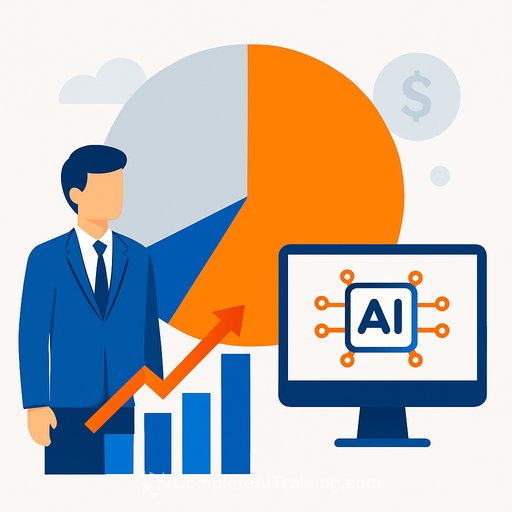
One-Fifth of Companies Capture Three-Quarters of AI's Economic Value
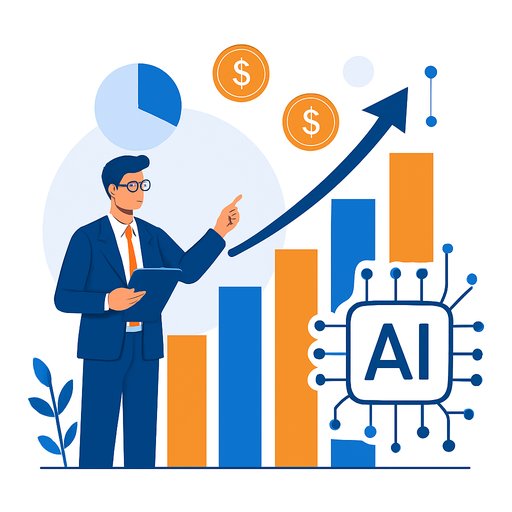
A small group of companies is pulling ahead in converting artificial intelligence into measurable financial returns, according to a PwC study of 1,217 senior executives across 25 sectors. The research finds that 74% of AI's economic gains flow to just 20% of organizations, revealing a widening divide between leaders and the majority still running pilots without results.
The gap reflects a fundamental difference in how companies approach the technology. Leaders treat AI as a tool for business reinvention and growth. Everyone else treats it as a way to cut costs.
Growth separates winners from the rest
Top-performing companies are 2.6 times more likely than peers to say AI improves their ability to reshape their business model. They're also two to three times more likely to use AI to identify growth opportunities when industries converge-such as partnering with companies outside their traditional sector.
PwC's analysis shows that capturing growth from industry convergence is the single strongest factor driving AI financial performance, ahead of efficiency gains alone.
Leaders don't simply add more AI tools. They redesign workflows around the technology and pursue revenue opportunities that wouldn't exist without it.
Trust enables automation at scale
The most successful companies are automating decisions at nearly three times the rate of peers. They're 1.8 times more likely to deploy AI for multiple tasks within guardrails and 1.9 times more likely to use self-optimizing systems.
This acceleration depends on building trust. AI leaders are 1.7 times more likely to have a Responsible AI framework and 1.5 times more likely to have a cross-functional governance board. The payoff: their employees are twice as likely to trust AI outputs.
Strong governance isn't a constraint on automation. It's what makes automation safe enough to scale.
The gap will widen
Without a shift in strategy, the performance divide between leaders and laggards will grow. Companies that have already mastered AI are learning faster, scaling proven use cases, and automating decisions safely-advantages that compound over time.
For organizations still in pilot mode, the findings suggest a clear choice: continue optimizing costs with AI tools, or redesign the business around what the technology makes possible.
Learn more about AI Agents & Automation and Generative AI and LLM to understand the foundations that enable this kind of transformation.
Your membership also unlocks: