
AI news ·
Vending machines and AI tools drive perfume sales growth in Japan
Japan's perfume market grew 16 percent between 2019 and 2024, now reaching 57.5 billion yen. Vending machines dispensing Dior and Chanel, monthly subscription boxes, and AI scent recommenders are pulling buyers away from department store counters.
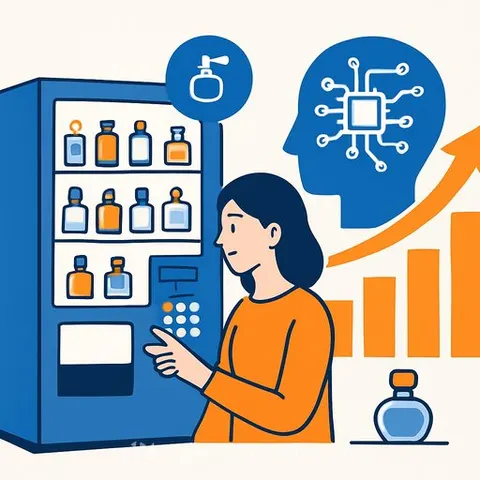
Japan's Perfume Market Finds New Sales Channels: Vending Machines, Subscriptions, and AI
Japan's perfume market is expanding beyond department store counters. Vending machines that dispense designer fragrances, flat-rate subscription services, and AI-powered recommendation systems are now competing for customers in a market that grew 16 percent from 2019 to 2024.
Fragrance Spot, a misting vending machine system, launched near JR Ikebukuro Station in Tokyo in November 2025. Customers press a button to spray perfume from luxury brands like Dior and Chanel onto their wrists for 150 to 500 yen per application. The operator has since installed machines in Shibuya and Harajuku, targeting younger customers and international visitors.
"We hope this system will serve as casual infrastructure for olfactory experiences in Japan, which has been called a backward country, and even a desert, in terms of perfumes," a Fragrance Spot official said.
Why the Market Is Growing
The COVID-19 pandemic drove demand for fragrances as consumers sought ways to improve their mood and express personal style. Japan's perfume market reached 57.5 billion yen in 2024, according to research firm Fuji Keizai.
A 2024 survey by marketing firm Boku to Watashi and Inc. found that more than 40 percent of Generation Z respondents aged 15 to 27 use perfumes regularly. One 28-year-old corporate board member said he spends several tens of thousands of yen annually on different fragrances to maintain his mood and project an image of cleanliness.
Subscription and AI Services Enter the Market
Coloria Kaori no Teikibin, a subscription service launched in 2019, delivers various perfumes monthly for several thousand yen. Subscribers now skew young, with those in their 20s making up nearly 60 percent of the customer base.
Scentmatic Inc. developed Kaorium, a device that uses AI for customer support to help customers choose fragrances. The system translates the abstract language perfume makers use to describe scents into plain language and recommends matching products.
"People are looking for reference axes by which to make choices because things are so vague and difficult to verbalize in this genre of scents," said Ryo Kaneko, chief operating officer at Scentmatic. "Perhaps our service has struck a chord with those who are not familiar with perfumes."
The AI system has reduced the burden on store staff while increasing sales of recommended fragrances, according to Scentmatic officials.
What This Means for Sales Professionals
These new channels represent a broader shift in how companies reach customers. For sales teams, the emergence of AI for sales tools and automated systems signals the need to understand how technology can augment rather than replace human selling.
The perfume market demonstrates that even in categories built on sensory experience and personal preference, technology can lower barriers to entry and help customers make confident choices.