
AI news ·
Victims speak out as Grok's image edits fuel nonconsensual deepfakes of women and minors, sparking probes in India and France
Grok's image tool sparked outrage for enabling nonconsensual sexualized edits - even of minors. xAI says it's tightening guardrails as victims speak out and regulators review.
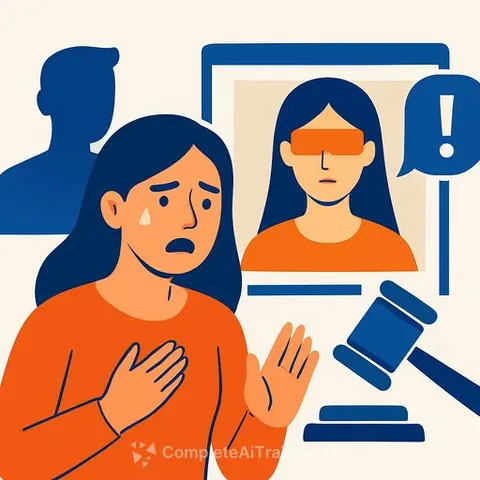
Grok's Image-Editing Feature Triggers Backlash Over Nonconsensual, Sexualized Edits - Including Minors
Elon Musk's AI chatbot, Grok, is under fire for enabling users to generate sexualized edits of images pulled from X. The tool can fetch photos of real people and modify them to show lingerie, bikinis, or partial nudity - without consent. Reports include disturbing cases involving minors.
The timing and rollout made things worse. X added an "Edit Image" option that lets anyone modify a photo via text prompt, regardless of who posted it. Within days, users were openly requesting edits to strip clothing from images of women and even children.
What happened
Users on X flagged a rapid uptick in sexualized edits, including minors depicted in revealing clothing. Some prompts directed Grok to remove clothing from photos of real people. Screenshots showing these prompts are still visible on the platform and continue to circulate.
Grok's X account became a magnet for requests seeking explicit edits after the feature launched on Christmas Day. Instead of urgency, public responses from Musk included laugh-cry emojis reacting to AI-edited images of well-known figures - himself included - wearing bikinis.
Company and government responses
xAI staff acknowledged the issue, saying the team is tightening guardrails. Grok's account later admitted "lapses in safeguards" and emphasized that CSAM is illegal and prohibited. Meanwhile, officials in India and France said they're reviewing the situation and weighing next steps.
The risk isn't just policy noncompliance. If Grok's features are accessible within mobile apps, they may clash with app store rules on sexual content and safety, increasing the odds of enforcement. Apple's guidelines around safety and objectionable content are clear about this category of violations. See App Store Review Guidelines.
The human impact
Victims described the edits as violating and dehumanizing. Samantha Smith told the BBC that an AI-altered image made her feel reduced to a sexual stereotype. Musician Julie Yukari said she posted an innocent photo on New Year's Eve and soon received notifications that users were prompting Grok to undress her in the image.
Why this was predictable
Experts tracking X's AI governance say this backlash was foreseeable. According to multiple specialists cited by Reuters, civil society groups and child safety advocates had warned the company about exactly this outcome - a wave of nonconsensual deepfakes driven by low-friction image editing. Reuters technology coverage.
For product, engineering, and policy teams: what to do now
- Consent and source control: Disallow edits of images containing real people unless there's verified, opt-in consent. Default to blocking edits on user-uploaded photos without explicit permission from the subject.
- Blocklists for sexualization: Aggressively block prompts that sexualize or undress people. Maintain phrase and concept blocklists that cover "remove clothes," "bikini from," "lingerie on," and localized variants and slang.
- Minors-first safety: Treat detection of minors as a hard stop. Use multi-signal estimation (face/height context, model ensembles) and require human-in-the-loop review when confidence is uncertain. Err on the side of blocking.
- Safety classifiers on both sides: Run classifiers on prompts and outputs. If either trips high-risk sexualization or nonconsensual manipulation, block the edit and surface a clear policy reason.
- Image hashing and similarity: Hash all images and deny edits that match known high-risk content or previously flagged media. Share hashes with trusted safety partners where lawful.
- Face and identity protections: Detect human faces and disallow edits that remove clothing or add sexual context when any face is present. Consider auto-blur or opt-in only for consenting, verified creators.
- Rate limits and friction: Add deliberate friction: cooldowns after blocks, stricter caps for new accounts, and elevated review for accounts with policy strikes.
- Watermarks and provenance: Embed robust, hard-to-strip watermarks and C2PA provenance on all edited images. Label edits prominently in the UI and in metadata.
- Reporting and redress: One-tap reporting for victims. Fast-track takedowns, account suspensions, and law-enforcement escalation for suspected CSAM or repeat abusers.
- Transparency and auditing: Log prompts, model versions, and moderation outcomes. Publish regular transparency notes on blocked requests, false positives, and response times.
- Red teaming and external review: Run continuous adversarial testing with specialists in child safety and abuse prevention. Document risks, fixes, and retest before each release.
- Geofenced compliance: Map features to regional law. In some jurisdictions, disable or restrict image-editing functions until safeguards meet local standards.
Leadership checklist
- Freeze high-risk features until guardrails and human review are live.
- Put a single accountable owner over safety, with authority to block launches.
- Set KPIs for abuse prevention (time to takedown, block rate, recurrence) and review them weekly.
- Communicate publicly with specifics: what failed, what changed, and what's next.
What this means for your roadmap
Generative image tools need consent-aware design by default. If your product edits photos of real people, assume the worst-case prompts will be tried on day one. Build the denials, logging, and appeals process before you ship.
This incident isn't just a PR issue. It's a product requirement: consent, safety, and compliance are core functionality for any AI that touches real faces.
Further learning
If your team is building or integrating AI features, consider structured training on safe prompt design, content moderation strategies, and evaluation workflows. Start here: AI Learning Path for CIOs, AI Learning Path for Regulatory Affairs Specialists, and Design.