
AI news ·
Workforce readiness, not technology, limits AI value in the enterprise
Most companies investing in AI are stalling on returns-not because the technology fails, but because employees lack the skills and guidance to use it well. Workforce readiness, not the tools themselves, determines whether AI spending pays off.
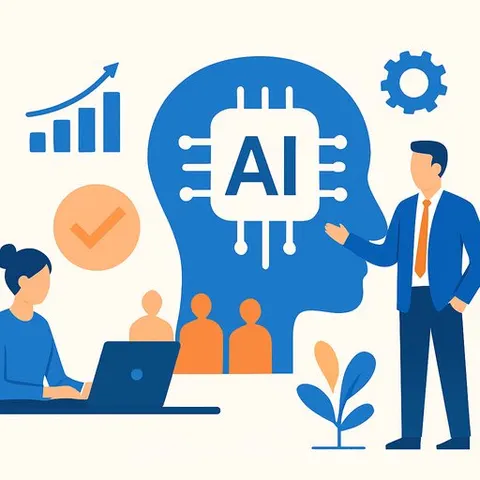
Workforce readiness, not technology, is the real constraint on AI value
Organizations are spending heavily on AI but struggling to translate that investment into results. The bottleneck isn't the technology. It's the people using it.
Most companies treat AI as a tool to deploy rather than a strategic capability that reshapes how work happens. Employees experiment without guidance. Governance lags adoption. Executives overestimate how quickly teams can integrate AI into daily workflows. The result: stalled returns, shadow AI use, compliance exposure, and missed innovation opportunities.
IT leaders and strategy executives face an immediate mandate: build a scalable workforce strategy instead of rolling out isolated AI systems. This means shifting from viewing AI as a productivity tool to seeing it as a strategic collaborator embedded in core workflows.
Two collaboration models, increasing in value
Organizations can structure human-machine collaboration in two ways.
Additive collaboration places AI and employees side-by-side for general productivity gains. Multiplicative collaboration integrates AI into workflows so employees and systems compound each other's benefits. Multiplicative approaches require intentional design and ongoing management.
As employees develop skills, they progress through four distinct roles:
- AI consumers: Use AI for basic productivity gains
- AI collaborators: Integrate AI into daily workflows and decisions
- AI orchestrators: Design human-AI workflows and governance models
- AI builders: Develop, deploy, and maintain AI systems
Organizations that scale AI value successfully align workforce development with these collaboration lanes.
A tiered training framework tied to business outcomes
Effective AI adoption requires continuous learning, not one-time training. Organizations need a four-tier capability stack tailored to specific roles and business goals.
Foundational AI literacy is mandatory for all employees. This baseline covers what AI can and cannot do, safe usage practices, and when human judgment is required. Delivery methods include onboarding modules, in-app guidance, and micro-learning programs.
Applied AI skills are for employees integrating AI into daily work. Role-based workshops, peer learning groups, and simulated tasks teach practical skills: advanced prompting, output evaluation, and escalation procedures when human review is needed.
Strategy and governance training targets leadership. Executives learn to design AI-enabled workflows, manage change, apply responsible AI principles, and measure ROI and adoption metrics.
Development and deployment training is for technical teams. This covers model evaluation, system integration, security, privacy, compliance, and lifecycle management.
Feedback loops allow organizations to refine training as AI evolves and business needs shift. Leaders should evaluate whether to build training in-house, buy from vendors, or partner with external providers. When learning is embedded in tools and workflows, it drives sustained behavior change.
Organizational obstacles outweigh technical ones
Most AI integration failures are organizational, not technical. They directly affect costs, risk exposure, and competitive position.
Operational challenges include employee resistance driven by job displacement fears, skills gaps that slow adoption, fragmented technology stacks, and data quality issues that undermine trust in AI systems.
Leadership challenges are more damaging. Unclear ownership of AI strategy across IT, HR, and business units creates confusion. Teams lack recognition for AI-enabled work. Shadow AI use spreads, creating security and compliance risks. Executives disconnect from operational realities, setting unrealistic timelines and missing ROI targets.
Strategic actions first, then drive adoption and scale
IT leaders should begin with four strategic actions:
- Assess current workforce readiness to identify skills, tools, and adoption gaps
- Define a clear AI operating model with explicit roles and collaboration opportunities
- Establish AI policies and governance frameworks for consistent, responsible use
- Mandate role-specific training tied to actual workflows and outcomes
Next, drive adoption and scale:
- Start with high-impact, visible use cases to demonstrate value quickly
- Embed AI into core workflows rather than positioning it as optional
- Develop internal AI evangelists to accelerate peer adoption
- Align incentives and performance metrics to encourage AI usage
- Treat change management as essential as technology deployment
Finally, establish continuous improvement practices. Measure adoption, productivity, and ROI. Iterate based on actual internal use. Balance speed with control when scaling. Treat AI collaboration as a long-term capability, not a one-time initiative.
The competitive advantage belongs to those ready
Human-machine collaboration is becoming a durable competitive advantage. Organizations that prioritize workforce readiness and strategic governance will outperform those focused solely on technology deployment.
AI investments deliver value only when paired with people who can use them effectively. For executives and strategy professionals, the imperative is clear: workforce readiness is not optional. It's foundational to an AI-driven transformation that drives revenue and innovation.