AI agent for independent consultants
Client Discovery Synthesis Agent
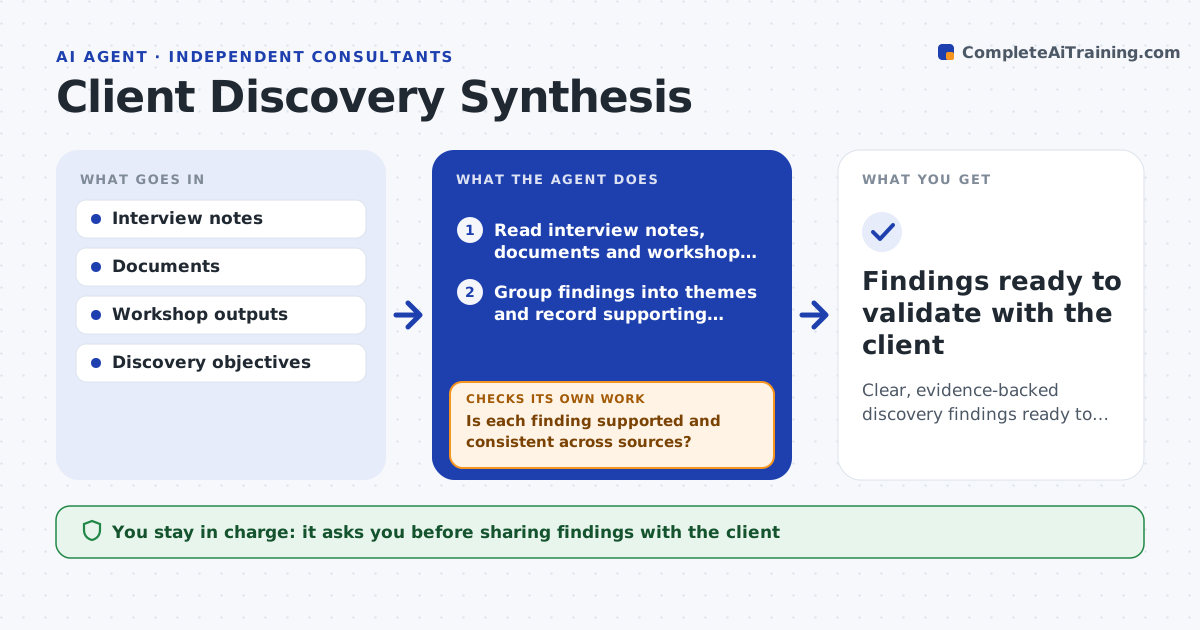
Clear, evidence-backed discovery findings ready to validate with the client
What it does
After discovery workshops and interviews, consultants face a pile of notes that is slow to turn into clear, agreed findings. This agent reads the interview notes, documents and workshop outputs and groups what it finds into themes: current processes, pain points, goals and constraints. For each finding it records the sources that support it. It checks where sources agree and where they conflict. Where accounts conflict, it lists both and marks the point as needing clarification instead of picking a side. A strong claim from only one person is marked single source. It then checks coverage against the discovery plan and flags topics no one discussed. You review the summary before it goes to the client. Edge case: a senior person's view is not weighted above the evidence from others.
How it works
Follow the arrows from top to bottom. The orange dashed arrow is the loop: when a check fails, the agent goes back and tries again.
Read the steps as a list
- Discovery sessions complete
- Read interview notes, documents and workshop outputs
- Group findings into themes and record supporting sources
- Is each finding supported and consistent across sources?If not: mark single-source or conflicting points for clarification. Back to step 3.
- Compare covered topics with the discovery plan
- Were all planned topics covered?If not: flag the gaps and draft questions for a follow-up session. Back to step 5.
- Draft the findings summary with evidence
- Consultant approves the findings summaryThe agent waits here for your OK.
- Findings ready to validate with the client
How it decides
It groups findings by theme and marks any point backed by one source or by conflicting accounts as needing clarification.
- Mark single-source claims as such
- Present conflicts as open, not resolved
- Flag objectives not yet covered
Make it yours
Every agent is a starting point. You choose these settings for your own situation.
- Theme categories
- Evidence threshold for a finding
- Discovery objectives to check coverage against
- Summary format
What keeps you in control
It always asks you first
- Sharing findings with the client
Hard limits
- Does not invent findings beyond the evidence
- Nothing to the client without approval
It stops when
- Done: findings grouped and evidenced
- Stop: notes are too sparse to synthesize
Set it up
We guide you through the set-up, step by step
Members get the full set-up guide for this agent. No technical skills needed: you copy, paste and upload.
- One set of instructions to paste into your AI, with the clicks for ChatGPT, Claude, Microsoft 365 Copilot, Gemini and Grok
- The agent then walks you through connecting your own data, one source at a time
- A downloadable copy with the flow chart, the rules and the full guide