AI tool
ARBR
ARBR observes LLM workloads to surface model-switching opportunities and builds evaluation datasets from representative traffic. It lets teams compare candidates on cost, quality, and latency, then roll out approved changes under human control. Th...
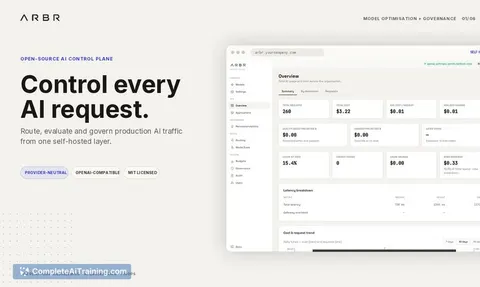
About ARBR
ARBR is an open-source, self-hosted control layer that sits between applications and AI models. It presents an OpenAI-compatible endpoint so teams can route, govern, observe, evaluate, and deploy across multiple providers without changing existing code. The tool is MIT-licensed and provider-neutral, built to run as a standalone gateway or on top of LiteLLM.
Review
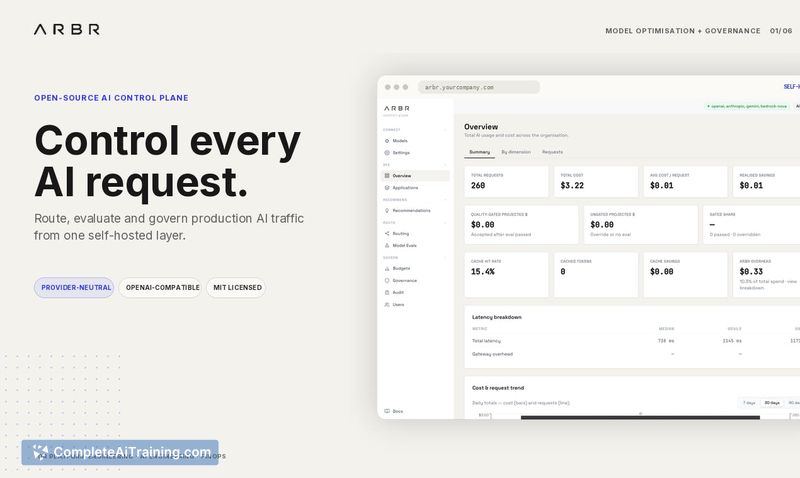

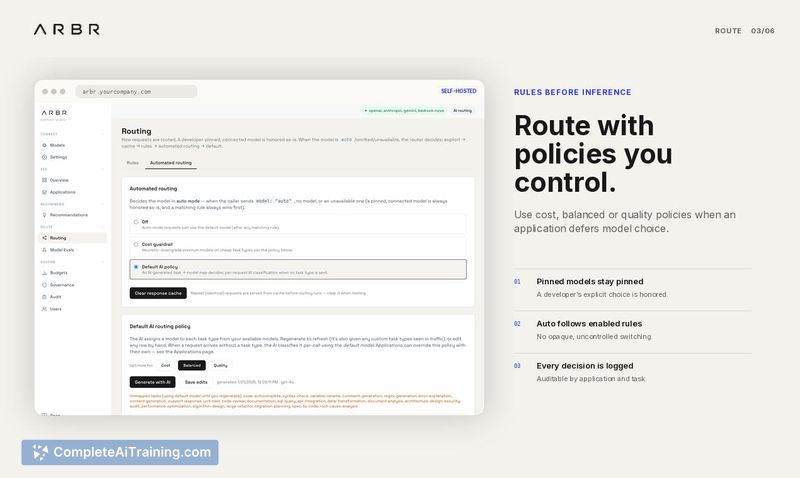
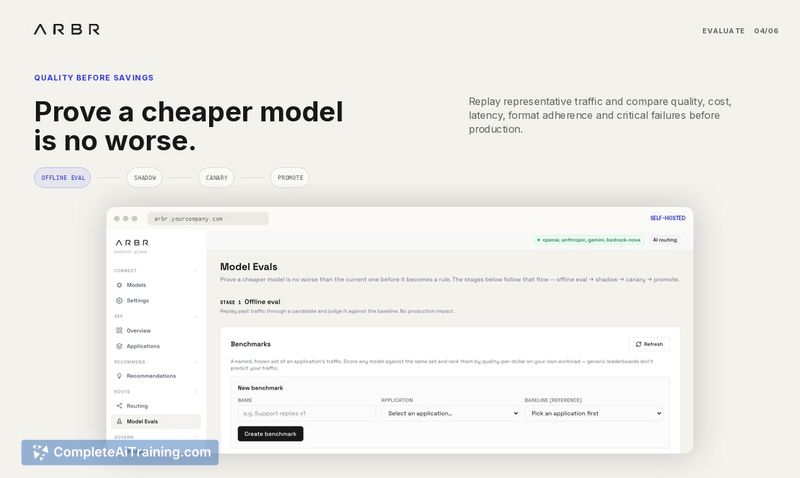
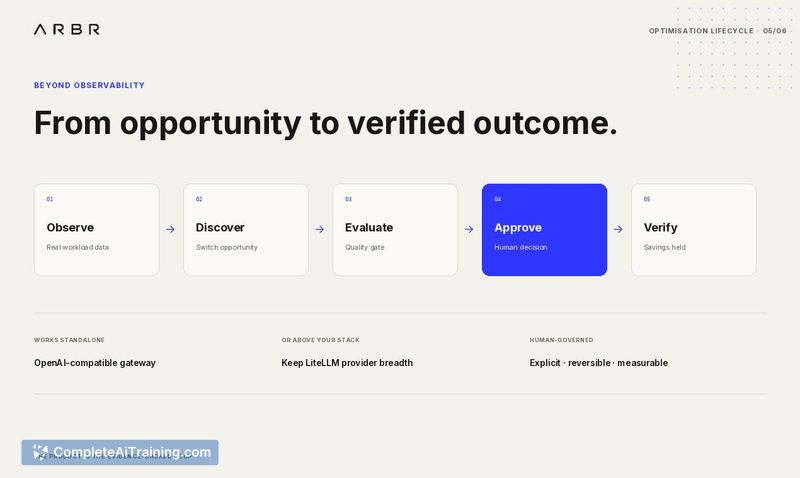
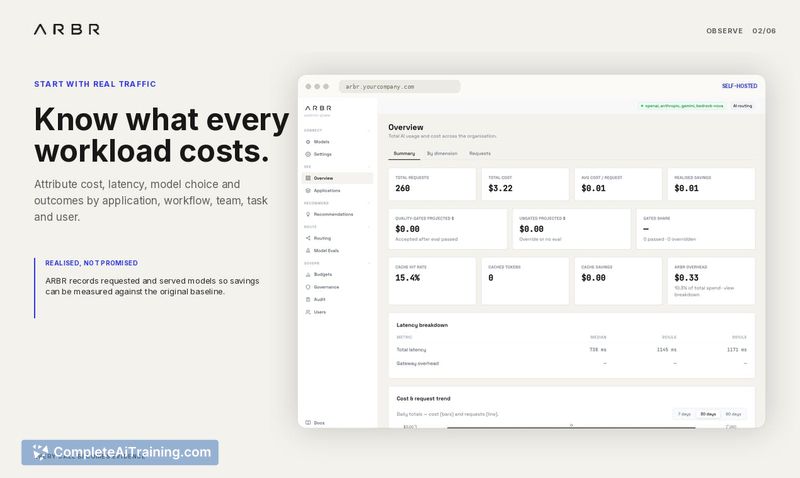
ARBR tackles a specific production problem: knowing which workloads can safely move to a different model, with evidence to back the decision, and confirming the result after rollout. It observes traffic patterns, surfaces model-switching opportunities, and builds evaluation datasets from representative requests. The routing logic follows explicit, auditable rules - models that are explicitly pinned stay pinned, while workloads marked "auto" follow only the policies the team has enabled.
Key Features
- Observes live workloads and identifies which ones are candidates for switching to a different model
- Builds evaluation datasets from actual traffic and compares candidate models across quality, cost, latency, format adherence, and critical failures
- Supports a staged deployment pipeline: shadow testing against mirrored traffic, guarded canary with automatic rollback, and human-promoted full rollout
- Automatic canary monitoring that recomputes candidate-vs-baseline metrics every 5 minutes over a trailing 60-minute window, with rollback triggered on guardrail breaches
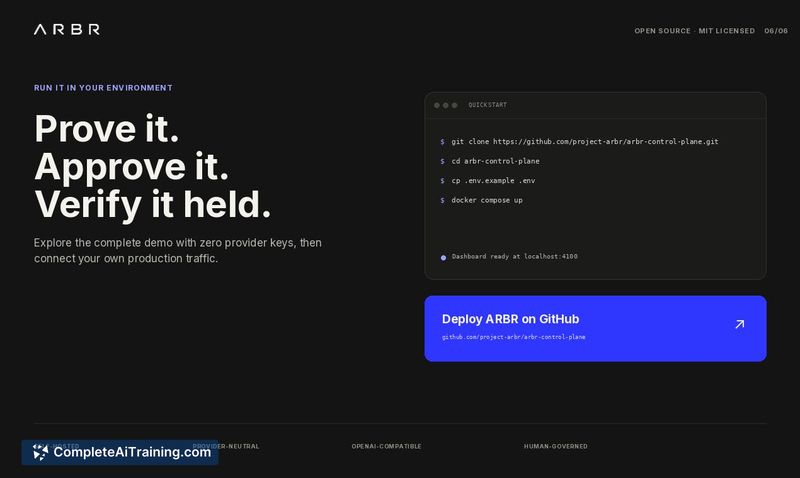
- Demo mode that lets users explore the full workflow without adding a provider key
Pricing and Value
ARBR is free and open source under the MIT License. The team has not published any paid tiers, enterprise plans, or managed hosting options. Self-hosting is the only deployment model described in the current documentation.
Pros
- Keeps the final model-change decision human-controlled, with an audit trail recording who promoted a swap
- Rollback triggers combine production telemetry (error rate, p95 latency, cost savings) with one eval-based metric, rather than relying solely on LLM-judged scores
- OpenAI-compatible endpoint means applications don't need rewrites to connect
- Works as a standalone gateway or layers above an existing LiteLLM setup
- MIT license imposes no restrictions on modification or commercial use
Cons
- Requires self-hosting, so teams without infrastructure to run Docker containers will find setup heavier than a managed service
- Provider integrations are limited to what LiteLLM supports; teams using niche or proprietary APIs may hit coverage gaps
- Not well suited for teams that don't run LLM workloads in production yet - the tool's evaluation and canary pipeline assumes live traffic to observe and compare
ARBR fits teams already running LLM workloads in production who want a structured, evidence-based process for model changes without vendor lock-in. The staged rollout pipeline gives operators room to test swaps on shadow and canary traffic before committing. Organizations that prefer a fully managed SaaS control plane, or that don't have production traffic to observe yet, won't find those use cases addressed in the current release.
Jobs ARBR suits
We checked ARBR against 500+ jobs; these get the most out of it.