AI tool
Ballet
Ballet is an orchestration layer that lets operations teams automate complex business processes by coordinating their existing systems and AI agents. Built for ops professionals, it provides graduated control over automations so teams can deploy p...
About Ballet
Ballet is a workflow automation tool that lets operations teams describe business problems in plain English and get a working automated workflow in return. The tool writes the workflow in code and runs it, with controls like full audit logs, one-click rollback, and a simulation mode. Users choose how much autonomy the system can exercise over each workflow.
Review
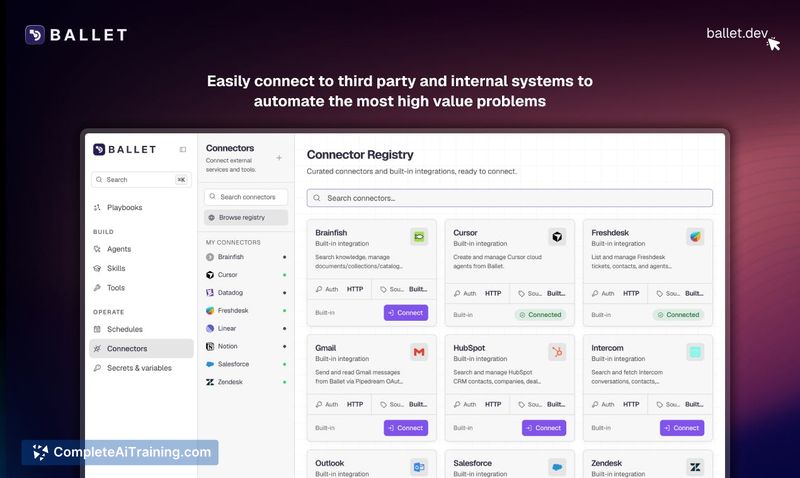

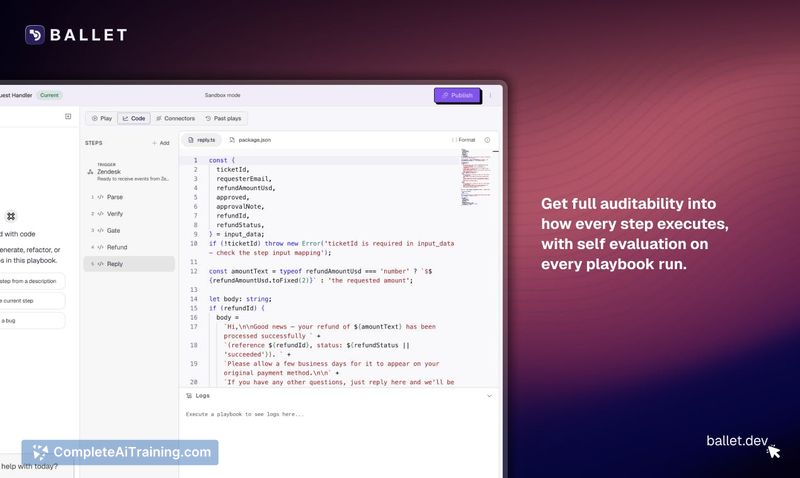
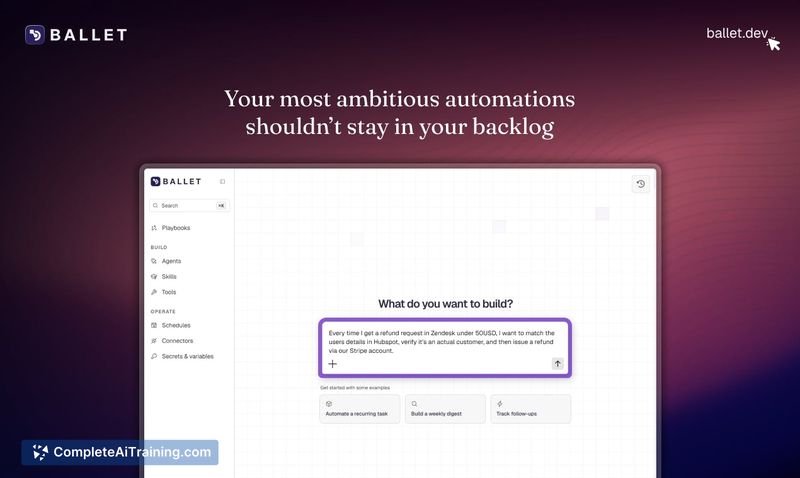
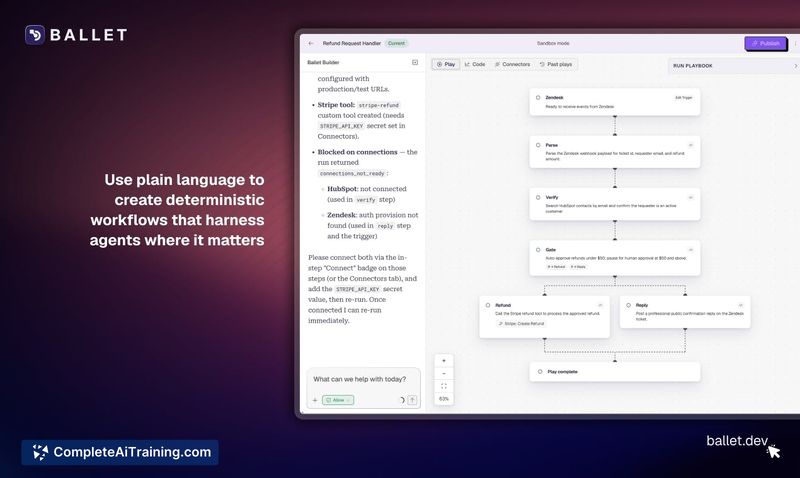
Ballet launched this week and targets a specific pain point: operations teams stuck acting as human middleware between different systems. The tool's makers spent twelve months talking to ops leaders before building it. What emerged is an automation layer that writes code based on natural language descriptions rather than forcing users into low-code drag-and-drop builders.
Key Features
- Describe a workflow in plain English, and Ballet writes operational code to execute it
- Full audit log tracks every action the workflow takes
- One-click rollback allows reverting to a previous workflow version
- Simulation mode lets users test workflows before they run in production
- Graduated autonomy control - users decide how much the agent can do per workflow
Pricing and Value
Pricing is not yet defined on the product page beyond showing a payment requirement for access. The tool is available now, having launched this week. For operations teams, the value lies in reducing dependency on engineers to build and maintain workflow automations. Ballet uses Claude Code to generate the underlying workflow code and stores that code on GitHub.
Pros
- Users write intent in plain language instead of visual flowcharts or code
- Simulation mode catches problems before workflows touch live data
- Rollback takes one click, reducing risk when iterating on automated processes
- Audit trails create visibility into what each workflow does
- Control thresholds let teams set different autonomy levels per task
Cons
- Workflow reliability depends on the AI agent's ability to correctly translate plain English into runnable code
- Users must trust their operational data to a system that executes generated code autonomously
- This tool is not well suited for teams that need visual flow builders or have compliance constraints requiring human-only process execution
Ballet works best for operations teams that already accept some degree of automation risk and need to move faster than their engineering backlog allows. Teams that cannot tolerate code-driven workflows or that require full visibility into every branch of a process tree should stick with more traditional automation tools where they control each step explicitly.
Jobs Ballet suits
We checked Ballet against 500+ jobs; these get the most out of it.
Alternatives to Ballet
Other tools that do the same main job. Our AI compared Ballet with similar tools and kept the ones you could use instead.