AI tool
InfrOS
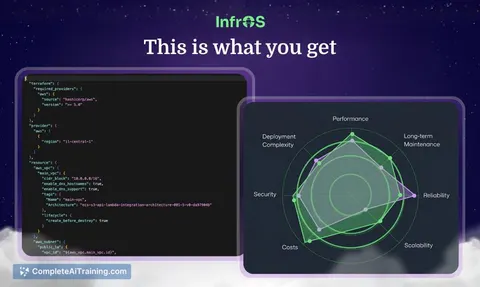
InfrOS shifts optimization left: it takes business, technical and compliance requirements, pre-designs and emulates cloud architectures to validate performance before provisioning, cutting infrastructure costs and accelerating deployments.
About InfrOS
InfrOS is a platform that designs and validates cloud architectures before any resources are provisioned. It uses AI-driven recommendations and an emulation sandbox to compare candidate architectures and forecast performance, cost, and reliability.
Review
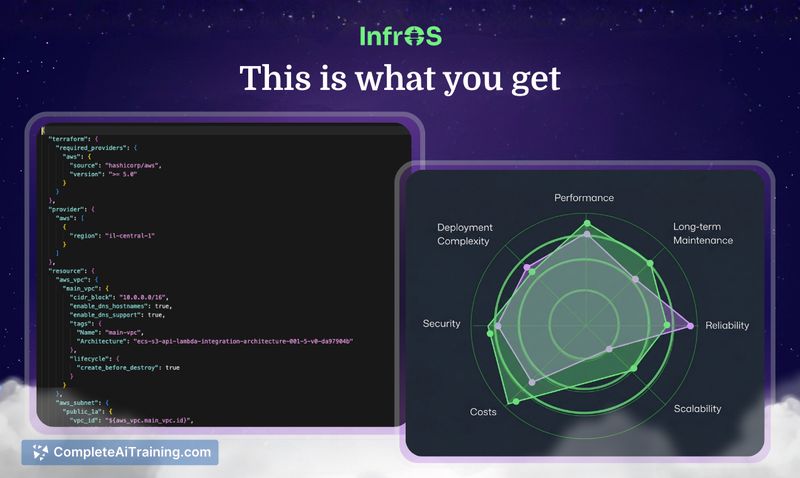
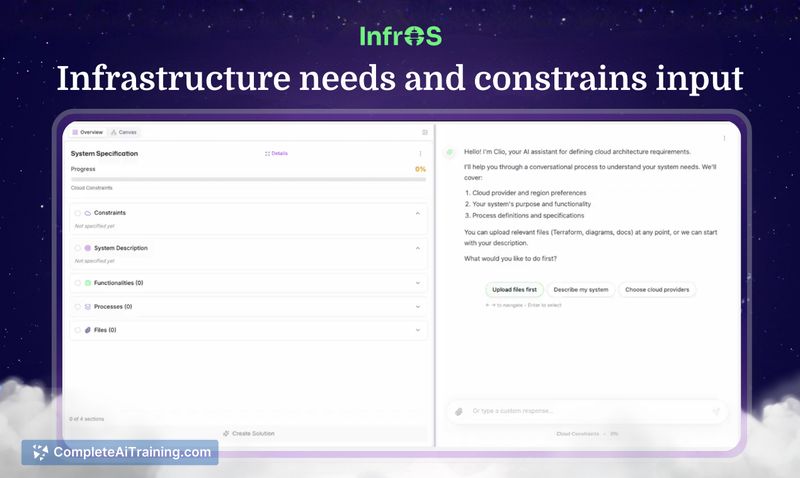
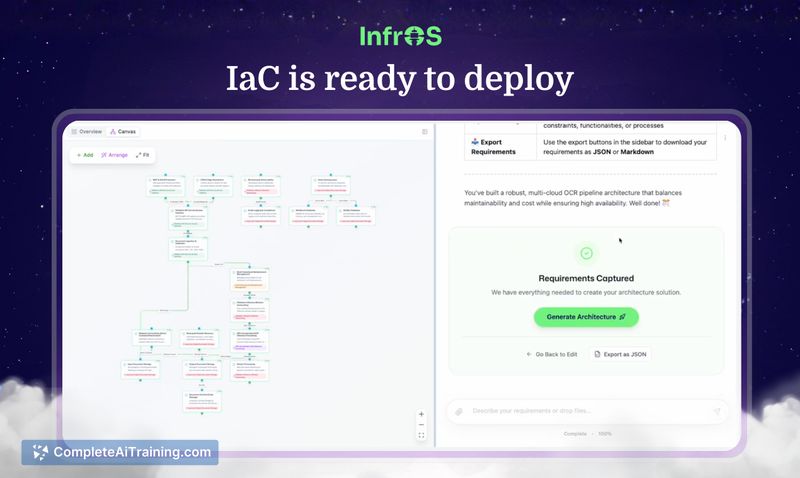
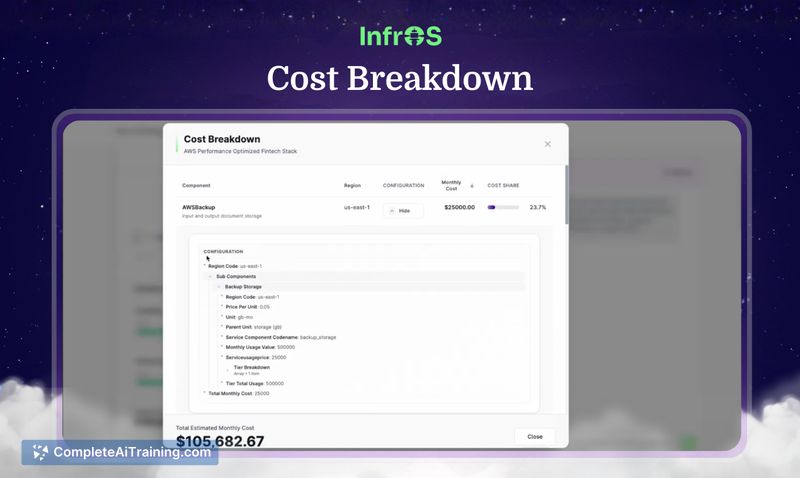
InfrOS approaches cloud infrastructure planning by shifting validation earlier in the lifecycle: instead of deploying and reacting, it generates architecture options and runs focused emulations to surface trade-offs. The platform targets teams that want clearer evidence for design choices, continuous reoptimization as requirements change, and a reduced risk of costly rework after deployment.
Key Features
- AI recommendation engine that proposes architecture candidates based on business, technical, and compliance requirements.
- Emulation sandbox that deploys and benchmarks top architecture options to compare expected performance and cost before provisioning production resources.
- Support for both new (greenfield) and existing (brownfield) projects, including migration planning and vendor-agnostic design.
- Continuous reoptimization that revisits designs when code, requirements, or cloud offerings change.
- Self-serve platform with a free trial and options to scale to enterprise needs.
Pricing and Value
Pricing is based on a tiered model: a free option and trial are available for initial evaluation, while paid plans scale for larger teams and enterprise requirements. Early user reports cite material cost and time savings - for example, reported reductions in infrastructure spend and faster deployments - which positions the product as a way to lower total operational cost and reduce the frequency of reactive fixes. Short-term discounts are occasionally offered for new customers.
Pros
- Validates design choices with real emulation runs, so teams get side-by-side comparisons of candidate architectures.
- Can reduce wasted spend by catching mismatched services, overprovisioning, and suboptimal topologies early.
- Works for both new builds and migrations, and aims to remain cloud-provider agnostic.
- Helps teams prioritize rearchitecting only when there is clear ROI from validated results.
Cons
- Emulation is a strong signal but may not capture every idiosyncratic production behavior; final validation in real environments is still advisable.
- Adopting a shift-left design workflow requires process changes and some learning for teams used to reactive tuning.
- Organizations with very small, simple projects may find the setup overhead less compelling than larger, more complex workloads.
InfrOS is best suited for engineering and DevOps teams planning significant cloud deployments, teams migrating between environments, or organizations looking to reduce infrastructure cost and deployment friction. For smaller one-off projects the platform's upfront design step may feel like extra overhead, but for teams with frequent changes or high cost sensitivity it can deliver measurable returns.
Jobs InfrOS suits
We checked InfrOS against 500+ jobs; these get the most out of it.
Alternatives to InfrOS
Other tools that do the same main job. Our AI compared InfrOS with similar tools and kept the ones you could use instead.