AI tool
Murfy AI
Murfy AI is an AI agent for researchers and technical writers that assists with drafting papers, reviewing manuscripts, revising based on reviewer comments, fixing LaTeX compile errors, and building Beamer slides. It is designed for academics and ...
About Murfy AI
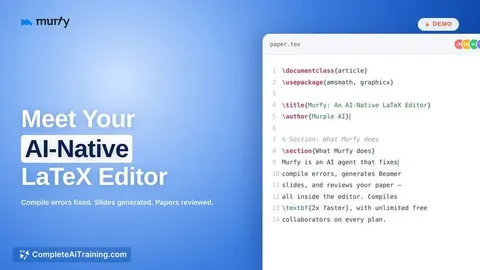
Murfy AI is a team of AI agents built for the research writing workflow, launched this week by the team at Murple. It operates as a code editor and writing assistant that helps users write and review papers in context, fix LaTeX compile errors, verify reference papers, and generate Beamer slides. The tool supports unlimited collaborators with real-time editing and is free to start.
Review
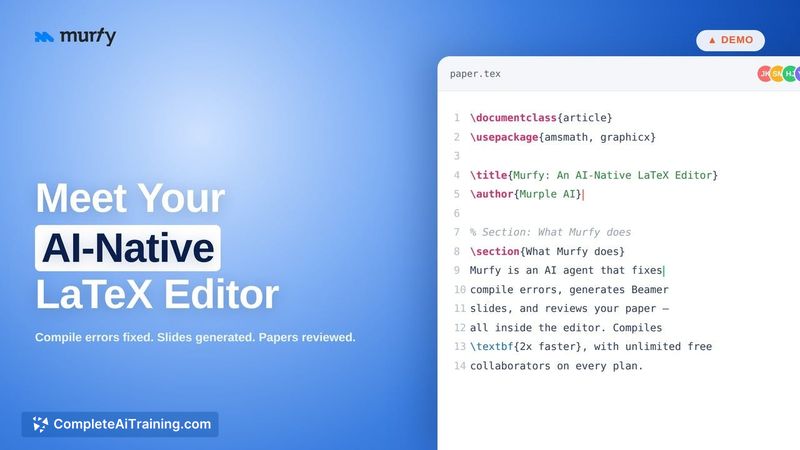
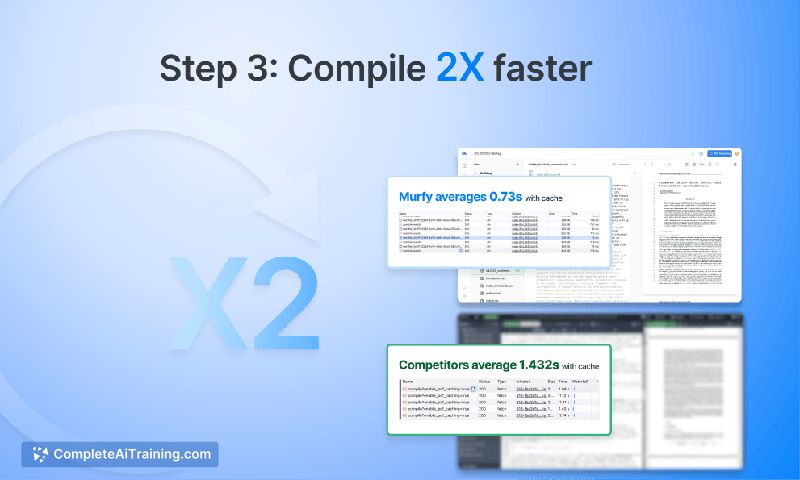
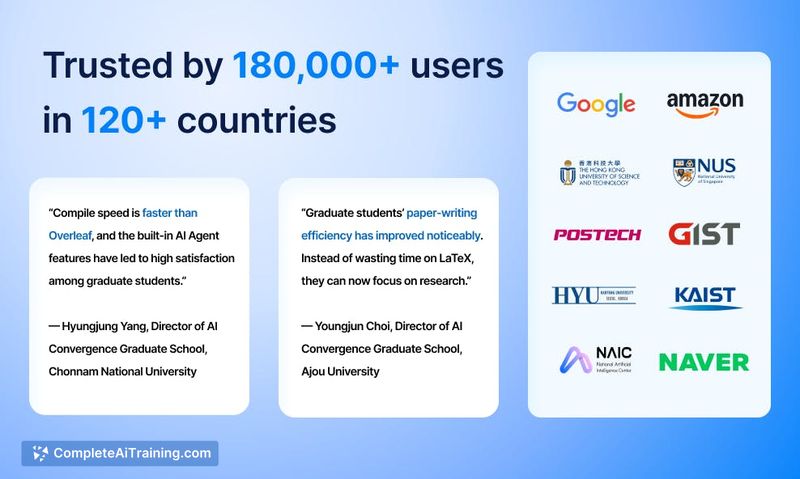
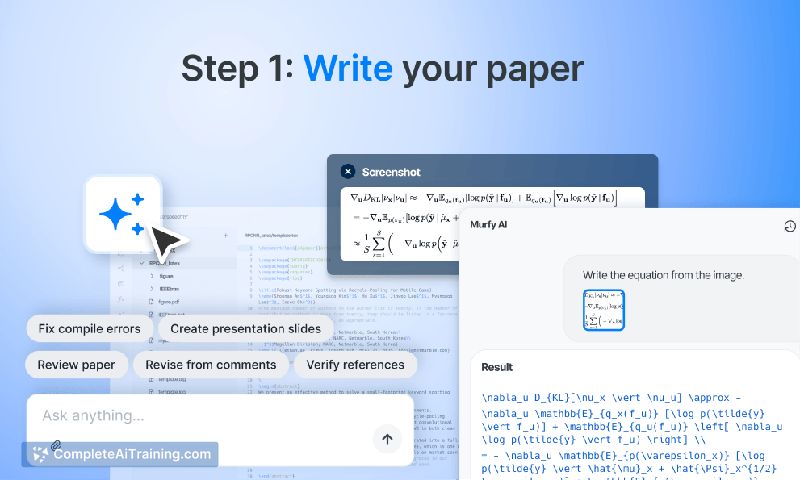
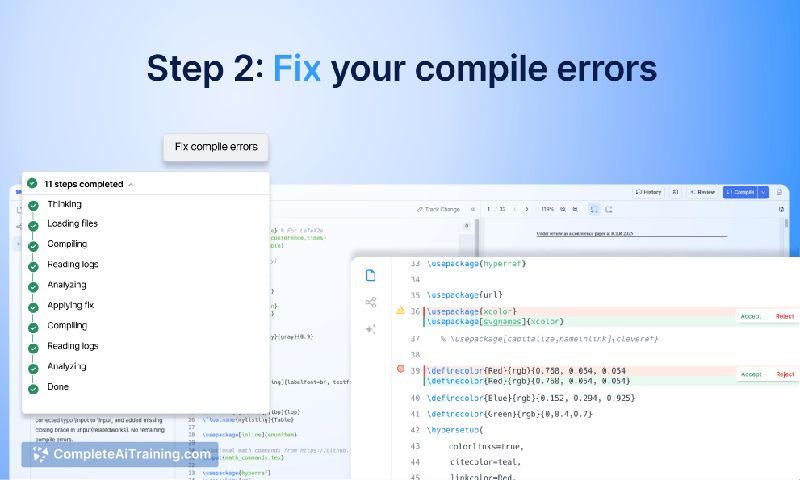
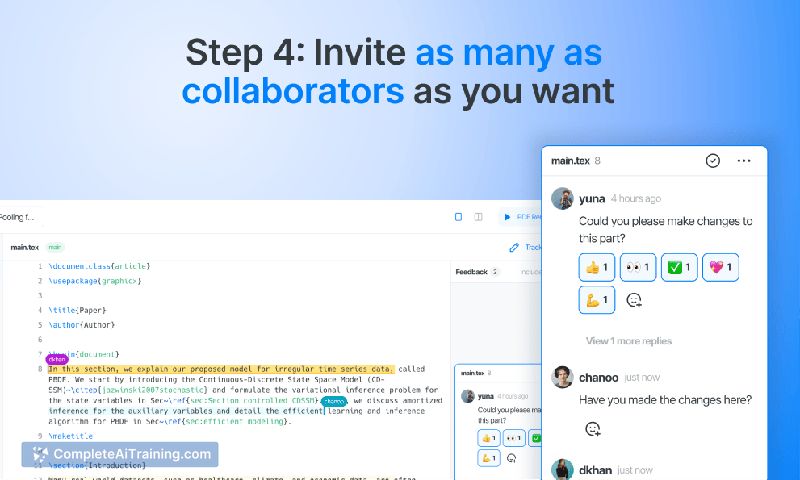
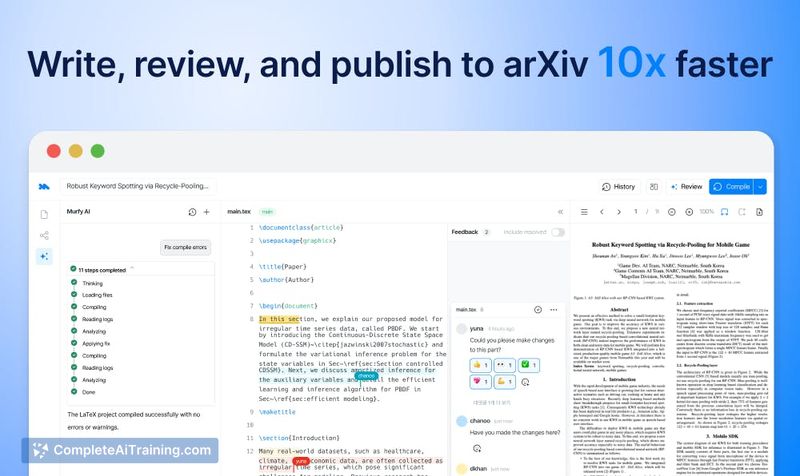
Murfy positions itself differently from a typical AI writing assistant bolted onto an editor. Instead, it works through the writing process as an agent: it reads project files, suggests changes as diffs, compiles the paper, and iterates on errors until they're resolved. The tool launched with a 5.0 rating from 2 reviews and reports researchers in 120+ countries using it, with growth of 50-100% month over month.
Key Features
- LaTeX compile error fixing: Murfy compiles, edits, and recompiles up to three times, catching cascading errors. It checks diffs for shortcuts like deleting \includegraphics or \input commands or enabling draft mode to mask errors.
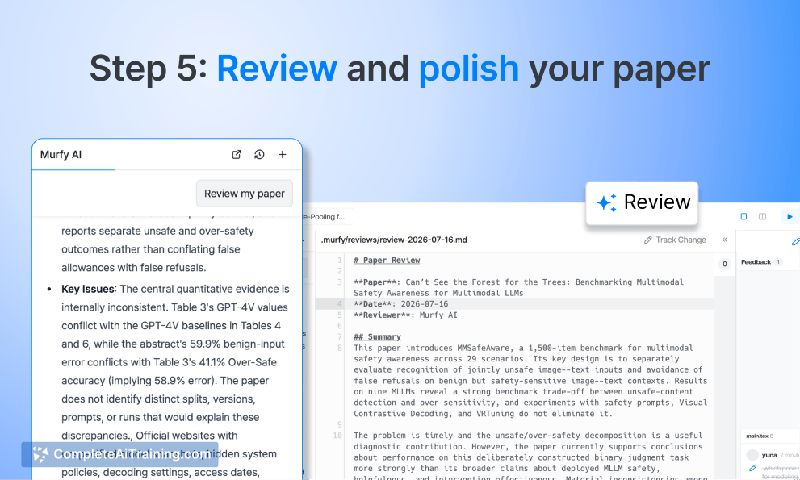
- Deep paper review: Reads the compiled PDF and checks whether claims are supported by the paper's own evidence, challenges weak assumptions, and returns a referee-style report with a rating and confidence score.
- Real-time collaboration: Unlimited collaborators on the free plan, with revision history showing who changed what and when.
- Reference verification: AI checks references against the paper, which one user noted used to be pure manual work.
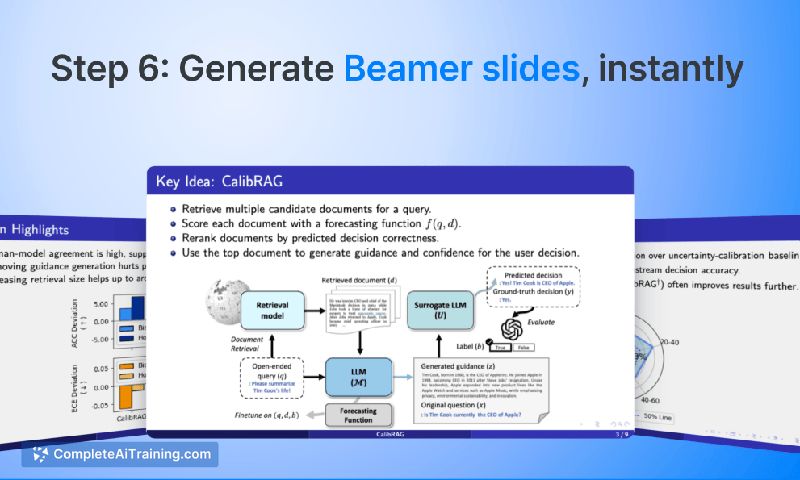
- Beamer slide generation: Builds presentation slides from the paper content.
- Reviewer comment handling: Revises papers based on reviewer feedback.
Pricing and Value
Murfy is free to start, and the free plan does not limit the number of collaborators. Pricing beyond the free tier is not yet defined in the available material. The founder notes that junior researchers save the most time on LaTeX itself through code assistance and compile error fixing, while senior researchers get the most value from deep AI paper reviews before submission. Advisors report the biggest win is visibility into revision history plus AI-verified reference checking.
Pros
- Fixes are not applied automatically; users get an inline diff to accept or reject along with a preview PDF, keeping the researcher in control.
- The agent reads the full paper context, so AI suggestions are relevant to the specific project rather than generic.
- Handles the tedious debugging loop of LaTeX compile errors, which the team says was a major pain point in their own research careers.
- Free plan includes unlimited collaborators, which suits lab-wide projects.
- Real-time editing works alongside the contextual AI agent, addressing a common bottleneck in group papers.
Cons
- Murfy does not inspect the rendered PDF; it reads the source and compile log, so it won't notice if a package changes line breaks or pushes a figure to the next page. Users must check layout themselves.
- One user reported issues with a persistent "Murfy Guide" first page that was difficult to remove, and another reported the AI occasionally responding in Korean due to internal instructions leaking into responses. The team acknowledged both issues.
- The tool is not well suited for researchers who need mature integrations and ecosystem stability; the team openly states Overleaf remains ahead in maturity and integrations, and Murfy is much newer.
Murfy is best suited for researchers who work with LaTeX regularly and want an agent that handles the repetitive parts of writing, compiling, and revising papers. It fits both junior researchers learning LaTeX and senior researchers who want pre-submission review feedback. Those who rely on established editor ecosystems or need AI to verify visual layout in the rendered PDF should wait for further development.
Jobs Murfy AI suits
We checked Murfy AI against 500+ jobs; these get the most out of it.
Alternatives to Murfy AI
Other tools that do the same main job. Our AI compared Murfy AI with similar tools and kept the ones you could use instead.