
Learning path
Learning AI as a Biologist
This path helps biologists use AI for literature reviews, lab protocols, fieldwork notes, and data analysis. You will set up your AI, learn job-specific skills, and take a prompt course built for biology work.
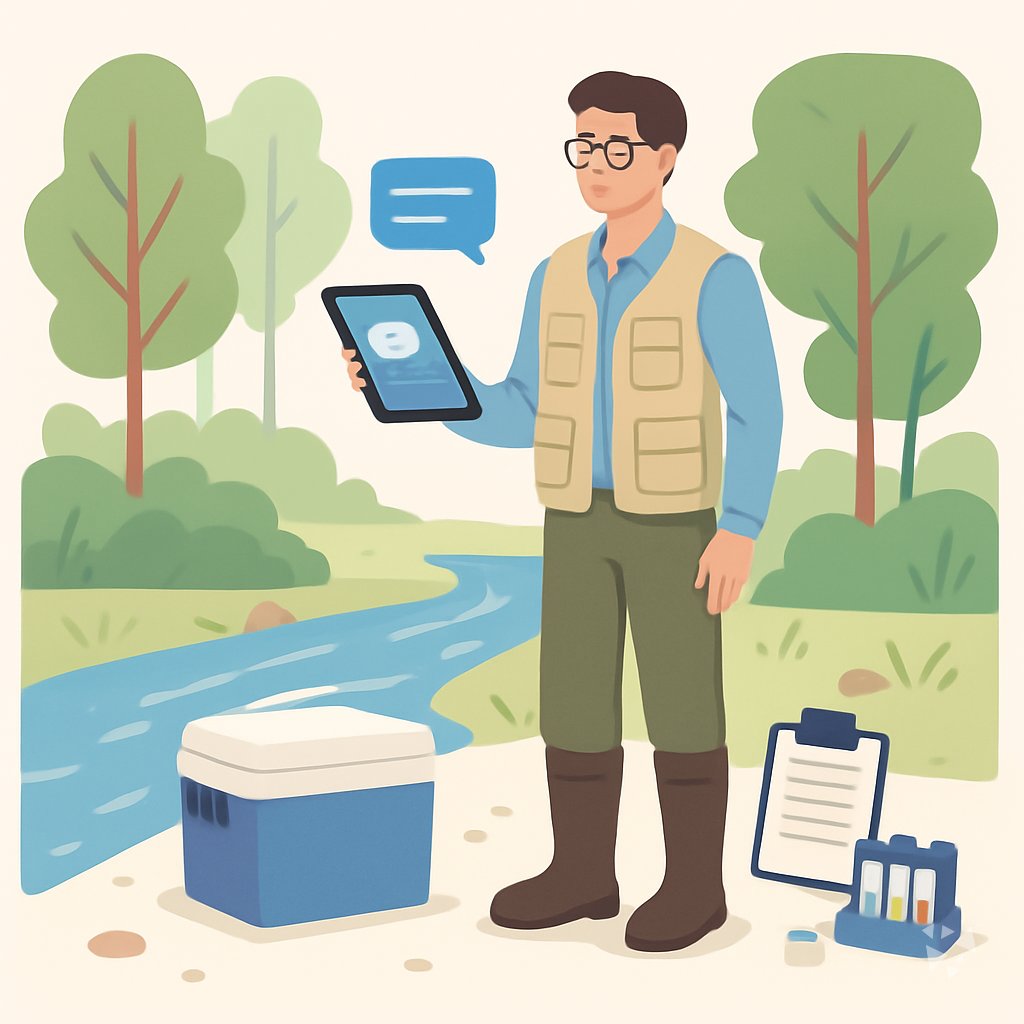
Your path
Everything in the Biologist AI kit, in the order that makes sense. Members tick off each step and see their progress.
Set up your AI
We guide you through each click.
Let skills do your everyday tasks
Connect your apps and pick your AI apps
Hand whole tasks to AI agents
Build your own tools
Keep growing
Everything for biologists
All the courses, certifications, AI tools, MCP servers and apps for biologists, most relevant first. Open any list to see more.
Take the prompt courses
A short framework course to learn how to ask, then 9 lessons with ready-to-use prompts for biologists.
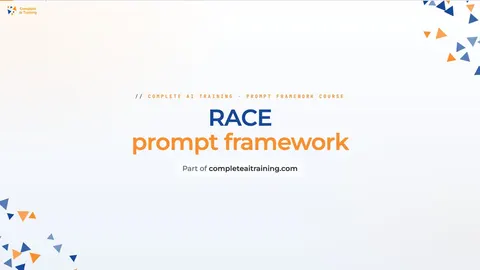
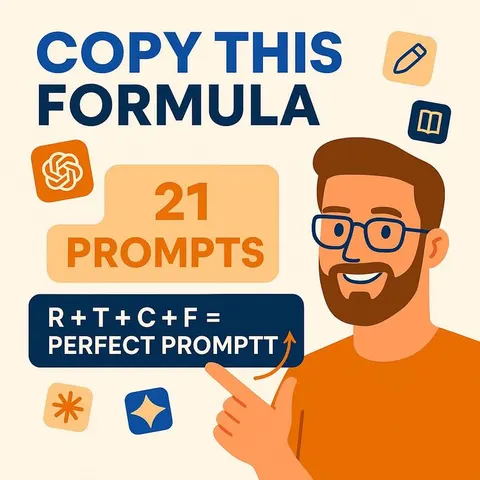
Start with this framework: how to talk to AI
RACE helps biologists define their role, action, context, and expected quality when analyzing gene expression data for a lab report.
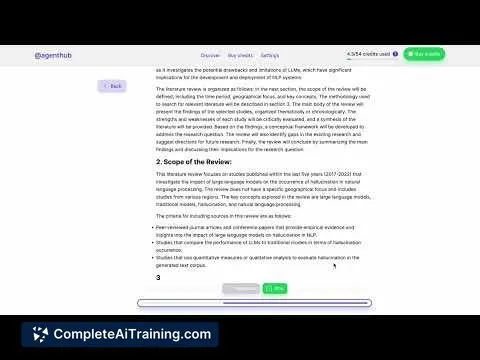
Then your prompt course for biologists- 1Literature Review Basics4 prompts
- 2Lab Protocol Drafting4 prompts
- 3Fieldwork Planning & Notes2 prompts
- 4Data Analysis & Statistics3 prompts
- 5Scientific Writing & Reports3 prompts
- 6Figures, Posters & Talks2 prompts
- 7Lab Safety & Compliance2 prompts
- 8Equipment & Troubleshooting2 prompts
- 9Grants, Admin & Collaboration3 prompts
Watch the video courses or add them to your Favorites for later
80 video courses our AI picked for biologists, most useful first. Save the ones you want to watch later with the heart.
Favorites are saved to your account: sign in or get your AI kit first.
Show all 80 video courses
Get certified, or add certifications to your Favorites
Every course ends in an exam and a certificate you can add to LinkedIn. Save the certifications you are aiming for with the heart.
Favorites are saved to your account: sign in or get your AI kit first.
More certifications for biologistsShow all 24 certifications
Try the AI tools for biologists
24 AI tools our AI matched to the work of biologists, best fit first. Each review shows what it does, its alternatives and the jobs it suits.
Favorites are saved to your account: sign in or get your AI kit first.
Show all 24 AI tools
Connect your AI to the apps biologists use
MCP servers let ChatGPT, Claude or Copilot look things up and get work done in other apps, like your email, calendar or bookkeeping software. These 12 fit the work of biologists best, well-known apps first.

NCBI PubMed MCP server
by vitorpavinatoSearch PubMed's millions of research articles and get summaries, authors, and related papers through your AI.

Scholar MCP server
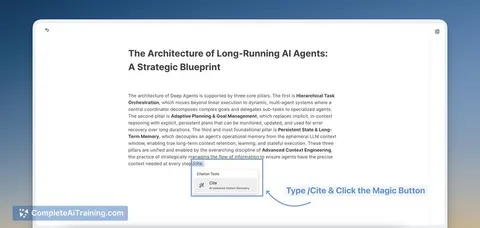
by Liyux3Your AI can search academic papers, read them, map citations, and save them into a personal library.

Mendeley MCP server
by pallaprolusLets your AI search your Mendeley library, read your papers, and organize your folders for you.

Research Hub MCP server
by WenyuChiouLets your AI search for papers, save them to Zotero, and write notes into your Obsidian vault for you.

Google Scholar MCP server
by HasDataLets your AI search Google Scholar and pull ready-made citations for papers you find.
ResearchNo install
Plant Genomics MCP server
by musharnaLook up plant genes across 23 public databases and get one combined answer in your chat.
Show all 12 MCP servers

Research Data Finder MCP server
by musharnaSearch and download research datasets and papers from many archives, all through one request to your AI.

Annota MCP server
by dengls24Let your AI read your Zotero papers, highlight key findings, explain formulas, and save reading notes back to your library.

Zotero MCP server (zotio)
by OrgMentemLets your AI read and safely update your Zotero library, check for retracted papers, and keep notes in sync.

Zotero MCP server (Zoteus)
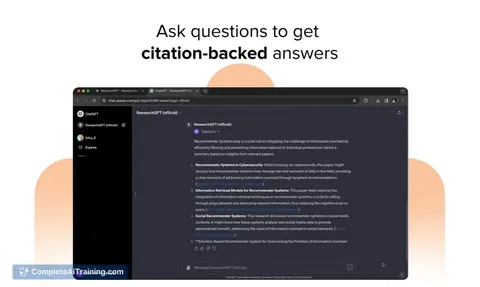
by oscardvsLets your AI search your Zotero library, pull PDF passages with page numbers, and format citations.
ResearchNo install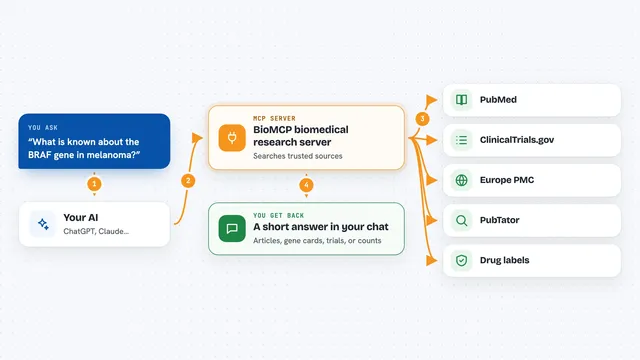
BioMCP biomedical research server
by genomoncologyLets your AI look up genes, variants, drugs, diseases and clinical trials from trusted medical sources.

Semantic Scholar MCP server
by smanichesSearch 200M+ academic papers, follow citations, and get author details right inside your AI chat.
Build your own AI apps for biologists
Apps you build yourself with your own AI, no coding needed and no monthly fee. Our AI picked the 12 that fit the work of biologists.
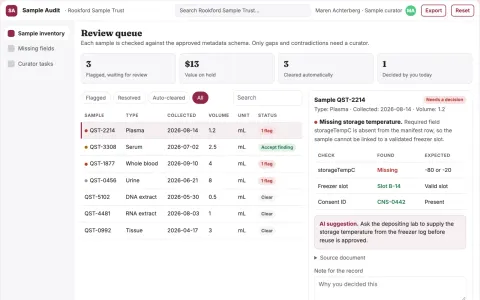
Research sample metadata completeness desk
Find metadata gaps before sample reuse.
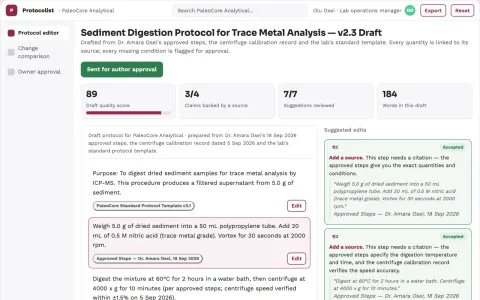
Protocol documentation assistant
Completeness checks and version history without inventing experimental parameters.
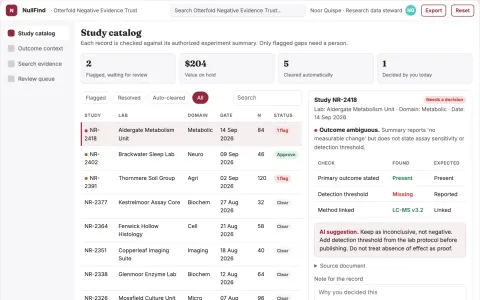
Negative-result study archive
Recover what was tried and why it was inconclusive.
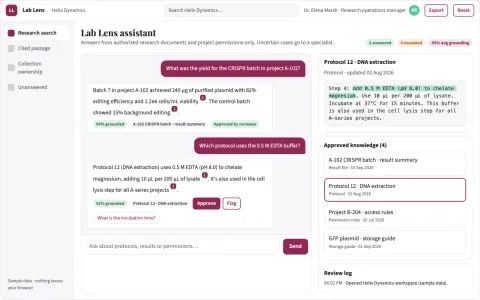
Research document search
Project-aware permissions and document provenance for internal research.
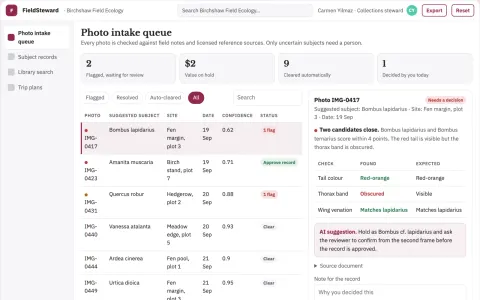
Photo subject identification and field data stewardship console
Reduce manual identification and cataloguing effort while keeping reviewed records in one owned library.
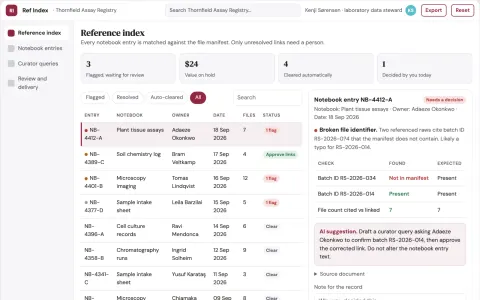
Research notebook reference index
Find supporting records without changing observations.
Show all 12 apps
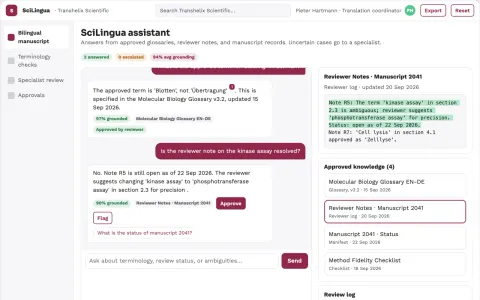
Scientific translation service
Field-specific terminology and method fidelity verified by qualified reviewers.
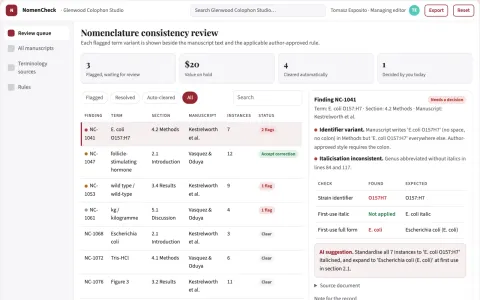
Scientific nomenclature consistency review
Consistency without imposing unsupported scientific meaning.
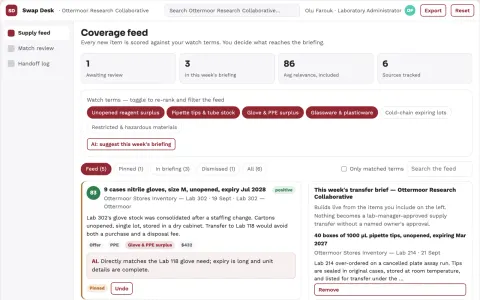
Cross-lab nonregulated supplies exchange
Reduce avoidable spending on ordinary lab consumables.
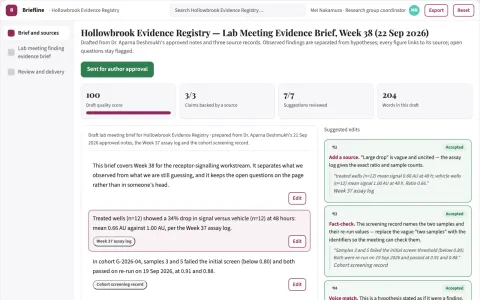
Lab meeting finding evidence brief
Explicit distinction between evidence and hypotheses.
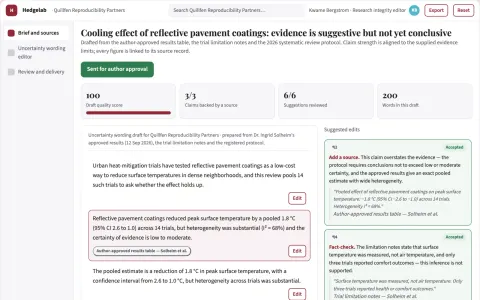
Scientific uncertainty wording editor
Align language with supplied evidence limits.
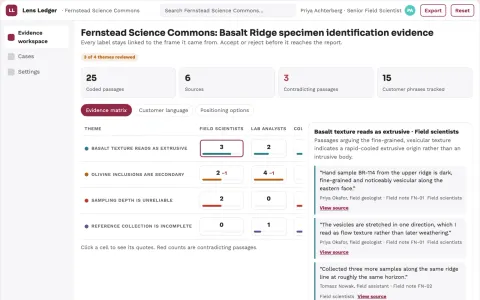
Visual identification and explanation workspace
Reduce manual identification effort while keeping a reviewable evidence trail.











About this learning path
6 topicsAI skills for biologists, from lab bench to field
Biology work asks you to read widely, plan carefully, and write clearly. AI can help with each of those tasks when you know how to ask.
This path starts with setup, connects AI to your tools, and teaches prompts made for biologists. You also get video courses chosen for your job and the certifications that come with them.
Why AI matters for biology now
Research moves fast and the amount of literature keeps growing. AI helps you find relevant papers, compare methods, and spot gaps without losing your own judgment.
Funders and labs also expect faster reporting and cleaner records. Knowing how to use AI well keeps you competitive without adding hours to your week.
What the path includes
You begin with setup questions and connecting your AI to the tools you already use. Then you build job skills inside your AI, such as summarizing papers or drafting protocols.
The prompt course for biologists comes next, with lessons on fieldwork notes, data analysis, writing, figures, safety, and troubleshooting. Video courses picked for your role and their certifications complete the path.
How it saves you time
AI can turn a stack of papers into a comparison table, a messy notebook into tagged field notes, or a blank page into a draft report. You still check the work, but you start from something instead of nothing.
Small tasks add up: reagent calculations, maintenance checklists, grant budgets, and email replies. The path shows you where AI helps most in a biologist's day.
How it protects your career
Employers value biologists who can handle data and communicate clearly. Using AI for routine writing and analysis frees you for the thinking and lab work that need a human.
You also learn safety and privacy habits, so you can use AI without exposing sensitive data or cutting corners on compliance.
How to start
Start with the setup questions and connect one AI tool you already have access to. Pick one lesson from the prompt course that matches a task on your calendar this week.
Try a single prompt, check the output, and adjust. The path is built for working professionals, so you can move at your own pace and apply each step to real research.
Frequently asked questions
Do I need to know how to code?
No. The lessons show you how to ask AI for analysis code and explain the results in plain language. You can also choose analyses without writing code yourself, as long as you understand the assumptions.Will AI replace biologists?
AI is a tool, not a replacement. It handles repetitive parts of literature review, writing, and data work, but fieldwork, lab judgment, and scientific interpretation stay with you.Is my research data safe?
The course covers privacy and safety habits for biologists, including what not to paste into public AI tools. You will learn how to work with sensitive data responsibly and follow your institution's rules.How long does the path take?
Most people move through the path in a few weeks while working full time. You can go faster or slower, and each lesson is short enough to fit between experiments.