AI tool
Taste Lab
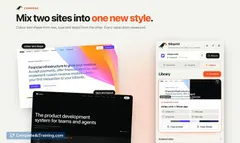
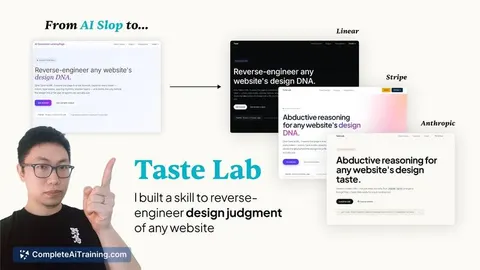
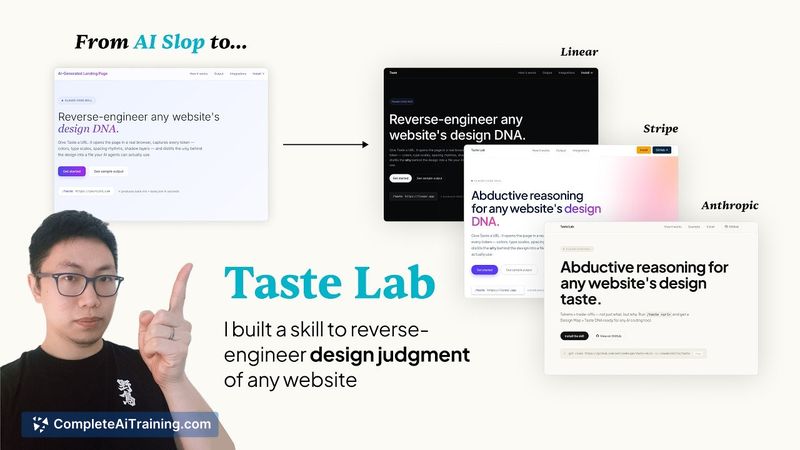
Taste Lab helps designers and developers guide AI agents to replicate specific website designs. It extracts the proportions and trade-offs of a target site to replace vague prompts with precise styling instructions.
About Taste Lab
Taste Lab is an AI design analysis tool that extracts a website's design DNA. Users point the agent at a specific URL to receive a complete design breakdown. The output includes colors, typography, spacing, and the reasoning behind each specific decision.
Review
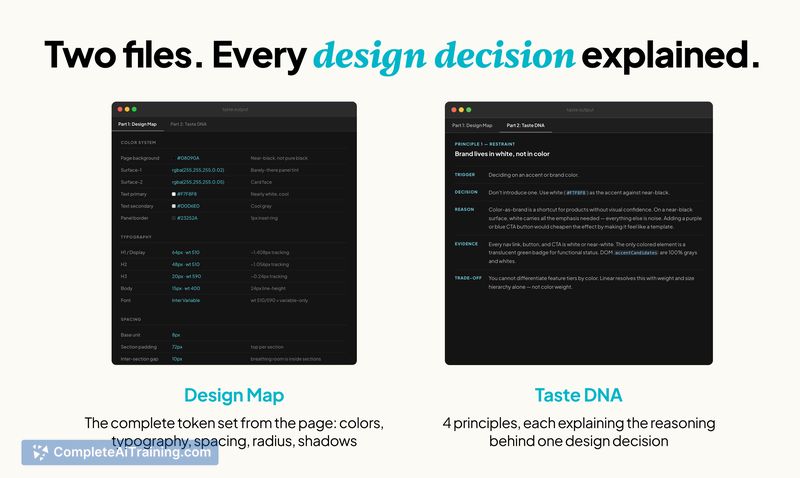
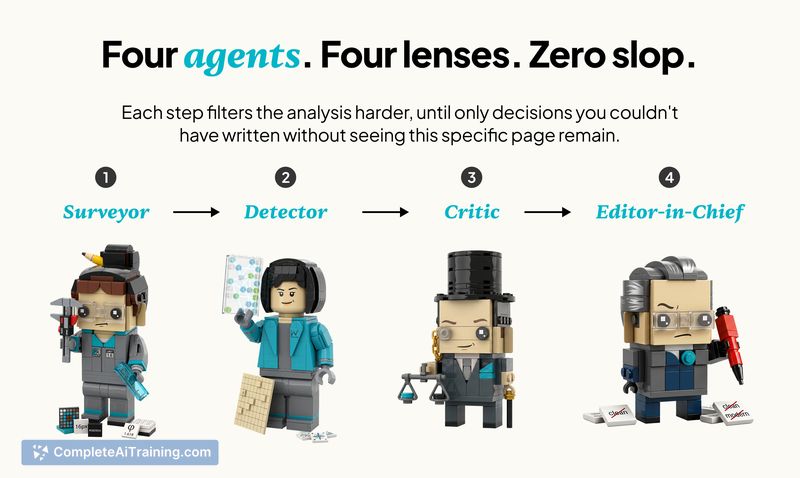
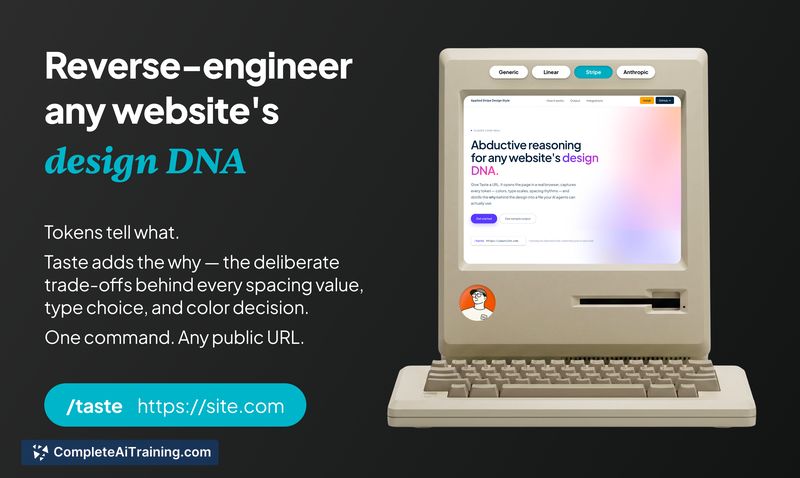
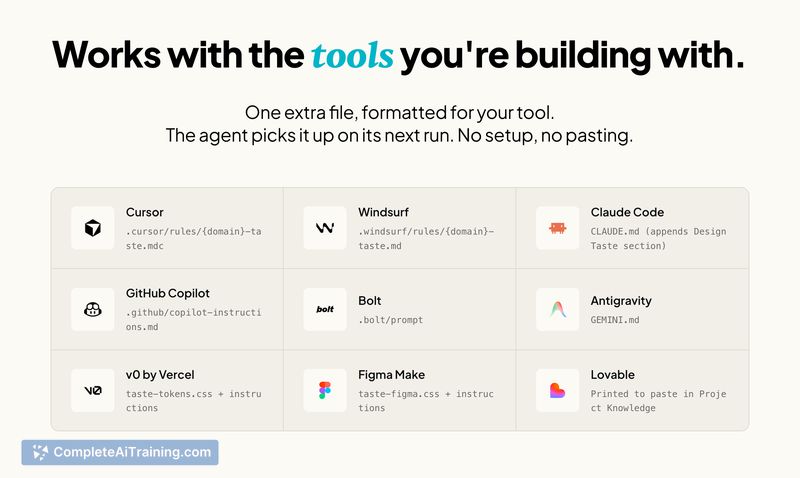
This tool addresses a common limitation in AI-assisted development, where generated designs often miss the proportional nuances of a target site. Instead of generating generic style tokens, the system explains the trade-offs that dictate specific layout choices. The pipeline actively rejects vague descriptors like "clean and modern" to force site-specific analysis.
Key Features
- Design DNA Extraction: Analyzes a target website to identify specific colors, type, and spacing metrics.
- Decision Reasoning: Generates explanations for design trade-offs rather than just listing static tokens.
- Strict Context Filtering: Automatically deletes any design principle that could apply to a website without having seen the specific target site.
- Structured Output: Exports the analysis directly into markdown and json files for immediate integration into development workflows.
Pricing and Value
Taste Lab is currently available for free. The tool delivers practical utility for developers who need to replicate specific visual styles without manually inspecting CSS or guessing spacing ratios. Since it outputs standard markdown and json files, teams can ingest the data directly into their existing build processes without extra conversion steps.
Pros
- Outputs structured markdown and json files for easy integration.
- Forces specific, site-dependent reasoning by banning generic design cliches.
- Focuses on the rationale behind spacing and typography rather than superficial aesthetics.
- Requires no complex configuration to analyze a static web page.
Cons
- The tool does not currently capture interaction styles, transitions, or motion behaviors.
- It is not well suited for teams needing to analyze consistency across entire product ecosystems or multiple dashboards at once.
- Output quality depends entirely on the source website having coherent, intentional design decisions to extract.
Taste Lab serves as a practical utility for front-end developers and AI prompt engineers who need to reverse-engineer a specific page's visual hierarchy. It works best when applied to individual, well-designed landing pages as a starting point for a new build. Users requiring animation analysis or cross-platform design system audits will need to look elsewhere for now.
Jobs Taste Lab suits
We checked Taste Lab against 500+ jobs; these get the most out of it.