AI tool
Vitra.ai
Vitra.ai is a content localization platform for marketing teams, agencies, and creators. It uses AI agents to translate and dub videos, adapt designs, and publish campaigns in over 100 languages from a single workspace.
About Vitra.ai
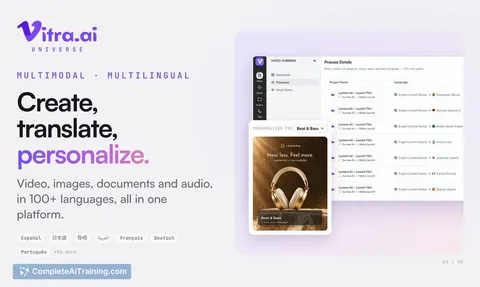
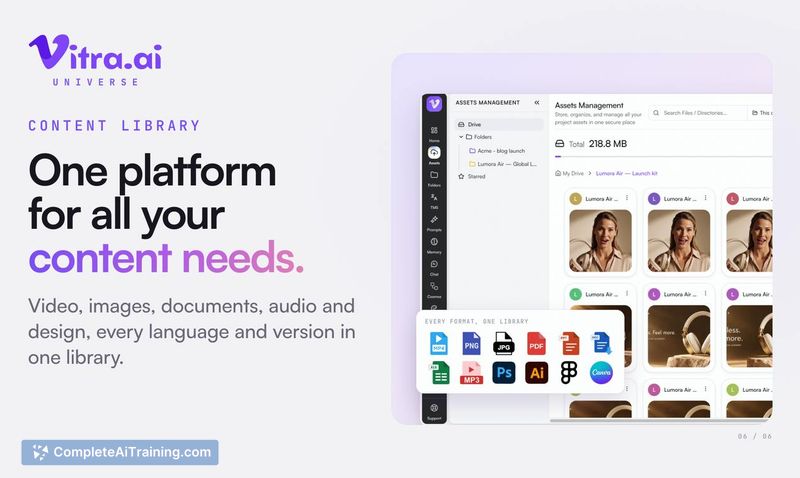
Vitra.ai is an agentic content platform that combines creation, translation, and localization for video, images, documents, and audio across more than 100 languages. It consolidates functions from multiple separate tools into a single environment called Vitra.ai Universe, which includes AI agents that run workflows end-to-end. The platform also incorporates brand kits, translation memory, glossaries, and style guides to maintain consistency across localized content.
Review
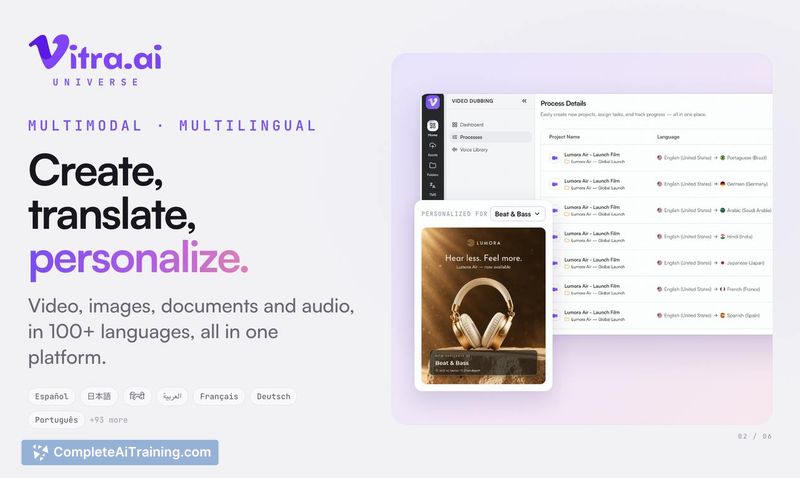
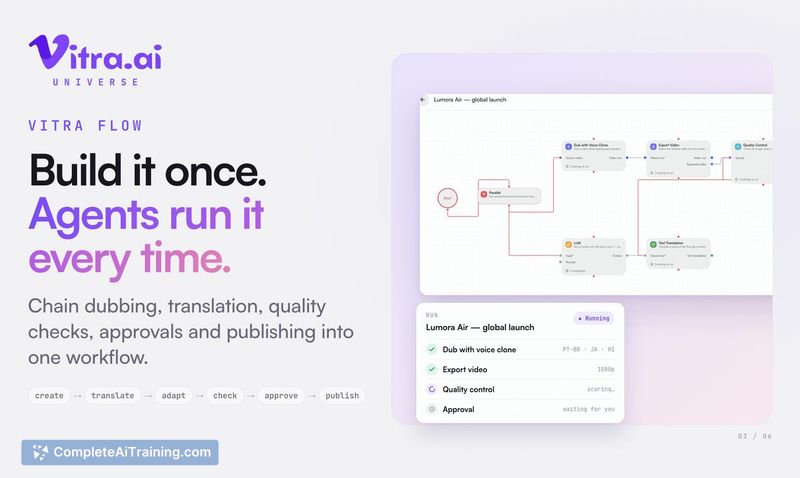
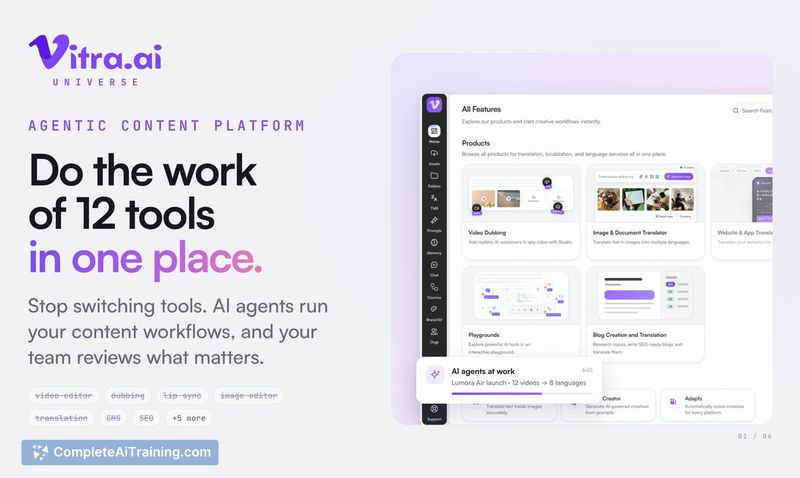
Vitra.ai enters the market as a newly launched platform, released this week, that targets marketing teams, content creators, agencies, and localization teams who typically work with a dozen or more separate tools. The core concept centers on Vitra.ai Universe, which brings together capabilities previously spread across the company's earlier standalone products-Translate.video, Translate.photo, Translate.website, and Short.video. The platform's defining mechanism is Vitra Flow, where AI agents handle the sequence of localization tasks while team members retain final approval.
Key Features
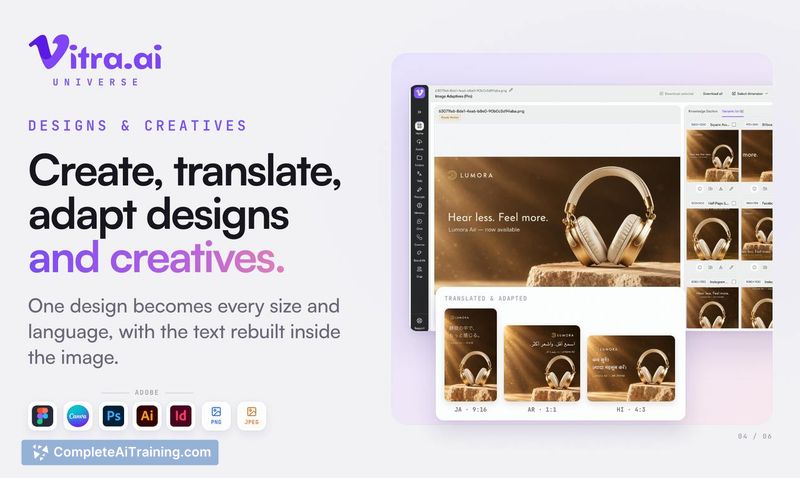
- AI agents within Vitra Flow execute multi-step content workflows-dubbing with lip-sync, translating designs from Figma, Canva, and Adobe files, adapting creatives to different sizes, checking quality, and publishing-with human approval as the final step.
- The platform handles video, image, document, and audio content types, performing translation and localization into more than 100 languages.
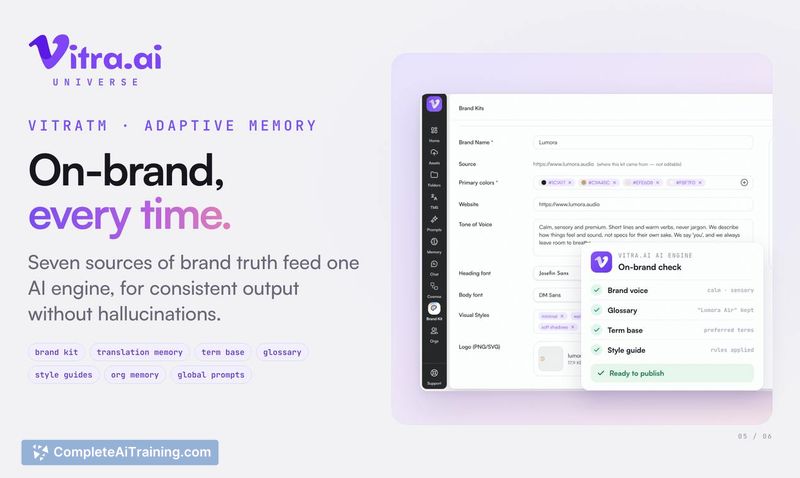
- A brand consistency system called VitraTM, described as adaptive memory, works alongside brand kits, translation memory, glossaries, and style guides to keep localized outputs aligned with brand standards.
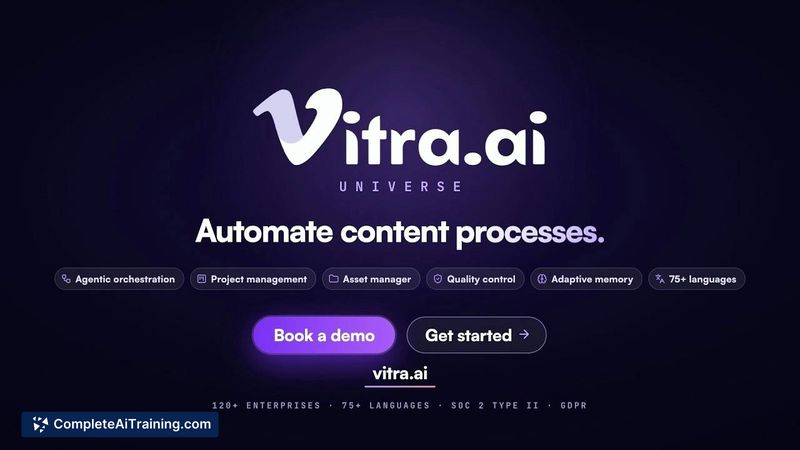
- Enterprise-level security certifications are in place: SOC 2 Type II compliance and GDPR readiness, with an option for customers to bring their own AI keys.
Pricing and Value
A free trial is available with no credit card required. The launch promotion includes 50% off the first month. Standard pricing beyond the first month is not publicly listed, and the maker comments on the Product Hunt launch do not clarify ongoing costs. One user noted that the absence of visible pricing may signal a focus on larger organizations rather than solo developers or early-stage startups.
Pros
- Consolidates multiple content localization functions into one platform, reducing the need to switch between separate tools.
- AI agents handle end-to-end workflow steps, from dubbing and translation to resizing and publishing.
- Lip-sync dubbing works across the supported language set, which is relevant for video-heavy campaigns.
- Brand consistency tools-translation memory, glossaries, and the VitraTM adaptive memory-apply automatically across projects.
- Enterprise compliance (SOC 2 Type II, GDPR) and bring-your-own-key options address security and data control requirements.
Cons
- Pricing details are not available publicly, which creates uncertainty for smaller teams or individual users evaluating the tool.
- The platform is not well suited for solo developers or founders who need transparent, self-serve pricing and a lightweight onboarding experience-the communication and feature set lean toward mid-size and enterprise teams.
- The approval step for languages no one on the team reads remains an open question; there is no indication of a built-in native-reviewer or back-translation verification step, leaving quality assurance for unfamiliar languages to the customer.
Vitra.ai fits teams that already manage multi-language campaigns and want to collapse their tool stack into a single workflow with AI agents. The platform's focus on brand governance and enterprise compliance makes it more relevant for agencies and marketing departments with established localization processes. Smaller operations or those needing clear upfront pricing will likely find the current offering harder to evaluate without direct contact with the company.
Jobs Vitra.ai suits
We checked Vitra.ai against 500+ jobs; these get the most out of it.