AI tool
Zero
Zero is an AI tool that generates concise summaries of long documents, articles, and reports. It is intended for professionals and students who need to quickly extract key information without reading the full text. The tool outputs plain-language ...
About Zero
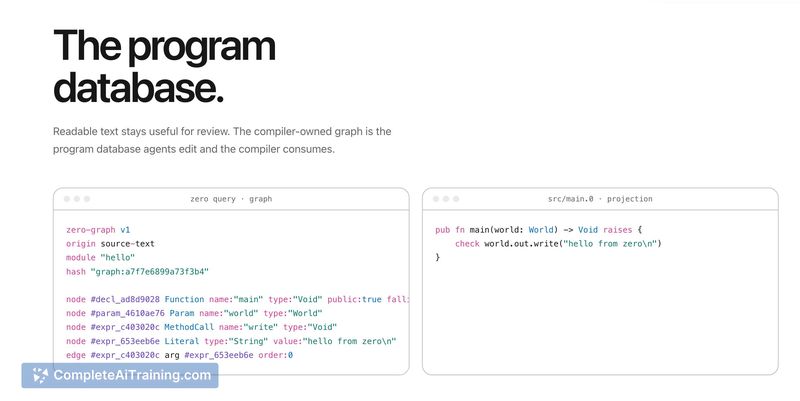
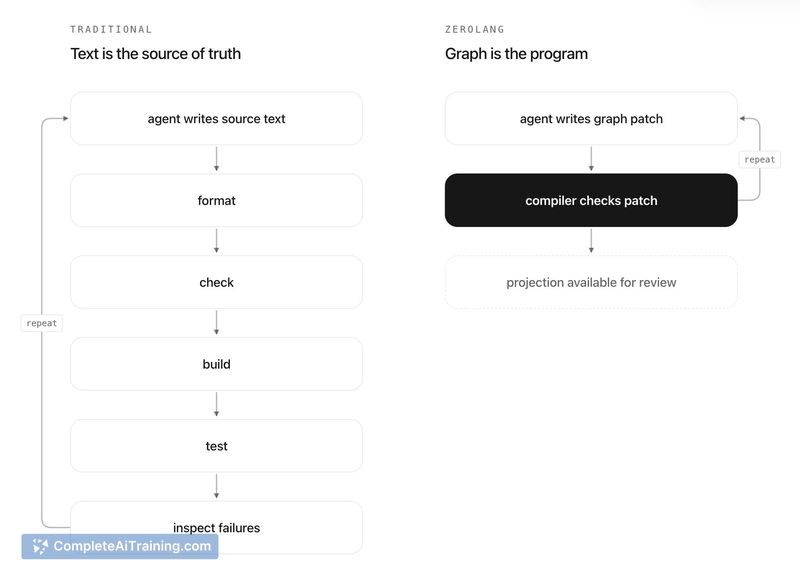
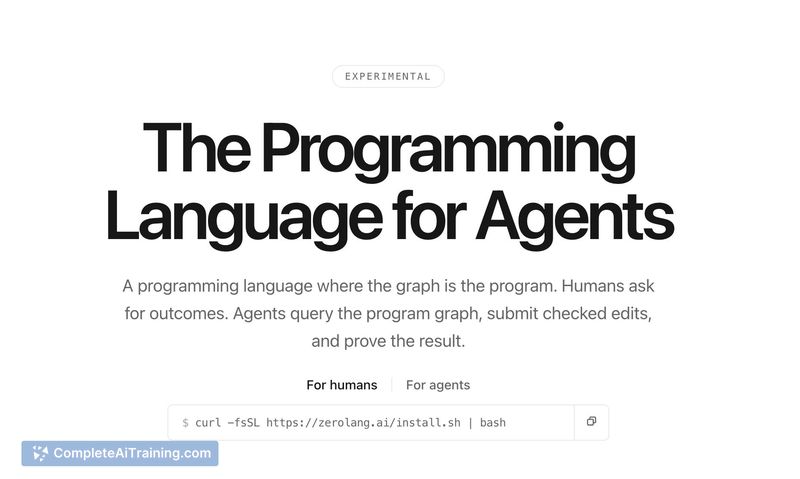
Zero is an experimental programming language created by Vercel, built specifically for AI agents that write code. Rather than editing source text, agents work with a semantic program graph, and the compiler checks each change as it happens. Humans can state what they want and then review readable code projections when necessary.
Review
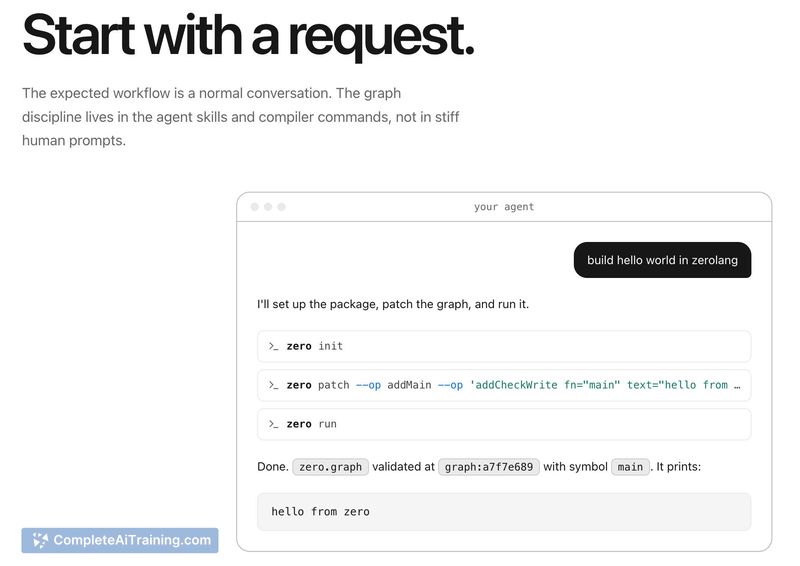
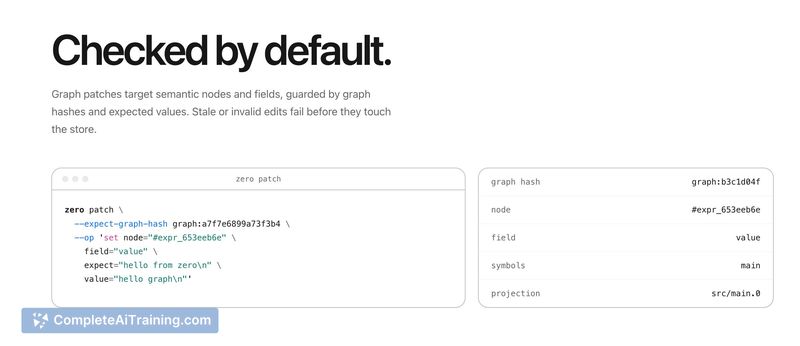
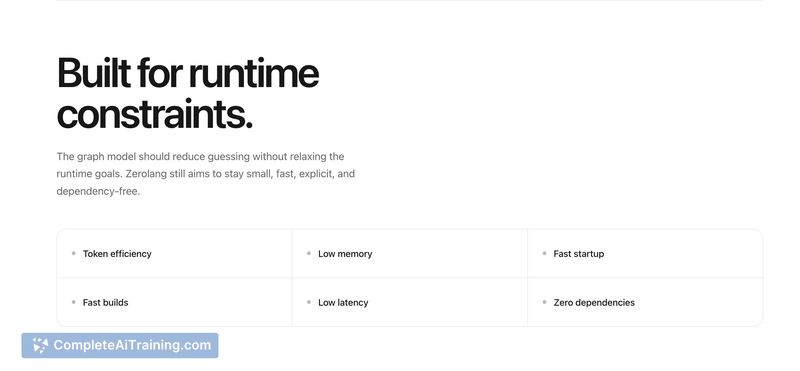
Zero launched this week as a free, experimental tool in the AI coding agents and LLM developer tools space. The language is designed from the ground up for agentic coding, emphasizing token efficiency, fast builds, low memory usage, and zero dependencies. It's still early, so the available information focuses on the core design rather than a long track record.
Key Features
- Semantic program graph: agents query and patch this graph instead of working with text files.
- Compiler checks every change: each modification is validated by the compiler as it happens.
- Human-readable code projections: people can review the generated code output when they need to.
- Built for agentic coding workflows, with an emphasis on token efficiency and low memory footprint.
- Zero dependencies: the language itself ships without external package dependencies.
Pricing and Value
Zero is listed as free. Pricing details beyond that are not yet defined. The value is in the design approach: the compiler handles correctness checks, so agents can work at a higher level of abstraction while humans only step in to review projected code.
Pros
- Compiler-enforced changes catch errors early in the agent's workflow.
- Token efficiency and fast builds are built into the language's foundation.
- Human review happens on readable projections, not raw graph data.
- Zero dependencies simplify deployment and setup.
- It's free to start using, which lowers the barrier to experimentation.
Cons
- It's experimental and brand new, so documentation and community support are still minimal.
- Humans who prefer editing source text directly may find the graph-based model less familiar.
- It's not well suited for teams working with established codebases in other languages that need immediate integration.
Zero is best suited for developers and teams who are actively working with AI agents and are comfortable with experimental tools. If you're building agentic coding workflows from scratch and want a language that treats the agent as the primary author, this is worth trying. For production systems with existing code in other languages, it's too early to depend on.
Jobs Zero suits
We checked Zero against 500+ jobs; these get the most out of it.
Alternatives to Zero
Other tools that do the same main job. Our AI compared Zero with similar tools and kept the ones you could use instead.