MCP server · Security
Aegis MCP server
by wei9072
Lets your AI check a code file before saving it and report facts like syntax errors, risky patterns, and new import cycles.

Aegis is a small helper program that your AI coding assistant can call before it saves a change to a file. It looks at the new version of the file and reports back plain facts, such as broken syntax, risky code patterns, or a new circular import. It is handy for developers who use an AI to edit an existing codebase and want a second pair of eyes on each change.
What is an MCP server? The 30-second version
On its own, your AI can only chat with you. An MCP server is a small helper program that gives your AI a new skill or a connection to a tool. This one, Aegis, gives your AI the ability to inspect a proposed file write and describe what changed before the file is saved. When you ask your AI to edit a file, it can call Aegis first and use the facts it gets back to decide what to do.
What this MCP server does
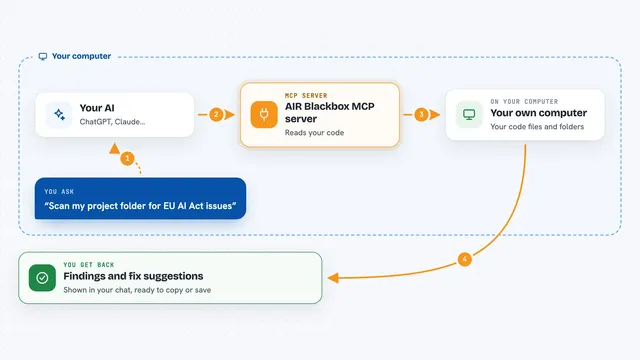
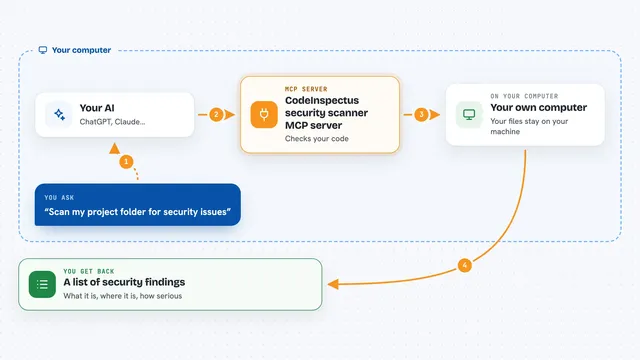
You ask your AI to change a file, for example to fix a bug or add a function. Before saving, your AI sends the new content of the file to Aegis. Aegis reads the file, compares it with the old version if you gave one, and checks it against a set of rules. It then sends back a list of findings: things like a syntax error, a risky pattern such as a hardcoded password, a counter that went up, or a new circular import between files. Your AI reads those findings and decides whether to keep the change, adjust it, or ask you.
 Click to zoom
What you can do with it
- Check a file for syntax errors before saving it
- Spot risky code patterns like hardcoded secrets or weak random numbers
- See if a change adds a new circular import between files
- Compare the old and new version of a file and see what structural counters changed
- Get a list of facts about a proposed change, with file name and line numbers
- Mark a finding as acknowledged with a comment so your AI knows you saw it
Try asking your AI
- “Before you save that change to src/auth.py, run it through Aegis and tell me what it finds.”
- “Check this new version of the file for any security patterns and show me the findings.”
- “Did my edit introduce any new circular imports in the project?”
- “Compare the old and new version of this file and list any counters that went up.”
What it gives back to you
Aegis sends back a list of findings in a structured format. Each finding tells you the kind (syntax, signal, security, or workspace), a rule name, the file, and often the line number and a short snippet. For signals it can also show the value before, the value after, and the difference. Your AI shows you these findings in the chat, usually as a short list or a summary.
Before you start
What you need
- A Rust toolchain version 1.74 or newer
- Git to download the code
- An MCP-aware client such as Claude Code or Cursor
Good to know
Aegis only describes what it sees; it does not block or fix anything, so you and your AI still need to decide what to do with the findings.
Install it with your AI
Add Aegis MCP server to your AI, no technical skills needed
You don't install anything by hand. You copy one prompt, paste it into an AI that can work on your computer, and it checks, installs and connects the server for you, asking you when it needs something.
Sign in to get the install prompt
Members get a ready-made prompt that lets the Claude desktop app check Aegis MCP server, install it and connect it for them, step by step. You don't need any technical skills: you copy, paste and answer a few questions. Your connected AI can also find and install any of the 4,361 MCP servers here for you.
Who it's for
Developers who use an AI coding assistant on an existing codebase and want a quick factual check on each file change.