
AI news ·
AHLA/HTNG version 2 brief presents AI-native hospitality commerce ecosystem diagram
A new hotel industry blueprint maps how AI agents and direct booking rails should connect. Hotels that don't shape the standards now risk ceding guest relationships to intermediaries.
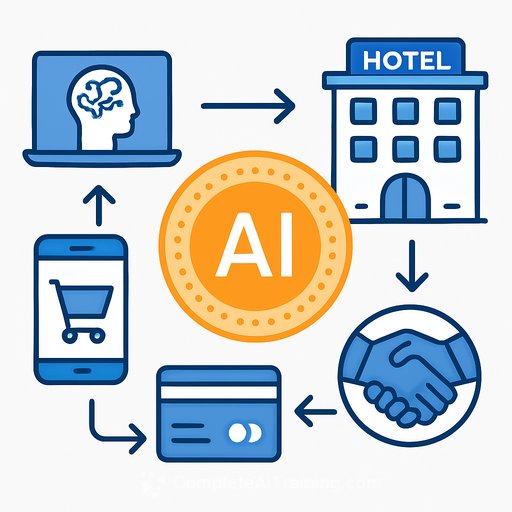
The AHLA/HTNG Global Technology 100 published Version 2 of its strategic brief on June 8, 2026, introducing the DART taskforce's AI-Native Hospitality Commerce Ecosystem Diagram. The five-layer reference architecture spells out how AI agents, hotel systems, and direct booking rails should interconnect - and the window for hotels to shape the technical standards is narrowing.
The centerpiece of V2 is a layered model that maps the journey from discovery to on-property experience. The Protocol Rails layer presents the most consequential fork: a direct path where hotels expose their own MCP endpoints to AI agents, and an indirect path where third-party intermediaries sit between the guest and the property. Which one gains traction will determine who controls the guest relationship and the economics of each AI-initiated booking.
The role of MCP in direct connections
The brief anchors real-time connectivity in the MCP standard, introduced by Anthropic in late 2024 and adopted by OpenAI, Microsoft, and Google in early 2025. MCP acts as a universal connector designed for large language models. For hotels, that means pushing live availability, rates, inventory, and content directly to AI assistants instead of relying on stale crawled snapshots. The document is candid about the maturity gap: implementations remain limited, and how AI assistants will route bookings is still unresolved.
A dual strategy for visibility
The brief sharpens its core thesis from V1: hotels need two things to avoid being misrepresented or routed quietly through intermediaries. First, open robots.txt to reputable crawlers like Common Crawl so property content enters the knowledge base of large language models. Second, prepare for real-time data delivery via MCP. Without the second piece, even well-crawled content will lag behind guest demand when availability changes.
Quick-win priorities for this quarter: open crawler access, refresh and structure property content with high-resolution images and schema.org markup, and start MCP integration conversations with CRS, PMS, and booking-engine partners. Medium-term moves include confirming that the direct booking engine can handle AI-driven handoffs, tracking AI-originated traffic, and monitoring how the property appears in AI-generated summaries.
Why this matters for hospitality and events
The reference architecture is not a final blueprint - it is a map that operators and brands can use to see the emerging battleground. Hotels that build direct MCP connections early will have a voice in how the rails work. Those that wait may find themselves locked into intermediaries' monetization models. As the brief itself warns, the time to act is now, while the standards are still taking shape. For practical next steps, explore the AI for Hospitality & Events training resources.