
AI news ·
AI chatbots take over job screening interviews as recruiters struggle with application volumes
Companies are using AI chatbots to conduct initial job interviews via phone, text, and video. Experts say preparation, clear answers with metrics, and good audio setup matter as much as in any human interview.
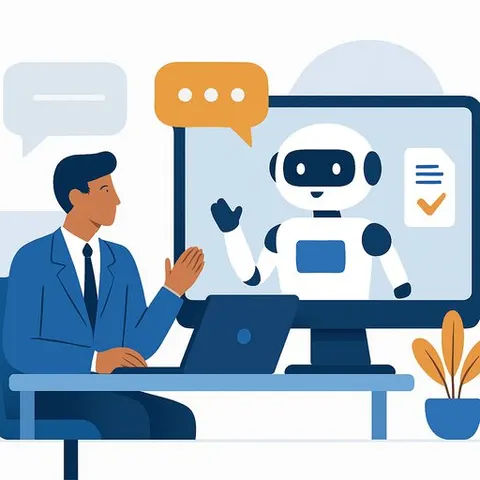
AI Chatbots Are Now Screening Job Candidates
Recruiters drowning in applications from job boards are turning to artificial intelligence to handle the initial interview stage. Companies now use chatbots to conduct screening interviews through phone calls, text messages, and video chats with on-screen avatars.
The trend is expanding. Research from hiring platform Greenhouse shows more jobseekers report facing AI interviews, though some candidates withdraw from the process entirely. Whether they're unsettled by the experience or simply unserious about the role remains unclear.
Preparation Still Matters Most
The fundamentals of job interviewing haven't changed. Review the job description, research the company, and understand what the role requires before any interview-AI or human.
"The more prepared you are, the easier it will be to tailor your responses, even when you're interacting with AI instead of a person," said Amanda Augustine, a career coach at Careerminds.
Practice Speaking Out Loud
An AI interview lacks the warm-up small talk and rapport-building of a human conversation. There's no point in smiling or trying to break the ice with a chatbot.
The solution is practice. "You need to practice out loud," said Priya Rathod, workplace trends editor at Indeed. "And when I say practice out loud, I mean, say the actual answers out loud, because the chatbot needs to record what you're saying."
Online interview simulators can help. They record your answers, provide feedback on content and delivery, and let you practice speaking into a camera within time limits-all without the natural back-and-forth of a live conversation.
Remember you're providing information to a machine, not having a conversation. Be descriptive and clear. An AI interviewer cares less about your tone and more about what you actually say.
Use the STAR Method for Behavioral Questions
AI interviewers ask behavioral questions expecting concrete examples with numbers and metrics. Vague answers fail.
Use the STAR method: situation, task, action, result. Walk through a specific work situation, the task assigned, the action you took, and the measurable result. Instead of saying "I saved time with an AI tool," say "I reduced transcription time by 40 minutes per week using an AI transcription tool."
"Those are the kinds of questions that AI relies heavily on. And the trap that we see a lot of people falling into is giving really vague answers," Rathod said.
Technical Setup Still Counts
Don't neglect the physical setup. Test your audio and video in advance. Ensure lighting is bright and hits your face. Raise your laptop to eye level so you're not looking down at the camera.
"Small adjustments, such as using a stack of books or a ring light, can make a noticeable difference in how polished and professional you present," Augustine said.
Don't Use AI to Generate Your Answers
Jobseekers might be tempted to use AI to craft responses, assuming a machine won't notice. That assumption is wrong.
"That's a big no-no because it's pretty obvious" to both the AI tool and anyone reviewing the recording, Rathod said. Using AI for your answers "can sometimes immediately disqualify you."
If you're stuck, ask the chatbot to clarify or repeat the question instead.
For HR professionals managing recruitment, understanding how these tools work-and their limitations-matters. AI for Human Resources covers the broader implications of AI-powered hiring systems. Those overseeing recruitment strategy may benefit from the AI Learning Path for CHROs, which addresses workforce analytics and recruitment automation.