
AI news ·
AI hiring tools create legal risk as discrimination lawsuits and state regulations mount
AI hiring tools are drawing class-action lawsuits and a patchwork of city and state regulations targeting discrimination, disability exclusion, and lack of candidate notice. One vendor faces claims it scraped data on over one billion workers to assign a 0-to-5 score without required disclosures.
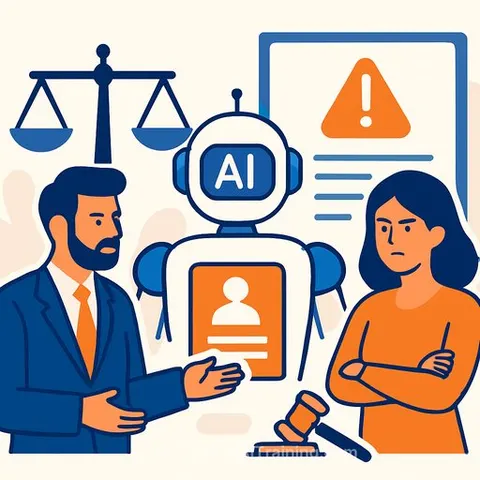
Employers across the country have adopted AI tools to screen, rank, and surface job candidates at scale, often processing thousands of applications in seconds. That speed creates legal exposure: a growing wave of class-action lawsuits and a patchwork of state and city regulations are targeting AI-driven hiring practices that discriminate, exclude disabled applicants, or operate without candidate notice.
Litigation targets the hiring algorithm
Several high-profile cases show where the liability is landing. In Mobley v. Workday, Inc., a federal court granted preliminary collective certification, opening the door for potentially millions of plaintiffs to join a suit alleging that Workday's AI screening tool discriminates on the basis of age and disability. The case remains in discovery.
In Kistler v. Eightfold AI Inc., the vendor faces claims it operated as an unregistered consumer reporting agency, scraping data on more than one billion workers and assigning a 0-to-5 "likelihood of success" score without the disclosures required under the Fair Credit Reporting Act. Harper v. Sirius XM Radio, LLC drives home a harder lesson for employers: using a third-party vendor's tool does not insulate a company from discrimination claims. That case alleges an AI system evaluated candidates using data points that functioned as unlawful proxies for race.
Disability accommodation does not disappear with automation
Overreliance on AI without meaningful human review creates particular exposure under the Americans with Disabilities Act. The Department of Justice and the Equal Employment Opportunity Commission issued joint guidance in 2022 warning that tools built to predict "who will be a good employee" by comparing candidates to current successful staff can exclude people with disabilities. If those individuals were underrepresented in the comparison pool, the model learns to screen them out.
Facial and voice analysis assessments present a similar problem. They can filter out applicants with autism or speech impairments before the candidate ever sees an option to request an accommodation. Employers can reduce this risk by providing information about the assessment and the accommodation process before the evaluation begins. A human-reviewed alternative can serve as a reasonable accommodation, letting organizations evaluate these candidates fairly.
A shifting patchwork of state and local rules
While federal guidance has shifted with changes in administration, cities and states have moved forward. New York City now requires a bias audit, public disclosure, and candidate notice before an employer can use an "automated employment decision tool." Illinois has taken action on AI video interview analysis and discriminatory impact. California, Colorado, New Jersey, and Oregon are among the states pursuing their own legislative or administrative measures. Employers should prepare for a fragmented regulatory environment absent significant congressional action.
Candidates are gaming the system
The AI arms race runs both ways. Some applicants now insert hidden white-on-white text - invisible to a human reader - designed to manipulate AI screeners into assigning a favorable ranking regardless of the resume's actual content. A recent Duke University study found that 1% of roughly 200,000 resumes in its dataset contained these prompt injections.
Candidates are also using AI to draft cover letters and coding samples. Employers trying to detect and exclude AI-generated materials should proceed cautiously. Stanford research found that leading AI detectors misclassified more than 60% of essays written by non-native English speakers as AI-generated, because the detection parameters reward linguistic sophistication that native speakers produce more easily. Today's detection tools remain unreliable enough that using them may introduce more harm than benefit.
Practical steps for HR teams
HR leaders should start by inventorying every tool that screens, ranks, or recommends candidates - including tools used for years that were never labeled as "AI." From there, ask difficult questions of internal and external technology teams to understand the parameters driving AI-powered decisions. Building periodic audits into the system helps identify potential bias before it triggers a charge.
To guard against prompt injection, strip formatting from application documents before they pass through an AI reviewer. Disclosing AI use after the initial screening, and telling applicants what tools are in use and how to request an accommodation, allows qualified candidates with disabilities to participate fully. These steps reduce litigation risk and prepare employers for the growing complexity of state and local regulation. For teams building or refining these processes, structured learning paths like AI for Recruitment Coordinators offer practical grounding in candidate screening and hiring workflows. Broader guidance across the function is available through resources on AI for Human Resources.
Why this matters for HR professionals
The legal risk in AI hiring does not typically come from a rogue algorithm making moves an employer never intended. It comes from a hiring team using an AI system as part of its decision-making process without fully understanding how it works. The tools that promise consistency and speed also carry the capacity to exclude at scale - and both plaintiffs' attorneys and regulators are paying attention. Knowing what your AI does, auditing what it produces, and building a genuine accommodation path into the process are no longer optional. They are the baseline for defensible hiring.