
AI news ·
AI-powered job scams fool even experienced journalists as recruitment fraud rises sharply in the UK
Recruitment scams more than doubled in UK reports between 2022 and 2024, with Monzo saying over 10,000 customers were hit in 2025 alone. AI tools now let fraudsters craft personalized fake job offers that are far harder to detect.
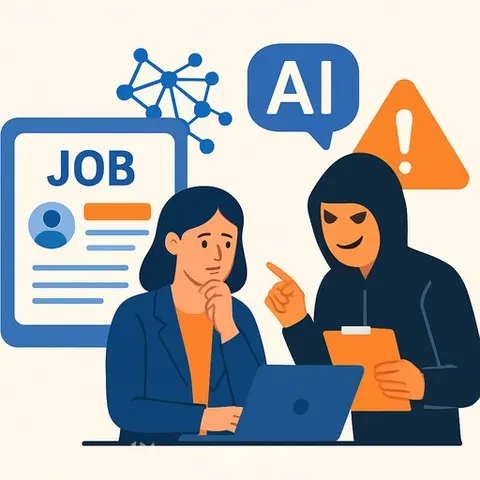
Recruitment scams are booming. Here's how to spot them before you lose money
A headhunter emailed with a job prospect that seemed perfect: a journalist role with a leading US technology company, part of a confidential expansion, tailored to my specific expertise. The timing was ideal. I was returning from maternity leave and looking for work.
The email passed basic checks. The headhunter had a real LinkedIn profile with the same name and photo. The message referenced my previous roles and areas of focus. It felt personal.
When I asked about next steps, the headhunter offered feedback: my CV undersold my leadership skills. She could connect me with a specialist who would improve my profile - for a fee.
That was the scam.
The numbers are climbing fast
Recruitment scams are surging across the UK and US. Report Fraud, the UK's national cybercrime reporting service, received more than twice as many reports of recruitment scams in 2024 compared with 2022. Lloyds Banking Group reported a 237% rise in job scams from January to August last year. Monzo said more than 10,000 of its customers fell victim to such scams in 2025.
AI tools have made running these scams easier and more effective. "You can sit nowadays anywhere in the world and run a large job scam against people in the UK," says Keith Rosser, chair of JobsAware, a not-for-profit organisation that helps workers report scams. "It's not very difficult, you've got a reasonable chance of success, and you've got a very low chance of being caught."
How the scams work
Recruitment scams take different forms. Task scams offer money for simple online activities like liking TikTok videos or reviewing products. These often target young people and students looking for remote work. They may pay small amounts initially to build trust, then ask for fees to retrieve funds or upgrade accounts.
More sophisticated scams target senior workers. Scammers impersonate real recruiters or employers - sometimes by cloning LinkedIn profiles - and dangle bespoke roles that match a candidate's experience exactly.
Once they've hooked a candidate, they ask for money under various pretexts: CV improvement, training, equipment, travel costs, visa fees, even fake background checks. Some scammers have asked victims to call premium-rate phone numbers for interviews, charging them per minute.
Even if no money changes hands, scams harvest personal data. Victims provide bank details, passport information, or other identifying documents that can be used for identity theft or to take out loans in their name.
AI makes scams harder to spot
Five years ago, you could often spot a scam by poor grammar. That's no longer true.
Lisa Webb, consumer law expert at Which?, says the growing accessibility of AI means criminals can produce scams faster and with higher sophistication. "They can make them more relevant," she says.
In my case, the scammer appeared to have used ChatGPT or similar tools to create a job description based directly on my CV. The role was located in my city, offered hybrid work as I'd requested, and paid significantly more than I'd suggested. The writing was polished and professional.
Oleksandra Lietova, head of marketing at educational platform Ratatype, has noticed the shift. She used to receive obviously fake offers with vague messages. Recently, she received emails appearing to be from Google, Meta, and other recognisable companies, complete with real logos. The senders' addresses didn't use proper company formats and contained suspicious links, but the initial impression was authentic.
Why people fall for them
Recruitment scams exploit psychological vulnerability. "A lot of people feel as if they've been found, almost - 'Somebody wants me!'" says Rosser.
The UK unemployment rate is at a five-year high. The US experienced its weakest year for job growth since the pandemic. When jobseekers are desperate, they become prime targets.
Candice Jackson, who works in customer support for tech and healthcare, lost her job in 2023 and struggled to find similar work. Her mortgage company was pressing her; her house was at risk. When recruiters on LinkedIn offered seemingly perfect opportunities, she jumped at the chance. One referred her to a CV specialist on Fiverr.
She knew something felt off. "All of the verbiage they were using was: urgent, urgent, urgent. You have to do this now, now, now," she says.
After being scammed, Jackson's main feeling was embarrassment. Research by the Cyber Helpline found that victims rate the mental health impacts of fraud as much more significant than the financial losses. "The primary thing is feeling stupid," says Linda Homewood, fraud and scams ambassador at the Cyber Helpline.
This reaction is misplaced. "These are criminals, and you are a victim of a crime," says Webb. "I really, really want victims to know that this is not their fault."
Red flags to watch for
Be suspicious of unsolicited contact, especially messages from generic email addresses like Gmail or Yahoo. Communications over WhatsApp or social media are another warning sign.
If you're unsure about a company, look it up on Companies House. If you see a suspicious job advert, contact the hiring company directly to verify it's legitimate.
Check the sender's email address carefully. Look for mismatches between claimed location and phone number area codes. If a LinkedIn profile appears to match a recruiter but their posts are in a different language or from a different country, investigate further.
In my case, the "headhunter" claimed to be based in Madrid but used a Tennessee phone number. The CV specialist appeared to be in Tennessee. The email came from a Gmail address, not a corporate domain.
Webb acknowledges these checks aren't always practical. "Scams work often because they're targeting people who are time-poor, or distracted, or in the middle of something," she says. Online recruitment platforms bear some responsibility and should implement more robust systems for verifying job adverts, says Rosser.
If you've been scammed
Contact your bank immediately using the number on the back of your card. In some cases, you may recover your money.
Report the incident to the police via Report Fraud, even if you don't expect immediate action. Reporting helps police identify patterns of fraud.
Be aware of recovery scams. After falling victim to one fraud, you may be contacted by someone claiming to be a lawyer or recovery agent who can get your money back - for an upfront fee. This is another scam.
Criminals maintain "suckers lists" of people they've successfully targeted before, using them to launch additional frauds. Victims should expect follow-up attempts.
What HR professionals need to know
For those hiring, recruitment scams create a secondary problem: your company's reputation and recruiting channels can be exploited. Scammers clone LinkedIn profiles of real recruiters and send offers in your company's name.
Consider implementing verification protocols for candidates who receive unsolicited offers. Internal communications about how legitimate recruiting processes work can help protect both your organisation and jobseekers.
Understanding how AI enables these scams is essential for HR leaders. AI Learning Path for CHROs covers how to implement AI safely in recruitment while protecting against misuse.
Jackson, who lost money to a scammer, eventually recovered her funds. She lost her home, but she's now staying with family and says she's in a better position to search intentionally for work. She's expecting an offer soon.
I never lost money. I lost only an hour refining my CV and some pride. But the experience was a reminder that scammers are getting better at their craft, and even sceptical people can be caught off guard. The difference between falling for a scam and spotting it often comes down to circumstances beyond a victim's control.