
AI news ·
Airbnb CEO Brian Chesky says workers who adapt to AI will thrive, pure people managers will not
Airbnb CEO Brian Chesky says managers who only oversee people and run meetings will become obsolete as AI reshapes work. He argues leaders must combine coaching with hands-on technical skills to stay relevant.
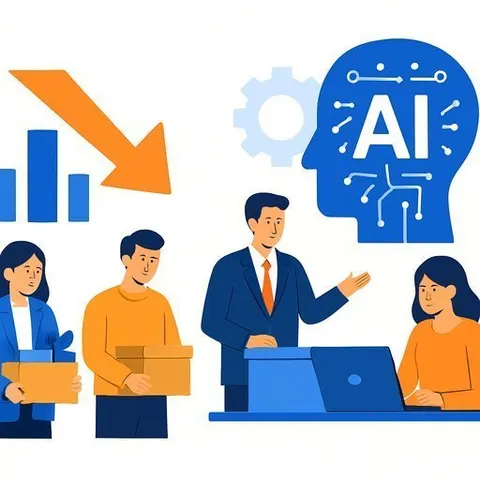
Airbnb CEO: Managers Who Only Manage People Will Become Obsolete
Brian Chesky, Airbnb's CEO, says workers should not fear AI as long as they evolve alongside it. In a recent podcast appearance, he drew a direct line between adaptability and career survival, identifying two groups likely to struggle: traditional people managers and those resistant to change.
His comments reflect a broader debate among tech leaders about AI's impact on work. Jensen Huang at NVIDIA argues AI will make employees "busier than ever," suggesting the technology increases output rather than eliminates roles. Amrita Ahuja, CFO of Block, takes a different view, calling job reductions due to AI an "inevitability."
Chesky's position sits between these poles. He sees AI as a structural shift that rewards those who learn, reskill and find new ways to contribute.
The End of Pure Management
Chesky is blunt about the future of traditional oversight roles: "I do not think people managers will have any value in the future." He means managers who only manage people and meetings.
"You cannot just be these managers where you are people's therapists, and you are just doing meetings, you are doing one-on-ones," he said.
Instead, leaders must become "hybrid people managers" who combine coaching with hands-on technical or functional work. Influence should come from expertise and demonstrated contribution, not title alone.
Coinbase is already restructuring around this model. The company announced a 14% workforce reduction and plans to flatten its organization to five layers below CEO Brian Armstrong. The goal is more agile teams where every leader is a "strong and active contributor" - what Armstrong calls a "player-coach" approach.
AI at Airbnb
Chesky calls AI "the best thing that ever happened to Airbnb." He says founder-led companies and those ready for transformation are best positioned to capture AI's benefits.
Airbnb's CFO Ellie Mertz told Fortune that AI has lifted customer satisfaction by getting guests and hosts "what they need very quickly." The company continues investing in generative AI across products and customer support, focusing on speed, personalization and efficiency.
Self-Disruption as Strategy
Chesky frames AI adoption as a competitive necessity. Leaders must act before market forces act on them.
"If you do not disrupt yourself, someone else will," he said. "And we are not going to allow people to disrupt ourselves."
His message to organizations is clear: treat AI as a structural shift, not a side project. Redesign roles, flatten hierarchies where it improves speed and make leaders active contributors.
For individual workers, the takeaway is equally direct. Evolve your skills with AI. Deepen your domain knowledge. Lean into tools that amplify your impact. Those who adapt will advance.
Learn more about AI for Management and AI for Human Resources to understand how these shifts affect your role.