
AI news ·
AI's replacement of entry-level jobs threatens to cut off the pipeline of future business leaders, expert warns
AI is shrinking entry-level hiring, and that could leave companies short of experienced managers within a decade. Graduate job postings have dropped 30% in the UK and US over three years.
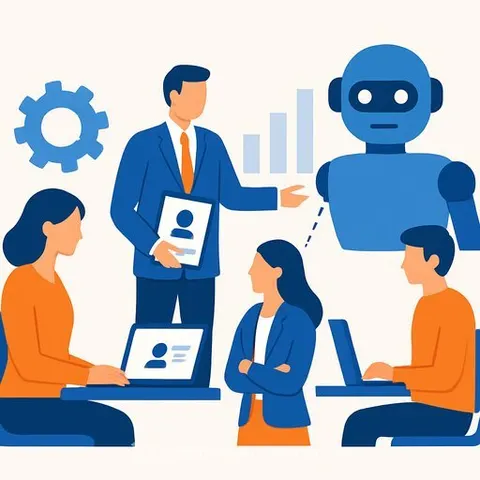
AI is cutting entry-level jobs. That could create a bigger problem later.
Artificial intelligence is eliminating the positions that traditionally taught new graduates how to work. As AI tools handle customer service, marketing, software development, and human resources tasks faster than teams of people once did, companies are hiring fewer entry-level employees. The risk: a shortage of experienced managers in five to ten years, when those early-career workers would have moved into leadership roles.
Graduate-level job advertisements in the UK and US have fallen 30% over the past three years, according to recent data. Students report finding it harder to secure their first roles.
The concern extends beyond today's hiring freezes. Most organisations operate as pyramids-many people enter at the bottom, fewer rise to management. If companies stop hiring graduates, where will tomorrow's middle and senior managers come from?
Not every layoff is actually about AI
Some companies are attributing job cuts to AI when the real cause is poor management or weak business performance. This distinction matters because it inflates how quickly AI is actually replacing workers.
Large AI investments have not yet produced returns. Companies needing to offset those costs sometimes frame layoffs as part of an AI strategy rather than admitting management failures. Investors respond better to "we're investing in AI" than "we've been poorly managed"-and share prices reflect that messaging.
What HR leaders should do now
The productivity gains AI creates give businesses a choice. They can cut 10% of their workforce, or they can free up that 10% of employee time for higher-value work: improving products, better customer understanding, and building business strategy.
Organisations that invest in developing their workforce will compete better than those focused solely on short-term savings. That means:
- Creating pathways for graduates and junior staff to develop skills AI cannot replicate-judgment, communication, empathy, and social intelligence
- Using AI tools to support and amplify employee capabilities rather than replace them
- Building AI literacy across the organisation so workers can collaborate effectively with the technology
- Protecting learning opportunities so employees continue developing expertise instead of outsourcing all routine work to machines
Relying too heavily on AI without building foundational skills creates a trap. Workers become more productive short-term while losing the knowledge and judgment that careers are built on. Outsourcing too much to tools means people never stretch themselves.
The skills that matter most
As AI becomes more capable at routine tasks, the human advantage lies in areas machines struggle with. Judgment, communication, empathy, and social intelligence are likely to become more valuable, not less.
For experienced workers, the challenge is learning to work alongside AI technology that moves faster than they're comfortable with. For highly skilled employees, AI can double or triple productivity. But that only works if they continue developing their own expertise.
HR leaders should prepare for an AI-capable workforce by treating people as the organisation's most valuable asset. That means investing in their development and helping them become proficient with AI tools-not replacing them.
Learn more about AI for Human Resources and strategic approaches to workforce management in an AI-driven environment.