
AI news ·
BMW Group uses AI to cut battery cell testing time and materials by more than 50 percent
BMW Group's AI models cut battery cell testing time and material use by more than 50% at its Munich facility. The system may also eliminate quarantine storage between production stages.
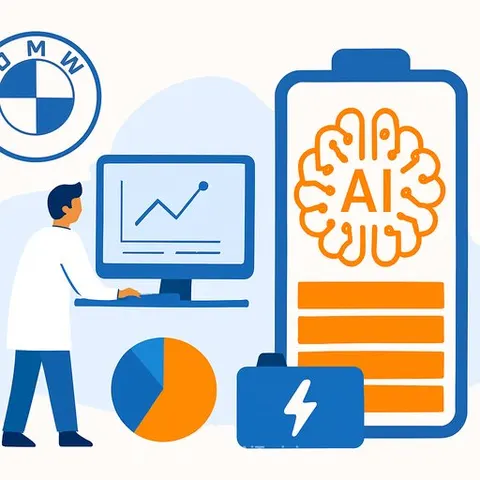
BMW Group uses AI to cut battery cell testing time by half
The BMW Group is piloting AI models at its Battery Cell Competence Centre in Munich that predict how production parameters affect battery cell performance. The models use real-time and test data to reduce time and material consumption for individual process steps by more than 50 percent.
Battery cell development traditionally requires extensive testing. Every process change must be validated through trial runs, consuming equipment capacity and raw materials. The new AI approach replaces much of this guesswork with data analysis that identifies which settings produce which outcomes.
How the models work
The AI systems analyze patterns in production data to reveal how specific parameters affect performance, quality and costs. The approach mirrors how an experienced chef manages ingredients and timing - the learning curve is now being transferred to battery manufacturing.
The models make processes more robust by enabling targeted quality assurance rather than incremental trial and error. Even small deviations from defined standards can impact a cell's performance and stability, so precise control matters.
Eliminating quarantine storage
One production stage could be fundamentally reshaped. Battery cells currently must be stored at a specific temperature after initial charging before further processing - a period called "quarantine" that consumes time and storage space.
AI systems may eventually analyze cells at an earlier stage, potentially making quarantine obsolete. This would mark a significant step forward in production efficiency.
From prototype to production
The BMW Group is already planning to scale the models beyond pilot operations. Christian Siedelhofer, Head of Technology Development Lithium-Ion Battery Cells, said the company is examining how to enable cell producers to apply the process themselves and exploring additional use cases across the production network.
The Group's consolidated expertise across the value chain supports this approach. The Battery Cell Competence Centre develops future cells; the Cell Manufacturing Competence Centre transfers concepts into near-series production; and the Cell Recycling Competence Centre advances direct recycling. AI for operations can optimize individual steps while making knowledge available across the entire chain.
University partnership accelerates development
A joint research project called Insight, running since 2024 with the Centre of Excellence for Robotic Technology at the University of Zagreb, is structuring production data and developing AI models. Doctoral candidates and undergraduate students contribute expertise in engineering, electrical engineering and IT.
Stefan Kershcer, Head of Technology Development Battery Cells at the BMW Group, said the project helps attract talent to AI and battery cell work. "We are delighted when young talents decide to embark on a career with our company."