
AI news ·
Chinese courts side with workers displaced by AI in series of rulings
A Chinese court ruled that a tech company illegally fired a worker after replacing him with A.I. - the third such ruling in Beijing's push to limit job losses from automation.
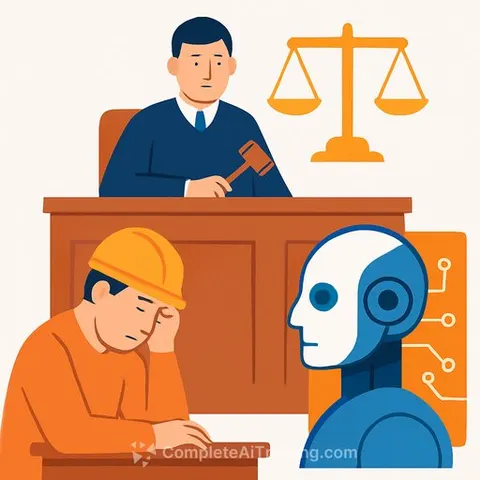
China Uses Courts to Protect Workers Displaced by A.I.
A Chinese court ruled late last month that a tech company illegally laid off a worker after replacing him with artificial intelligence software. The decision marks the third time Beijing has publicly sided with workers displaced by A.I., signaling a coordinated effort to constrain job losses even as the government pursues aggressive A.I. development.
The Hangzhou Intermediate People's Court wrote that "the development of artificial intelligence technology should be applied to liberating labor, promoting employment and improving people's livelihood." The ruling acknowledged that employers can make technological changes, but said they must protect workers' rights in the process.
China has invested billions to become an A.I. superpower and integrated the technology across industries from manufacturing to logistics. But rapid deployment has created a political problem: widespread anxiety about unemployment among workers whose jobs face automation.
The Central Tension
Beijing faces a difficult balance. The government wants A.I. to spread across the economy while avoiding the job losses that would accompany it. "The deeper tension is between this all-out push for A.I. diffusion into the economy, and wanting that to not actually impact any jobs," said Matt Sheehan, a senior fellow at the Carnegie Endowment for International Peace.
This tension extends beyond China. Officials in Japan, Britain, and South Korea have proposed versions of universal basic income for workers displaced by technology.
For government officials evaluating A.I. policy, the Chinese approach offers a case study in how courts can enforce labor protections while technology development continues. Understanding AI Agents & Automation and the policies surrounding it is central to managing workforce transitions. Government leaders may also benefit from reviewing how other jurisdictions are addressing AI for Government and labor displacement simultaneously.