
AI news ·
College of Charleston accounting class adds AI project and exam scores double
Accounting students using AI-driven assignments doubled their exam scores compared to previous cohorts. Major accounting firms now expect new hires to arrive with AI proficiency.
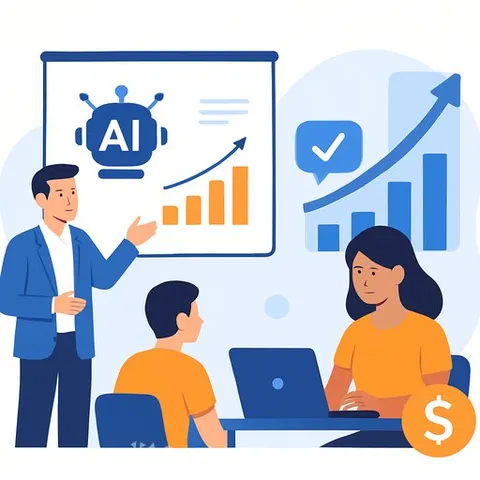
The College of Charleston School of Business is teaching accounting students to use generative AI tools like ChatGPT, rather than banning them. A tax project led by assistant professor Roy Martin found that students who completed AI-driven assignments scored twice as well on exam questions compared to cohorts a year earlier. The approach comes as major accounting firms expect new hires to arrive with AI proficiency.
How the AI project works
Martin designed the assignment around the way public accounting firms use AI today. Students first completed an AI-prompting course from EY that covers prompting strategies and AI ethics. Then they worked through a complex tax scenario with AI, submitting their prompting logic, the AI output, and their own analysis. Finally, they edited the AI-generated content into a client-ready report.
"AI can maybe do 80% of the heavy lifting for them," Martin said. "But that final 10% to 20% of what we might call professional judgment it's on them. They're responsible for making sure what the AI puts out is correct."
Students learn that AI output needs scrutiny
Accounting student Ally Evans said the project reshaped her view of the technology. "Having it laid out for you in a way that looks like it could be correct and then having to really get into the nitty-gritty and looking at how it exactly applied, even the wording has to be so specific, especially in tax," she said. Evans added that just like any new graduate, AI makes mistakes, and the real skill is learning to adjust to the tool and use it effectively.
"It gave me a chance to kind of have an outline as to what I would provide to the client, but then I could go back in and edit it as I saw fit," Evans said. "It was definitely more efficient, but it wasn't something that it just spit out and I could just hand to the client."
Exam data backs up the approach
Martin compared performance on two tax-specific exam questions between the AI-project group and the prior year's class. "The students who did the AI project scored probably twice as much, twice as better, on average, on those two questions, than their cohorts did the year before when I didn't use AI," he said. On a feedback survey asking students to rate the project's value from one to 10, the average response landed just under nine. Martin said no student expressed that they hated the project or wanted to avoid AI.
Industry already expects these skills
Martin developed the project after senior leaders from large and midsize accounting firms told him at a tax research conference that they expect new hires to know how to use AI. "The biggest accounting firms, and even the midsize accounting firms, they're all using AI," he said. He predicts that students entering the profession with AI experience will get in front of managers and partners faster and shape how their firms adopt the technology.
This practical mindset aligns with the kind of structured skill-building found in an AI Learning Path for Accountants. The project's classroom results also add weight to the broader conversation around AI for Education, showing how deliberate integration can lift both learning outcomes and career readiness.
Why this matters for professionals in education, IT, and research
The College of Charleston's results demonstrate that teaching with AI, instead of shielding students from it, can measurably deepen understanding of complex material. For educators, the project is a replicable model for embedding AI literacy into technical coursework without sacrificing core skills. For IT and development teams that support instructional technology, it signals a rising demand for tools that let students audit, edit, and contextualize AI output rather than passively accept it. Researchers will note the preliminary exam data as a signal worth further study, especially as the professional world increasingly treats AI fluency as a baseline, not a bonus.