
AI news ·
Cornell researchers push back on claims that AI will eliminate half of white-collar jobs within five years
Cornell researchers say tech executives' predictions that AI will eliminate 50% of entry-level white-collar jobs within five years are overstated. Companies may be blaming AI for restructuring decisions they'd make anyway-often to boost stock prices.
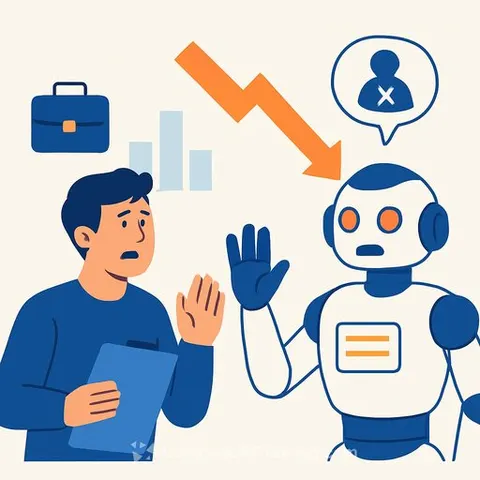
AI Job Displacement Timeline Faces Reality Check From Cornell Researchers
Executives at major tech companies predict 50% of entry-level white-collar jobs will disappear within one to five years. Cornell researchers studying the actual impact say that timeline needs adjustment.
Anthropic CEO Dario Amodei and Microsoft executive Kai-Fu Lee made the aggressive projections at the 2026 Transform AI conference. But Cornell Professor Virginia Doellgast, who studies AI's effect on white-collar work in telecom, IT, and game development, sees a more complicated picture.
The Share Price Problem
Companies announcing AI-based layoffs often see their stock price rise. Doellgast's research suggests firms are attributing restructuring decisions to AI that they would make regardless.
"When companies announce AI-based layoffs, they inflate their share price," Doellgast said. "So I think companies are attributing, or blaming, AI for other kinds of restructuring decisions that they would be making anyway."
What Unions and HR Can Do
Unions are pushing companies to invest in worker skills rather than replace jobs outright. They're also demanding guardrails on AI use to protect customers, patients, and employees.
"Unions are most concerned with moving companies from replacing jobs to investing in worker skills and competencies and having more worker voice," Doellgast said.
For workers without union representation, Doellgast recommends direct action. Reach out to HR and management with specific concerns about AI implementation. Frame the conversation around customer care and safety-arguments that benefit the organization long-term.
"One thing that unions can do is really bring those frontline worker voices in," Doellgast said. "Frontline workers really know from interacting with customers and patients why it's important to have humans on the frontline."
HR professionals managing AI adoption should consider AI for Human Resources strategies that balance automation with workforce development. For senior HR leaders, an AI Learning Path for CHROs addresses recruitment automation, workforce analytics, and talent strategy in an AI-driven market.