
AI news ·
CUHK study finds AI-driven HR decisions dehumanise employees
A study of nearly 700 workers finds AI-driven HR decisions like promotions and reviews fuel feelings of being devalued and raise turnover risk. Hybrid systems curb backlash.
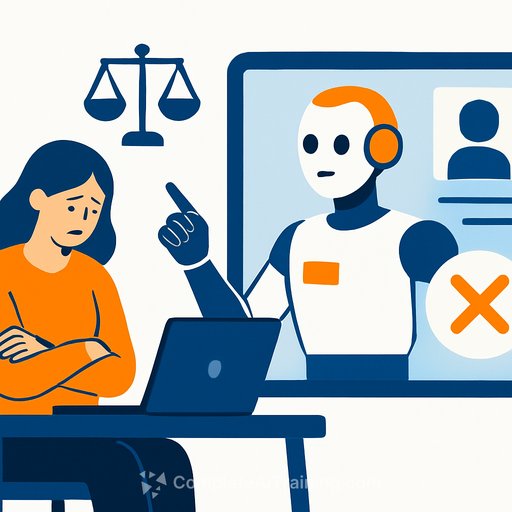
Employees feel less valued and more likely to disengage when AI drives important HR decisions like promotions and performance reviews, according to new research from the Chinese University of Hong Kong (CUHK) Business School that involved nearly 700 participants. The findings point to higher turnover risk and retaliatory feelings among employees who see AI as lacking human empathy.
The study, titled AI in Human Resource Management: A Driver of Organisational Dehumanisation and Negative Employee Reactions, is based on three online experiments. It examines how employees respond to AI-driven promotion and performance-review decisions, compared to those made by human managers.
The dehumanisation effect
Researchers attribute the negative reactions to organisational dehumanisation - where employees feel they are treated as functional units rather than individuals with unique qualities and emotions. In these scenarios, employee characteristics are reduced to data numbers, reinforcing a sense of being objectified. AI systems are perceived as lacking empathy and failing to account for social and ethical nuances. Many employees also find AI decision-making processes opaque, leaving them feeling powerless and excluded.
"Putting it all together, loss of empathy, transparency, and control can leave people feeling objectified," said Professor Choi Sungwoo, Assistant Professor at the School of Hotel and Tourism Management of CUHK Business School, who led the study.
A cultural paradox in collaborative workplaces
The research also identified a cultural paradox: companies with highly collaborative, people-oriented cultures may face stronger resistance when adopting AI in HR. In such environments, employees expect management to value cooperation, support, and interpersonal relationships. AI-driven personnel decisions can clash with these expectations of a human-centred workplace, further deepening negative reactions.
The hybrid solution
Despite these concerns, the researchers emphasise that companies should not abandon AI. Instead, they recommend hybrid systems where humans remain accountable for consequential decisions. This approach keeps the final call with people, which can substantially reduce the dehumanisation effect.
"This hybrid approach helps preserve the sense that consequential decisions about people are ultimately made by people," said Professor Choi.
For HR teams, understanding how to implement AI responsibly is critical, a focus area in AI for Human Resources. Professor Choi said that if AI serves only in an assistive capacity with limited input into the final decision, "the dehumanisation effect should be substantially mitigated."
Why this matters for Human Resources
HR professionals must balance the efficiency gains from AI with the need to maintain employee trust and engagement. The study demonstrates that employees react poorly when they feel reduced to data points, which can lead to higher turnover. Adopting hybrid systems where AI assists but humans decide on promotions, pay, and reviews can help preserve a sense of fairness and humanity in the workplace.