
AI news ·
Doctors and students weigh AI's role in healthcare as accuracy concerns persist
Doctors are using AI to draft patient messages and review charts, but warn it can present wrong information with dangerous confidence. Two-thirds of physicians see benefits, yet none believe AI should work without human oversight.
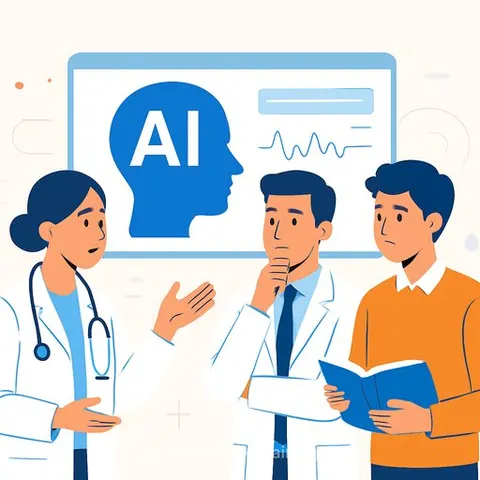
Doctors embrace AI for routine tasks, but warn against relying on it alone
Healthcare professionals are using artificial intelligence to handle administrative work and improve patient communication, but they're cautious about its accuracy and limitations.
Dr. Aliasgar Chittalia, an internal medicine physician at Geisinger, uses AI to draft messages to patients and review medical charts. The technology frees him from routine tasks so he can focus on patient interactions.
But accuracy remains a problem. AI can present incorrect information with confidence, potentially leading patients to make harmful health decisions without a doctor's review.
"The accuracy is a problem, and then we don't know how valid it is," Chittalia said. "Sometimes, the information that you get, AI will give you that information extremely confidently. That incorrect information somebody can apply and make bad decisions for themselves."
Physicians see potential, with conditions
According to an American Medical Association survey, two-thirds of participating physicians believe AI offers advantages. They cite improved diagnostic accuracy, faster workflows, and better clinical outcomes.
Chittalia agrees the technology can help, but only if used properly. "If you use it judiciously and use it in the right manner, I really feel that AI can help patients," he said.
For clinicians, AI can handle administrative burden. For patients, it can explain disease processes. The key is appropriate application.
Students recognize benefits and risks
First-year students at King's College see AI reducing errors in routine work-like counting medications-but understand it cannot replace human judgment in patient care.
"AI obviously isn't perfect, so you can't fully rely on it, especially when it comes to dealing with patients and real human beings' health," said Alex Breitfeller, a King's College student.
Questions about the future of clinical work
Ashley Perez, a licensed clinical psychologist at Geisinger, notes that AI-generated notes allow providers to give patients more attention during appointments. But new questions emerge: if clinicians no longer need time to write notes, will they see more patients? What happens to the quality of care?
"We're not typing during appointments anymore. So, we can really give more attention. But then you have the question of what will happen next if we don't need time to write our notes anymore?" Perez said.
Both Perez and Chittalia see potential for AI to create patient education materials and homework resources. Neither believes AI should operate independently in healthcare.
"Do not be sad, upset, or scared of AI. I think if you know how to use AI well, you will be more successful as a clinician, and the patients can also do better for caring for themselves and their families," Chittalia said.
For more on AI for Healthcare and how it applies to clinical practice, explore resources on AI Data Analysis for diagnostic and decision-support applications.