
AI news ·
Employers must address AI job anxiety as automation share set to double, WTW finds
Automation's share of work will more than double from 14% to 31% in three years, a WTW survey of 550 employers finds. Workers fear becoming obsolete, and firms that invest in employee experience show 23% higher profits.
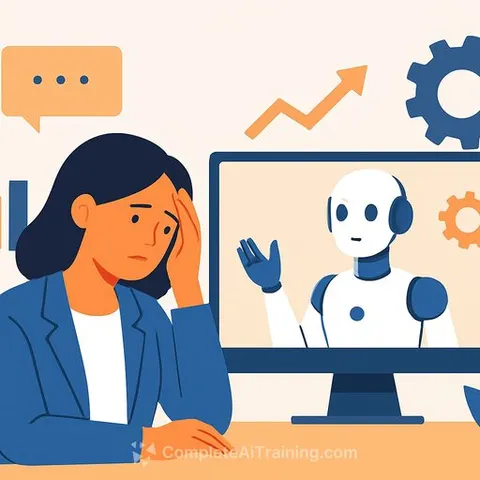
Employers must address employee anxiety as automation doubles, research finds
The proportion of work handled by automation and digital tools will more than double in the next three years, rising from 14% today to 31%, according to a study by advisory firm WTW. The shift is triggering what researchers call a "fear of becoming obsolete" among workers, threatening to undermine workplace transformation if employers don't act.
WTW surveyed nearly 550 employers across manufacturing, financial services, and IT and telecommunications in April, representing 5.6 million employees worldwide. The findings reveal a widening gap between the speed of technological change and workforce readiness.
While 59% of employers expect AI to fundamentally reshape how employee experience is managed within three years-rising to 89% over a decade-most organisations lack the tools to guide their people through the transition.
The measurement problem
WTW identified a critical weakness in how employers gauge workforce health. Tracking employee engagement alone-how people feel about their work and their willingness to give effort-is no longer sufficient in an AI-driven environment.
The firm is pushing employers to shift focus toward employee impact: how effectively people execute and adapt to deliver results. This distinction matters because it addresses what actually drives performance through technological change.
Four pillars for thriving alongside technology
WTW proposes a framework called High Impact Employee Experience (HIEX) built on four foundations:
- Clarity - knowing what matters and why
- Confidence - believing decisions make sense and support is available
- Capability - having the skills, tools, and readiness to adapt and perform now and in the future
- Connection - feeling valued, recognised, and part of something meaningful
Jill Havely, global employee experience leader at WTW, said: "Organisations that intentionally design an employee experience to address this anxiety can replace uncertainty with confidence and help people see a future where they still matter."
The business case
WTW identified 34% of employers who have consistently prioritised employee experience over the past three years, labelling them Employee Experience Leaders. These firms outperformed peers significantly: 23% profit increase and 8% one-year revenue growth.
At these organisations, 91% of employees strongly believe in company goals and 87% would recommend their employer as a good place to work. The data suggests that investing in employee experience during technological disruption pays measurable returns.
For HR professionals managing this transition, resources like an AI Learning Path for CHROs can help leaders develop strategies to build the conditions where employees thrive alongside technology. More broadly, AI for Human Resources training addresses the talent management and workforce planning challenges at the heart of this shift.