
AI news ·
German HR teams focus on AI Act compliance as automation productivity gains remain unverified
German HR departments are increasing AI training as EU rules classify recruitment as high-risk. Specialized tools cut GDPR administrative workloads by 60 to 75 percent.
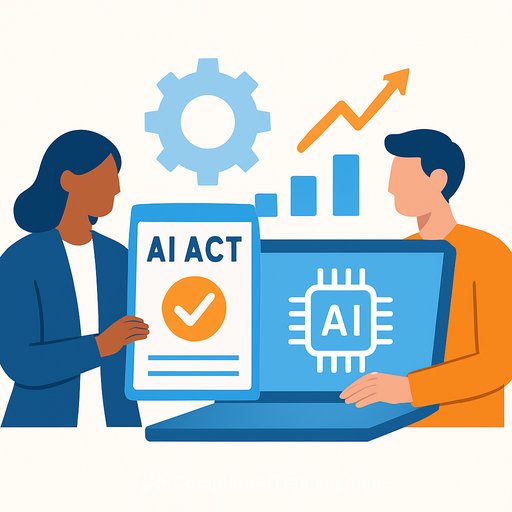
German human-resources departments have sharply increased attendance at AI Act training seminars since mid-June 2026. The urgency stems from new European Union rules classifying recruitment and personnel selection as high-risk applications, forcing employers to manage data protection, fairness, and algorithmic bias while balancing unverified productivity claims.
High-risk classification drives compliance training
Institutions like the Bildungsakademie am Rosental are leading the push, warning companies against fully automated applicant screening or AI-driven performance reviews due to steep legal risks. HR teams must now prove their systems mitigate algorithmic bias and protect candidate data. This regulatory pressure coincides with the NIS-2 directive, which has obligated roughly 30,000 companies to implement stricter IT-security measures since late 2025. With management now facing personal liability for security failures, organizations are increasingly directing staff toward an AI Learning Path for HR Managers to ensure proper oversight of these compliance requirements.
Administrative gains offset by heavier workloads
Despite the regulatory push, productivity promises from the IT industry remain largely unverified. Employee surveys and academic studies indicate that many workers face heavier workloads after implementing these tools, as staff absorb extra duties tied to setting up and monitoring the systems. Researchers warn that without targeted risk management, qualified professionals risk burnout.
Where AI does deliver measurable gains is in administrative compliance. Specialized tools for GDPR-related tasks cut the workload by 60 to 75 percent, highlighting the operational value of AI for Human Resources. However, providers like caralegal said a key limitation remains: "the technology only organises the information. The final legal judgement still rests with a human expert." Similar efficiency is emerging in accounting, with upcoming webcasts demonstrating AI-powered invoice coding within SAP systems that aim for time savings of up to 80 percent per invoice.
Industry events highlight ethical boundaries
The HR-tech sector in Germany, Austria, and Switzerland showed resilience through spring 2026, though expectations for the coming months are more cautious. At the Haufe HR-Online conference in early June, industry leaders identified "Skills der Zukunft" (skills of the future) as the core action area. These tensions will converge at the TALENTpro Expofestival on 17-18 June, where speakers from Allianz SE and Raven51 are set to debate the line between ethical AI and marketing promises. Information sessions in Gütersloh on 18 June will further educate small and medium-sized enterprises about the specific risks of large language models under the new security rules.
Why this matters for human resources professionals
HR professionals must shift their focus from chasing automation hype to managing verifiable compliance and workload distribution. Investing in systems that handle administrative overhead, like GDPR documentation, offers clear time savings, but fully automating candidate screening remains a legal liability. Teams should prioritize training that emphasizes human oversight, ensuring that any AI tool deployed in personnel selection meets strict EU fairness and data protection standards.