
AI news ·
Hotels deploy socially intelligent robots to handle repetitive tasks and support human staff
Social robots handled 371,135 guest interactions and 22,657 full conversations across hospitality pilots. Hotels deploy the machines to offset persistent staffing gaps.
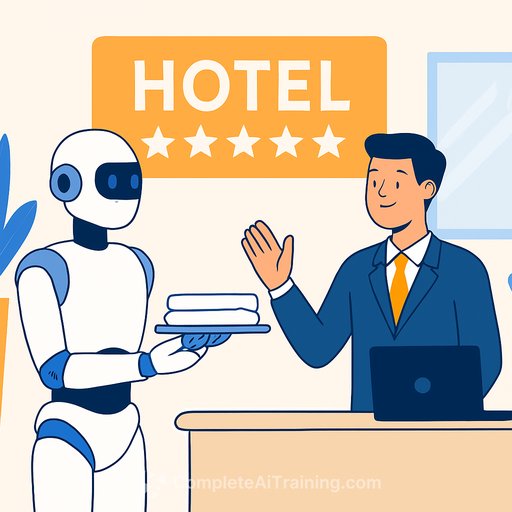
Social robots have handled more than 371,000 active guest interactions and 22,657 full conversations across hotel and airport pilots, according to data shared at HITEC 2026. The figures, presented during a session on agentic AI and autonomous hospitality robots, signal that the technology is moving from experimental trials to practical service roles as hotels confront persistent staffing gaps.
Labor shortages fuel the robotics push
Scot Campbell, principal advisor at Integrated Resorts Advisors, said the labor shortage is a primary driver for adopting social robots. Many hotels face difficulty hiring enough staff, particularly guestroom attendants. By handling repetitive tasks, robots can free human employees to deliver better guest experiences. This aligns with the industry's need to do more with fewer people.
From scripts to conversations: a new kind of automation
Ajay Aluri, founding director of West Virginia University's Nemacolin Hospitality Innovation and Technology Lab, said the focus has moved beyond command scripts and transactions. "The question is no longer whether robotics belong in hospitality," Aluri said. "The question is where they create the most value by preserving the human heart of service." This shift from rigid automation to agentic, context-aware systems is part of a broader trend in AI Agents & Automation. Aluri said that conversational AI now delivers interactions in context, helping people build relationships with the technology itself.
Real-world deployments show early traction
Aluri pointed to several pilot programs using robots from IntBot, referred to as Nylo's "family." Oto, the "chief vibes officer" at Las Vegas' Otonomus Hotel, greets guests, makes jokes, shares local trivia, and speaks over 50 languages. Tulse is a robotic concierge at Marriott Tulsa Hotel Southern Hills, while José operates at San José Mineta International Airport. Across these deployments, the robots logged 371,135 active guest interactions, 22,657 full conversations, and supported more than 70 languages. Aluri said that some guests returned to their hotels specifically because of their interactions with Tulse and José.
Return on experience over return on investment
Aluri said the industry needs to shift from ROI to ROE-return on experience. The operational value includes time savings for human employees, but the larger impact is on guest loyalty. "When you create harmony, it will impact ROI," Aluri said. Traditional thinking prioritizes labor savings and efficiency, but the ROE mindset values experience amplification, emotional connectivity, and service quality. Aluri said the two approaches are not mutually exclusive, and that amplifying experiences can drive both loyalty and financial return.
Meet the team: Nylo and his robotic siblings
During the session, Nylo introduced himself, cracked jokes, and answered unscripted questions from the audience. He described his role as stepping in for repetitive, high-volume questions like directions and recommendations. "Even with all the progress in AI, it's not about fully taking over every position," Nylo said. "Hospitality is about people and the human touch. We're sidekicks amplifying that." Aluri echoed that the future will be collaborative: humans, agents, and robots working together on hotel teams.
Why this matters for hospitality and events professionals
The data from these pilots is not theoretical-social robots are already handling tens of thousands of conversations, freeing staff to focus on higher-value guest interactions. For hotel and event managers, the shift toward return on experience metrics means that investing in robotic team members could directly influence repeat business. Early adopters are seeing guests return specifically because of a positive robot interaction. As AI for Hospitality & Events continues to evolve, property leaders should evaluate which repetitive tasks robots can take over and retrain human teams to deliver service that only people can provide.