
AI news ·
IBA report finds global labour laws struggling to keep pace with AI and remote work shifts
HR leaders in 48 countries face growing compliance gaps as AI and hybrid work outpace regulation, per a new International Bar Association report. The UK lacks AI employment law, Canada's proposed act stalled, and termination disputes are rising.
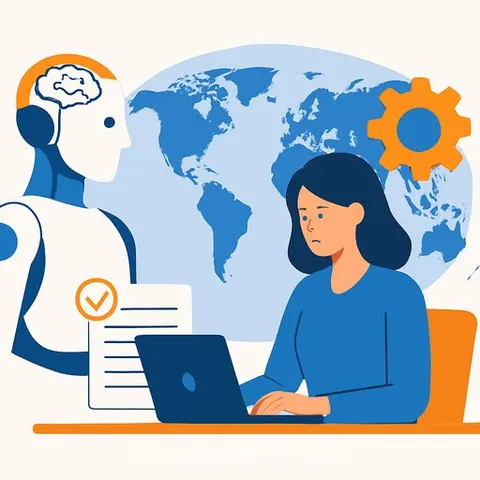
AI and remote work create compliance gaps for HR leaders
Employers worldwide are struggling to keep pace with AI adoption and hybrid work models as regulators fail to establish consistent legal frameworks, according to a new report from the International Bar Association's Global Employment Institute.
The survey of lawyers in 48 countries reveals that privacy, transparency, employee rights and data protection remain the top concerns as companies integrate AI into recruitment, monitoring and workflow automation. Yet significant regulatory gaps persist in key jurisdictions.
Where regulation stands
The UK has no specific legislation governing AI use in employment contexts. Canada's proposed Artificial Intelligence and Data Act stalled when parliament was prorogued in January 2025.
Other regions are moving faster. Switzerland and Luxembourg plan stricter rules on algorithmic decision-making and employee data collection. Japan is establishing ethical standards for AI in employment. The EU's AI Act already requires workplace systems to be fair, transparent and accountable.
The fragmented approach means HR teams must navigate different requirements across jurisdictions while AI applications become standard workplace tools.
Mental health and the remote work shift
Remote and hybrid work models, adopted during the pandemic, are now permanent fixtures in most organisations. This shift has made mental health a core compliance issue for HR leaders.
Many governments have enacted frameworks formalising rights to flexible or remote work. Simultaneously, organisations in the US and elsewhere are pushing return-to-office mandates, typically requiring three to five days in the office per week.
HR teams face increased scrutiny over compliance with working time rules, the right to disconnect, and occupational health and safety obligations. Burnout from blurred work-life boundaries and increased workloads are emerging as pressure points.
Some Canadian provinces have amended occupational health and safety regimes to explicitly address psychological wellbeing. But legal standards remain uneven across jurisdictions, creating compliance risk.
Disputes and dismissals
Termination-related disputes are the most litigated HR issues globally. Unclear contractual terms, inconsistent application of employment laws and disagreements over dismissal justifications drive litigation across Asia, Australia, the Americas, Europe and Africa.
AI-driven restructurings are expected to increase termination disputes further. Compensation disputes rank second, with some labour authorities reporting that up to three-quarters of cases involve pay issues. Discrimination claims remain a recurring source of litigation.
The skills challenge
Workforce upskilling will become essential as AI and automation become ordinary workplace features. HR leaders must balance retaining human-centric practices while adopting technological developments.
This requires HR teams to understand both the technical capabilities and legal implications of AI tools. AI for Human Resources covers recruitment automation, talent management and workforce analytics-skills increasingly needed to manage these transitions. For HR executives, a dedicated learning path for CHROs addresses AI strategy, workforce analytics and recruitment automation in depth.
The report emphasises that regulatory frameworks continue to evolve. HR leaders should expect ongoing changes to compliance requirements as governments respond to AI adoption and working model shifts.