
AI news ·
Indian companies shift from degree-based hiring to skills-first models as automation reshapes workforce needs
Indian companies are dropping degree requirements and hiring for skills as AI and automation reshape team-building. Demand for AI engineers and robotics experts is outpacing supply, pushing firms to train, hire, and contract specialists.
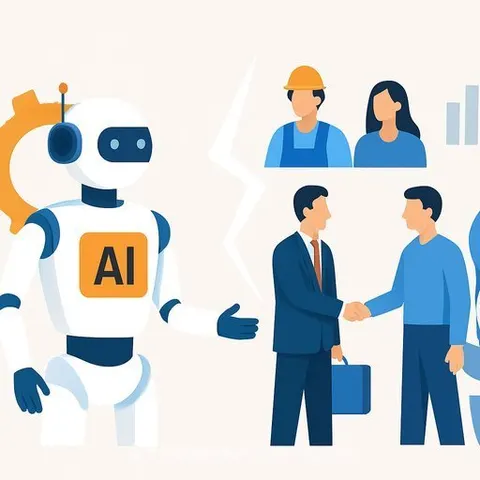
Skills Now Matter More Than Degrees in India's Hiring Shift
Indian companies are abandoning rigid job descriptions and degree requirements in favor of skills-based hiring. Automation, AI, and robotics are forcing organizations to rethink who they recruit and how they build teams.
The change reflects a practical reality: businesses need people who can blend multiple competencies-AI expertise paired with engineering knowledge and systems thinking. The specialist is giving way to the problem solver who can work across domains.
What employers now prioritize
Learning speed and adaptability matter more than credentials. Digital fluency-understanding data, algorithms, and automation-has become essential. Design thinking is gaining weight too, since building automation solutions requires focus on user experience and system efficiency.
Companies are no longer hiring just to fill positions. They're assembling mixed teams of people and technology that work together effectively.
The talent shortage problem
Demand for AI engineers, robotics experts, and digital project managers is surging. Supply isn't keeping pace. Organizations are responding with a three-part strategy: build, buy, and borrow.
- Build: Upskill existing employees and develop leadership talent internally
- Buy: Hire experienced professionals from the market for immediate needs
- Borrow: Contract specialists for specific automation projects
Campus hiring is gaining importance, but with a new angle. Companies are creating partnerships with engineering colleges and technical institutes. Rather than waiting for fully trained graduates, businesses invest early in young talent and shape them to fit industry demands.
How success is now measured
Headcount is outdated. Organizations are shifting to capability-based workforce design, breaking complex projects into smaller teams built around specific skills. Productivity is measured per capability, not by role.
This flexibility lets resources flow to areas that need them, rather than staying locked within departments.
Reskilling becomes continuous
The shelf-life of technical skills is shrinking. A single training workshop no longer cuts it. Businesses need to build learning ecosystems with role-based and technology-specific paths.
The goal is connecting individual growth to business outcomes. When an employee learns digital engineering, that should create new opportunities and business benefits. This creates a feedback loop that keeps people engaged and learning.
What HR must become
Human resources teams need to evolve into strategic workforce designers. This means using data to track skills and align them with company strategy-not treating talent as an afterthought to business plans.
HR leaders should work closely with business leaders to make talent strategy a primary driver of growth, not a supporting function. In an era when machines handle routine work, the competitive edge comes from how well an organization manages its people.
Companies that adopt a skills-centric, multidisciplinary approach will have the advantage. Learn more about AI for Human Resources and how to implement these strategies. HR leaders can also explore the AI Learning Path for CHROs to develop the capabilities needed for this transformation.