
AI news ·
Job applications double as companies adopt AI screening amid bias concerns
Job applications nearly doubled since 2023, forcing major firms to use automated screening to hire under 1% of candidates. Yet 65% of applicants view AI tools as impersonal.
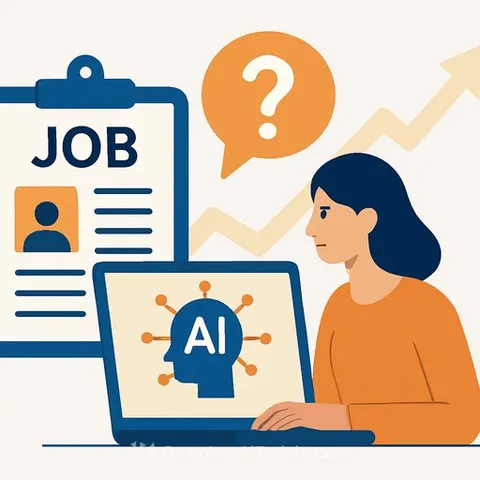
The number of job applications has nearly doubled since 2023, forcing employers to rely on automated screening tools to manage the volume. As hiring rates at major firms drop below one percent, researchers warn that prioritizing speed over fairness risks introducing systemic bias into recruitment pipelines.
Recruitment volume and candidate expectations
Boston Consulting Group processed roughly 1.7 million applications in 2025 but hired fewer than one percent of those candidates. Despite this selectivity, the firm plans to add thousands of new staff globally in 2026, with no junior-level cuts planned. To manage this volume, BCG has modified its application procedures to specifically test candidates' AI competence, making coding skills a baseline requirement in technology units.
The firm is also upskilling its current workforce. Around 33,500 employees began an AI certification program in June 2026 as revenue rose seven percent to $14.4 billion, driven by a growing focus on AI consulting. For most AI-related projects, variable compensation is now standard.
Algorithmic bias and workforce substitution
Algorithm-assisted interviews face growing scrutiny from sociologists and researchers. Studies show that 65 percent of applicants associate AI screening with impersonality, and these algorithms risk weeding out international talent by failing to account for cultural differences. Speaking at a human-resources conference in June 2026, sociologist Steffen Mau said AI should be used to foster individual development rather than simply filter resumes.
The broader debate over job substitution is gaining empirical backing. The Ifo Institute reports that nearly 20 percent of companies using AI consider it easy to replace skilled workers with the technology. In the retail sector, roughly 28 percent of firms view university degrees as easily replaceable by AI, though professional experience remains significantly harder to substitute. Overall, 54.5 percent of surveyed companies now use artificial intelligence.
The execution gap in corporate strategy
Large corporations struggle to translate AI planning into practice. A January 2026 market analysis found that 74 percent of German companies with more than 2,000 employees possess a formal AI strategy, yet only 34 percent actively steer their processes using it. Complex IT structures and a lack of internal expertise remain the primary obstacles. A Deloitte study concluded that just 16 percent of companies feel adequately prepared in talent management.
Addressing these obstacles requires building internal expertise. Some organizations are pursuing targeted training programs, such as the AI Learning Path for Recruitment Coordinators, to close the gap between formal strategy and daily execution.
Why this matters for HR professionals
HR teams must balance efficiency with legal and ethical scrutiny as AI screening becomes standard. The Federal Social Court ruled in early June 2026 (case reference B 11 AL 1/26 R) that an undisclosed side job does not automatically void unemployment registration, requiring individual case examinations rather than blanket repayment demands. This ruling highlights a broader trend: automated, blanket decisions in human resources and labor law face increasing judicial pushback. HR professionals must ensure their automated screening and assessment tools maintain human oversight to avoid similar legal and reputational risks.