
AI news ·
Managers who rely on AI are seen as less competent and less trustworthy, survey finds
42% of employees view AI-reliant managers as less competent, and 36% trust their judgment less, per a 2026 survey of 913 US workers. The reputational risk is sharpest among Gen Z, where 58% see such managers as less competent.
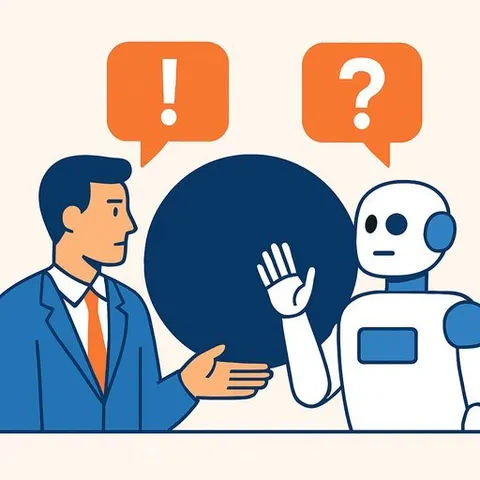
Managers who use AI for their own work face a credibility problem. A 2026 survey of 913 US employees found that 42% view AI-reliant managers as less competent, and 36% trust their judgment less. The data, collected by Omni Calculator across healthcare, education, finance and technology sectors, signals that AI adoption at the management level carries a personal cost that productivity gains alone may not offset.
The survey examined how workers react when managers turn to AI for tasks and communications. The erosion of trust is not abstract - it shows up in daily interactions. About 68% of respondents said AI-assisted messages feel less personal than those written without the tool. More than half reported receiving AI-assisted answers, decisions or feedback from their manager in the past year, and 12% said this happened several times a week.
Gen Z employees are the most skeptical
Younger workers were notably more critical of managers who lean on AI. Among Gen Z respondents, 76% said AI-assisted communication from managers feels less personal. A full 58% viewed AI-using managers as less competent, and 51% said they trusted them less. These figures suggest that as Gen Z becomes a larger share of the workforce, the reputational risk for managers who use AI without transparency or restraint will grow.
AI is moving beyond routine emails
Managers are applying AI to a wider range of responsibilities. While 32% of employees said their managers use it for day-to-day messages and emails, 35% reported AI use for project or workflow planning. More sensitive applications are also emerging. About 27% said managers had used AI to prepare performance reviews or feedback. Smaller but notable shares reported AI use for conflict or sensitive issues (13%) and for coaching or career advice (12%).
Strategic decisions are not immune. Roughly 26% of employees said their managers had used AI to set strategy or goals, and 18% said managers relied on it for workplace decisions. Half of respondents said their manager had used AI to answer a question or make a decision they felt the manager should have handled personally - a finding that points to a gap between what employees expect from human leaders and what AI-assisted management delivers.
Employees can spot AI-generated communication
Workers are not guessing blindly. About 45% identified a message that does not sound like the manager's usual voice as the clearest indicator of AI use. Another 40% pointed to a generic or robotic tone. These detection rates mean managers cannot assume AI-assisted messages will pass unnoticed, especially when they lack the personal context employees recognize.
The tension is clear: AI can support speed and consistency, but using it for tasks that require personal judgment, context and accountability may weaken the relationships managers depend on. For those exploring how to integrate AI without sacrificing credibility, targeted training such as AI for Management can help define which tasks benefit from automation and which demand a human touch. When AI enters strategic planning or performance conversations, guidance from AI for Executives & Strategy becomes relevant for setting boundaries that preserve trust.
Why this matters for managers
The survey does not suggest managers should avoid AI. It shows that employees are tracking how and when AI is used, and they are forming judgments about competence and trust based on those choices. The practical takeaway is to reserve AI for tasks where speed and structure matter most - workflow planning, drafting routine updates - and to handle performance feedback, conflict resolution and strategic decisions personally. If you use AI for communication, edit the output enough that it sounds like you. The risk is not the tool itself. It is the perception that you have delegated the parts of your role that employees believe only a human should do.