
AI news ·
Michigan bill targets AI-powered employee monitoring tools
Michigan's RAISE Act would require employers to disclose AI-based monitoring tools and get written consent before tracking keystrokes, screens, or facial expressions. It also bans using automated systems to set pay or issue discipline.
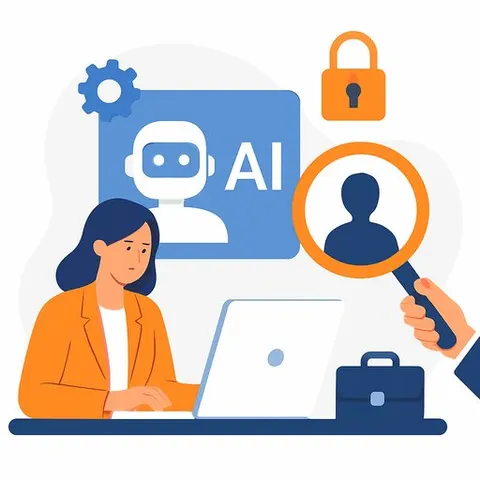
Michigan Bill Targets AI-Powered Employee Surveillance
Michigan introduced legislation that would regulate workplace monitoring software-the keystroke trackers, screen recorders, and idle-time monitors that now run on employee machines at roughly three out of four U.S. companies. The Responsible AI Security for Employees Act, or RAISE Act, requires employers to disclose monitoring practices and obtain written consent before implementation.
For HR leaders managing remote or hybrid teams, this bill signals where state regulation is heading. Connecticut and Delaware already mandate written notice before electronic monitoring. California and Massachusetts have introduced broader restrictions. Even if Michigan's bill stalls, the regulatory pressure on employee surveillance tools is building.
What the RAISE Act would require
The bill covers the full range of AI-powered workplace monitoring: screen recording, keystroke and mouse-movement tracking, break monitoring, facial recognition, and idle-time detection.
Employers would need to provide written notice and get employee consent before implementing any monitoring. Employees could opt out of certain tracking methods. They'd also have the right to challenge AI-generated performance assessments-meaning a low productivity score from a monitoring algorithm wouldn't be final.
The bill draws hard lines on specific practices. It prohibits using automated decision tools to set wages or make disciplinary decisions. It caps data retention at three years, bans selling employee data, and prohibits surveillance in bathrooms, locker rooms, and other private spaces.
The scale of workplace monitoring today
About 70 percent of remote workers operate under some form of online monitoring or tracking. The market for these tools is projected to hit $4.6 billion this year.
These systems went mainstream during the pandemic. When offices closed, employers bought monitoring software to replace the in-office visibility they lost. The tools stuck around. They've evolved well past time clocks and web filters-some now analyze facial expressions during video calls, automatically dock pay when a mouse goes idle, and generate performance scores from activity data that employees may never see.
The retention cost of surveillance
Nearly half of employees say they'd consider leaving their job if monitoring increased. One in six is already thinking about quitting because of their employer's current monitoring practices.
The data shows broader behavioral changes. Almost a quarter of monitored employees take fewer breaks to avoid appearing idle. A third report feeling pressured to work faster because they know they're being watched.
Monitoring was sold as a productivity solution. From the employee's perspective, it reads as distrust. People leave environments where they feel micromanaged and distrusted.
This matters most for hybrid and remote teams. The employees who value autonomy-often your strongest performers-react most strongly to surveillance. If your monitoring policy is driving your best people toward the door, the productivity data you're collecting won't show you that.
What HR should do now
Regardless of whether Michigan's bill becomes law, three steps protect your organization and your workforce.
First, know what's running. Many organizations deployed monitoring software in 2020 and 2021, and the tools are still active on employee machines without active HR oversight. Find out what's deployed, what data it collects, and who has access to the reports.
Second, check whether your employees were told. Written notice and consent are already required in Connecticut and Delaware. Even where they're not legally required, employees who discover undisclosed monitoring react badly. The trust damage from surveillance people didn't know about is real and hard to repair.
Third, align what you measure with how you evaluate. If your monitoring tools track activity, keystrokes, idle time, and screen captures, but your performance reviews are based on output and results, something is disconnected. The monitoring collects data that doesn't align with how you actually evaluate people. That gap creates confusion and resentment.
Employee monitoring isn't going away. The regulatory environment around it is tightening, and workforce tolerance for undisclosed surveillance is dropping. Organizations that get ahead of this can clearly explain three things to their employees: what you track, why you track it, and what you do with the data. If you can't communicate those answers simply and confidently today, that's the first problem to solve.
For HR professionals looking to understand the broader implications of AI in workforce management, AI for Human Resources covers how these technologies are reshaping talent management and decision-making across the function.