
AI news ·
Palantir CEO Alex Karp says AI will destroy humanities jobs and benefit vocationally trained workers
Palantir CEO Alex Karp says AI will "destroy humanities jobs," warning liberal arts graduates without specialized skills will struggle. He argues vocational workers and neurodivergent individuals will fare better.
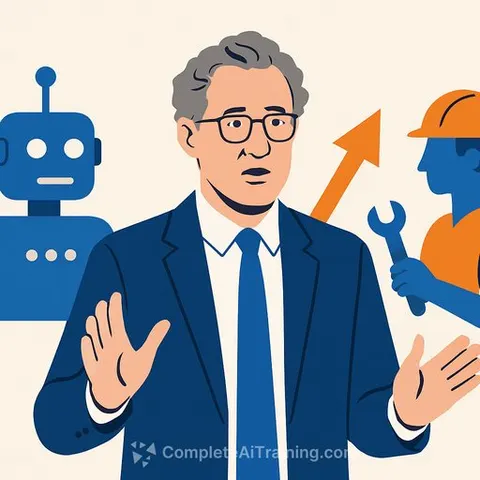
Palantir CEO: Liberal Arts Graduates Face AI Job Losses
Alex Karp, CEO of data analytics firm Palantir, said AI will "destroy humanities jobs" and that liberal arts graduates without specialized skills will struggle in the coming years. He made the comments at the World Economic Forum in Davos in January.
Karp, who holds degrees in philosophy and law from elite institutions, used himself as an example. "You went to an elite school, and you studied philosophy-I'll use myself as an example-hopefully, you have some other skill, that one is going to be hard to market," he said in conversation with BlackRock CEO Larry Fink.
The Palantir CEO has repeatedly warned that generalized knowledge from prestigious universities won't protect workers. In a November interview, he said: "If you are the kind of person that would've gone to Yale, classically high IQ, and you have generalized knowledge but it's not specific, you're effed."
Who Karp Says Will Thrive
Karp identified two groups positioned to succeed in an AI-driven economy: people with vocational training and neurodivergent individuals. He credited his own dyslexia-a learning disability affecting reading and information processing-with contributing to Palantir's success.
The 58-year-old billionaire predicted that AI will shift economic power toward "vocationally trained, working class" workers while reducing the economic standing of "humanities trained, largely Democratic voters" and women.
Karp pointed to specific examples of workers Palantir values: a former police officer who attended junior college and now manages the U.S. Army's Maven system, an AI tool that processes drone imagery. He also cited battery technicians whose practical skills make them "very valuable if not irreplaceable."
Other Leaders Disagree
Not all major employers share Karp's assessment. BlackRock COO Robert Goldstein said in 2024 the company actively recruits graduates who studied subjects "that have nothing to do with finance or technology." McKinsey's global managing partner Bob Sternfels recently told Harvard Business Review the firm is "looking more at liberal arts majors, whom we had deprioritized, as potential sources of creativity" to counter AI's linear problem-solving.
Palantir's Alternative to College
Palantir launched a Meritocracy Fellowship last year, offering high school students paid internships with the possibility of full-time employment after four months. The company criticized American universities for "indoctrinating" students and having "opaque" admissions processes.
Karp told investors that at Palantir, educational pedigree doesn't matter. "If you did not go to school, or you went to a school that's not that great, or you went to Harvard or Princeton or Yale, once you come to Palantir, you're a Palantirian-no one cares about the other stuff," he said during a earnings call.
He emphasized that Palantir focuses on identifying what he calls "outlier aptitude"-unusual strengths that don't fit traditional career paths-and developing those skills rather than assuming workers excel at multiple things.
The Broader Workforce Picture
Youth unemployment is rising. The jobless rate for workers ages 16 to 24 reached 10.4% in December, with unemployment growing among college graduates. Despite these trends, Karp expressed confidence about job availability.
"There will be more than enough jobs for the citizens of your nation, especially those with vocational training," he said.
For HR professionals, Karp's comments highlight a growing tension in recruitment: traditional credentials may matter less as employers seek specific skills and unusual aptitudes. Understanding how AI changes skill requirements is critical for talent strategy. Learn more about AI for Human Resources and how to prepare your organization for these shifts, or explore the AI Learning Path for CHROs.