
AI news ·
SK hynix gives AI agents names and roles in HR and administration
SK hynix has deployed four named AI agents to handle receipts, HR news, internal communications, and employee training. The chipmaker also tests AI that recommends leadership candidates by analyzing performance records.
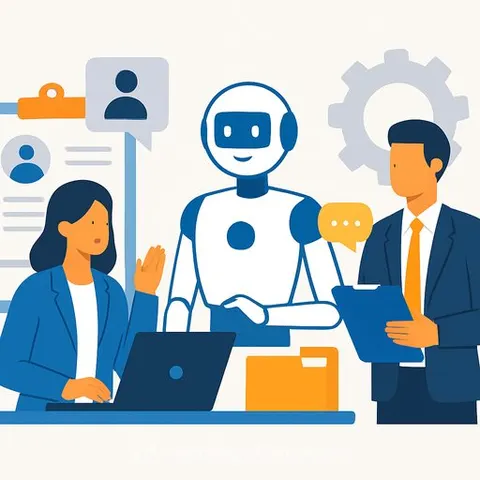
SK hynix deploys named AI agents to handle HR tasks, receipt processing and internal communications
SK hynix has embedded four named AI agents into its daily operations, assigning them specific roles across human resources, administration and internal communications. Youngcheol processes receipts each morning. Sosigi distributes HR and administrative news. Komong handles internal communications. Ddoksori guides employee training.
The move signals a shift across South Korean corporations where AI is moving beyond back-office productivity tools into organizational roles that interact with employees on routine decisions.
From automation to decision-support
SK hynix runs more than 85 robotic process automation projects that handle payroll calculations, contract management and personnel approvals. A company official said work "that once required temporary staff and cost tens of millions of won is now handled by systems."
The chipmaker has advanced to what it calls an "RPAI" model-combining robotic process automation with AI-that extends into tasks requiring judgment. The company is testing AI systems that recommend leadership candidates by analyzing performance evaluations, HR records and self-assessments. Executives stressed the systems support rather than replace human judgment. "AI is not selecting people on its own," the official said. "It serves as an additional recommendation tool alongside managers and colleagues."
SK hynix's large-language-model-based HR chatbot, called HaRu, evolved from answering questions into a digital assistant that books meeting rooms, processes leave requests and sends benefit reminders.
The adoption risk
SK hynix officials warned that some companies invested heavily in AI agents only to have employees ignore them. "Introducing AI simply because it is trendy, without a clear strategy, is bound to fail," the official said.
Industry experts argue that human expertise becomes more critical as AI integrates into HR operations. "As AI becomes integrated into HR, people will move into more advanced areas such as ontology design and mapping relationships between information," the official said. "The key challenge will be learning how humans and AI can work together."
For HR professionals, this shift means new skills will matter. Rather than handling routine administrative tasks, HR teams will design how AI systems understand organizational relationships and apply context to recommendations.
These developments were discussed at the HR conference "Wanted High Five 2026" held in Seoul on May 12. Lee Bok-ki, chief executive of Wanted Lab, predicted that "both workplace structures and the nature of work itself would be fundamentally transformed" as businesses and workers "grow with AI."
Learn more about AI for Human Resources and AI Agents & Automation.