
AI news ·
Southeast Asian workers fear AI dependency more than job loss, survey finds
53% of Southeast Asian workers fear becoming dependent on AI, outpacing the 34% worried about job loss, a survey of 3,000 professionals found. Most expect AI to save time on routine tasks, but organizational readiness remains low across the region.
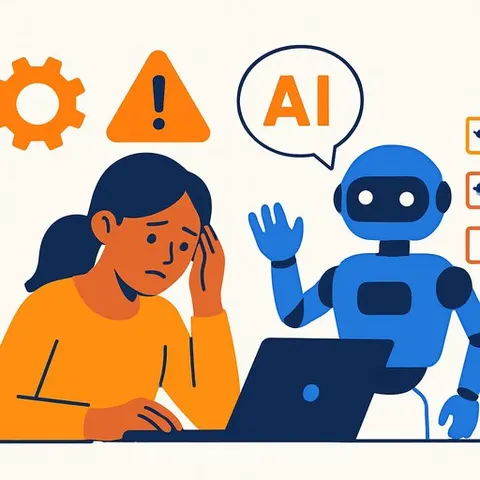
Southeast Asia's AI Fear: Loss of Judgment, Not Jobs
Southeast Asian workers worry more about becoming dependent on AI than losing their jobs entirely, according to a survey of 3,000 professionals across six markets. Over-dependence on AI ranks as the top concern at 53%, outpacing job loss fears at 34%.
The gap widens by country. In Indonesia, 61% worry about AI dependency versus 34% concerned about job displacement. In Vietnam, the split is even starker: 50% fear dependency while only 24% fear job loss.
Workers are increasingly uneasy about AI eroding human judgment and critical thinking rather than simply replacing positions. This shift reflects a deeper concern about professional autonomy and decision-making capability.
What workers expect in their roles
Most respondents see AI as a tool for augmentation, not replacement. Across the region:
- 51% expect AI will save time on repetitive tasks, freeing them for higher-value work
- 41% say AI will assist but not replace core responsibilities
- 26% anticipate significant role changes requiring adaptation
- 10% believe their job may be replaced entirely
- 10% expect AI will create new opportunities
The data suggests workers accept AI integration but want assurance that their core expertise remains valued.
Optimism persists despite concerns
Despite worries about dependency, 54% of respondents describe themselves as optimistic or very optimistic about AI's broader impact. Emerging markets show the strongest confidence: Vietnam at 66% and Thailand at 58%.
Workers expect AI to drive productivity gains, spur digital innovation, and create economic opportunities across the region. Singapore records the highest pessimism at 15% combined.
Organizations lag behind worker readiness
The survey reveals a significant gap between worker appetite for AI and organizational preparedness. Data security and privacy concerns top the barriers list, cited by 40% to 50% of respondents depending on market.
Perceived organizational readiness remains low across all markets. Vietnam leads at 25% saying their organization is "very prepared" with clear strategies and training. The Philippines, Indonesia, and Malaysia fall between 12% and 14%.
Employer encouragement to use AI is also limited. Vietnam leads at 38% reporting active encouragement from leadership. Singapore, the region's most developed market, sits at 25%.
Digital infrastructure gaps vary significantly. Thailand reports the highest concern at 26%, while Singapore records only 14%, reflecting differences in organizational maturity across markets.
The readiness question for HR leaders
The findings point to a critical challenge for human resources teams. Workers want to use AI but lack confidence in their organizations' ability to support adoption responsibly.
HR departments face pressure to build training programs, establish governance frameworks, and create clear policies around AI use. Without these guardrails, organizations risk workers either rejecting AI tools or using them without proper oversight.
The survey included 500 working professionals from each market-Singapore, Thailand, Malaysia, Indonesia, the Philippines, and Vietnam-conducted in February 2026. Respondents came from large private companies, SMEs, and multinationals across engineering, manufacturing, retail, IT, and sales sectors.
For HR professionals, the message is clear: AI adoption requires more than tool implementation. Organizations need structured approaches to training, clear communication about how AI will affect roles, and transparent decision-making about where and how AI gets deployed. The workers are ready. The question is whether their employers are.