
AI news ·
Storyteller Anne Brashier says the next economy runs on care, not information
AI is pushing organizations to choose between efficiency and human connection. The workplaces that thrive will be ones where employees feel seen, not just productive.
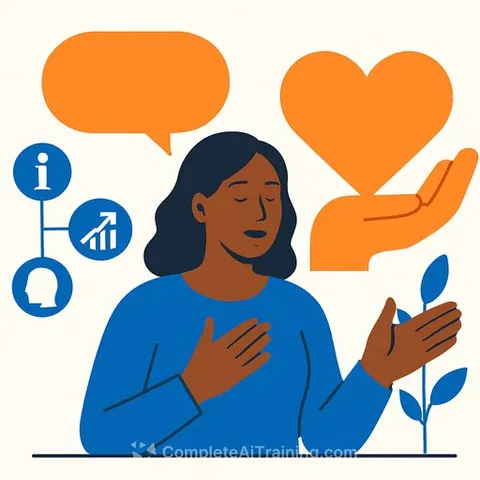
The Next Economy Runs on Care, Not Information
Anne Brashier, an immersive storyteller and creative director, argues that artificial intelligence forces a reckoning: organizations must choose between further disconnection or a return to human connection.
Brashier created the "Carnival of Feelings," an experience designed to help people process emotions through play rather than suppression. The work emerged from a simple observation-algorithms and news feeds pull people apart while bodies and communities signal a need to reconnect.
For HR professionals, the implications are direct. The future of work won't be built on information flow or efficiency metrics alone. It will depend on care, connection, and the willingness to ask employees how they're actually doing.
What This Means for Workplace Culture
Career pivots, ego death, regret, and love aren't typically part of workplace conversation. Yet they shape how people show up to work and how they engage with colleagues.
When organizations treat employees as information processors rather than whole people, they lose the very thing that makes human work valuable: the ability to think creatively, build trust, and make decisions grounded in shared purpose.
The shift requires HR to move beyond engagement surveys and wellness programs. It means creating spaces where people can be honest about struggle, change, and what matters to them.
Practical Ground for HR Leaders
This isn't abstract. Organizations that invest in psychological safety and genuine connection see lower turnover, stronger collaboration, and better problem-solving. People do their best work when they feel seen.
HR teams can start by examining where disconnection happens in their own workflows. Are one-on-ones transactional or relational? Do performance reviews acknowledge growth and difficulty, or just output? Are managers trained to notice when someone isn't okay?
Learn more about AI for Human Resources and how technology can support rather than replace human-centered work. For HR leadership exploring workforce transformation, the AI Learning Path for CHROs addresses strategy and implementation.
The Real Competitive Advantage
As AI handles routine work, the organizations that win will be those where people actually want to work. That happens when connection is real, when vulnerability is safe, and when the organization acknowledges that humans bring more than their skills to the table.
The question isn't whether AI will change work. It will. The question is whether HR will lead the shift toward care and connection, or follow it reluctantly.