
AI news ·
Stuttgart researchers build local AI assistant for compressed air systems that keeps sensitive data on-site
University of Stuttgart researchers built AI4Air, an on-site AI that analyzes compressed air systems without sending data to external servers. It cuts hallucination rates to 26% and answers technical queries with 90%+ accuracy in about ten seconds.
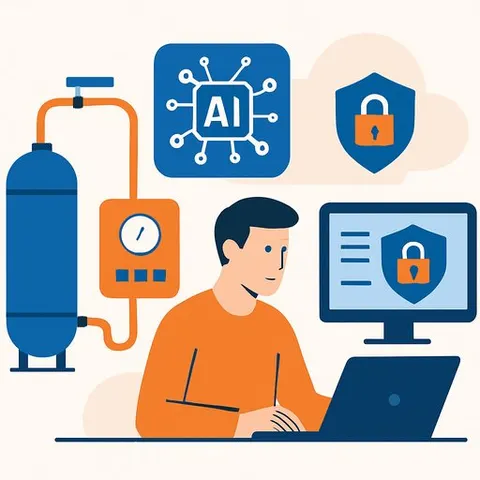
Researchers Deploy On-Site AI System for Compressed Air Operations
Researchers at the University of Stuttgart and WRS Energie + Druckluft GmbH have built an AI system that runs entirely on company servers rather than in the cloud, addressing a core tension in industrial automation: companies need AI's analytical power but cannot risk sending sensitive production data to external servers.
The system, called AI4Air, uses a specialized language model paired with a digital twin-a real-time virtual representation of the compressed air system. The AI translates complex sensor data into specific operational recommendations: fix this leak, schedule maintenance on that component, or adjust settings to improve efficiency.
How It Works Without Hallucinating
A persistent problem with general-purpose AI is "hallucination"-confidently stating false information. AI4Air addresses this through a technique called Retrieval-Augmented Generation (RAG). Instead of generating answers from patterns in training data, the system retrieves actual information from the company's sensor readings, technical documentation, and maintenance logs.
The result: The hallucination rate drops to 26%, compared to 40% for standard models. The system responds to compressed air-specific questions with over 90% accuracy and answers complex queries in about ten seconds.
Why This Matters for Operations Teams
The on-premises approach keeps proprietary production data within the facility. There is no dependence on cloud services or external vendors. The system also works faster than cloud alternatives because data doesn't travel across the internet.
Operations teams can use the AI to identify the root causes of rising energy consumption, prioritize maintenance tasks, and understand how decisions will affect system performance. Non-specialists can access expert-level insights without needing deep technical knowledge of compressed air systems.
The pilot phase tested the system in early stages and confirmed its performance advantages. The project is now expanding to additional industry partners in manufacturing, automotive, and food production.
The AI4Air project received funding from Baden-Württemberg's InvestBW innovation program and runs for two years. Learn more about AI for Operations or explore the AI Learning Path for Operations Managers to understand how similar systems apply to your role.