
AI news ·
UC Berkeley Law School bans AI use in assignments and exams
UC Berkeley Law School banned students from using AI on assignments and exams, allowing it only to locate research sources. The school says thinking remains "the sine qua non of good lawyering."
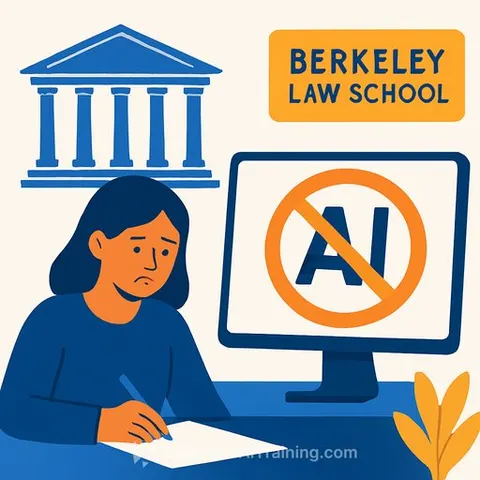
UC Berkeley Law School Bans Student Use of AI in Coursework and Exams
UC Berkeley School of Law announced a new policy this week prohibiting students from using artificial intelligence for class assignments and exams.
The ban covers most AI-assisted work: brainstorming topics, proposing organizational structures, composing paragraphs, correcting grammar, and editing submissions. Students can use AI only to identify research sources, not to analyze or synthesize them.
The policy's rationale addresses a tension law schools face. "Future lawyers may need to use artificial intelligence fluently," the school said in its announcement. "But the current state of the technology requires that AI use be coupled with the cognitive skills necessary to strategically deploy the technology, to critically assess its work product, and to uphold ethical obligations to clients and to the legal system."
The school framed the restriction bluntly: "Thinking remains the sine qua non of good lawyering (and of a quality legal education)."
Chris Hoofnagle, a Berkeley law professor, proposed the new rules after observing what he described as questionable legal reasoning in student work. "If you don't have your own analytical judgment, AI will do it for you, and then it's no longer your judgment," he said.
Professors teaching courses specifically focused on AI fluency can seek exemptions from the policy, allowing them to incorporate AI instruction where they deem it necessary.
For educators developing curriculum around AI for Legal practice, the Berkeley decision reflects broader questions about when students should develop foundational skills before using automation tools.