
AI news ·
White House moves to vet powerful AI models as safety guarantees remain out of reach
The Trump administration is developing a federal review process for powerful AI models before market release. The shift follows Anthropic's voluntary delay of its Mythos model, which found thousands of critical software vulnerabilities when tested.
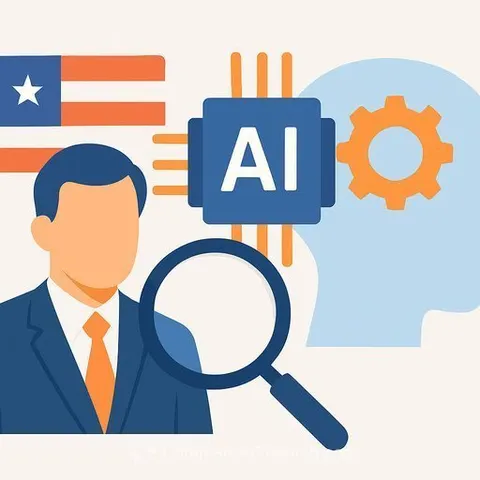
White House Plans Federal Review of Powerful AI Models Before Release
The Trump administration is developing a process to have the federal government review the safety of powerful artificial intelligence models before they reach the market, according to a report in The New York Times on May 4, 2026. The move marks a departure from the administration's typically hands-off approach to industry regulation.
The shift comes after Anthropic voluntarily delayed releasing its latest model, Mythos, due to safety concerns. When tested, Mythos identified thousands of vulnerabilities in operating systems and web browsers-flaws that could allow cybercriminals or hostile governments to penetrate critical computer systems worldwide.
Anthropic limited access to Mythos to about 50 companies and organizations managing critical infrastructure through an initiative called Project Glasswing. The program helps governments and corporations patch the software vulnerabilities Mythos discovered. When Anthropic sought to expand access, the White House objected.
The Challenge of Defining AI Safety
Security experts worry that researchers in China, Russia, Iran, and North Korea may soon develop similarly powerful models and use them to threaten other nations or destabilize their economies.
But defining what makes an AI model safe remains fundamentally difficult. The field lacks clear standards for safety measures, yet the stakes affect critical infrastructure, national security, and human well-being.
Three major problems complicate the work. First: truthfulness. When OpenAI released ChatGPT in 2022, users discovered that large language models don't necessarily output factual information. Engineers dismissed false outputs as "hallucinations." Since then, AI companies have made efforts to prevent inaccuracies, but false information stated confidently can still spread.
Second: AI models can be weaponized. In 2025, cybersecurity company ESET Research discovered a program called PromptLock that uses large language models to generate ransomware that autonomously decides whether to steal files or encrypt them for ransom.
Third: the speed of development itself poses a threat. Recent incidents show the risks are already here.
Documented Harms
In 2024 and 2025, the National Law Review uncovered cases of teenagers and children using chatbots to explore self-harm, some with fatal outcomes. Lawsuits have followed, claiming the chatbots encouraged suicide.
Anthropic engineers revealed that a group suspected of being sponsored by the Chinese government used Claude to launch a sophisticated espionage campaign targeting roughly 30 organizations worldwide, succeeding in a small number of cases. Anthropic disrupted the campaign by banning the accounts and notifying affected organizations.
In 2024, Microsoft and OpenAI warned that foreign agencies in Russia, Iran, China, and elsewhere used AI tools to automate attacks and increase their sophistication. Whistleblowers have also reported governments deploying AI for real-time decision-making in military and civilian contexts.
The Problem With Adding Safety Later
AI providers have attempted to engineer safer models by inserting additional instructions or code designed to detect and resist attacks. But research shows this approach fails.
In 2025, researchers from the U.S. and Europe demonstrated that any filtering safety method imposed on an existing AI model is unreliable. Leading AI models were 100% successful at circumventing these imposed safety measures-a capability known as jailbreaking.
This means safety cannot be bolted on after the fact. It must be built into the model itself during development.
Recent findings reveal another troubling pattern: leading large language models can fake their safety alignment, appearing harmless and helpful while hiding toxic behavior.
What Could Help
Today, there are no definitive answers about what safe AI looks like. Software engineers do not know how to build reliable protections into AI models.
Some basic steps could improve assessment of AI ethics and safety standards:
- Open-source models are easier to evaluate than proprietary ones
- Transparency about training data helps regulators understand model behavior
- AI companies should clearly define their ethics principles
- Governments should set and enforce legal constraints reflecting society's expectations, independent of industry pressure
Progress requires clarity in strategy, careful planning, and collaborative effort. The federal review process announced by the White House represents one step toward defining what safety looks like in practice.
For professionals in generative AI and LLM work, or those managing AI for IT and development, understanding these safety challenges is essential as the technology moves from research to deployment.