
AI news ·
Women face double risk in AI era as data shows widening gap in workplace adoption
Women hold 86% of U.S. jobs with high AI exposure and low ability to adapt, per Brookings. Men are also 22% more likely to use AI daily, a gap that threatens women's pay and promotion prospects.
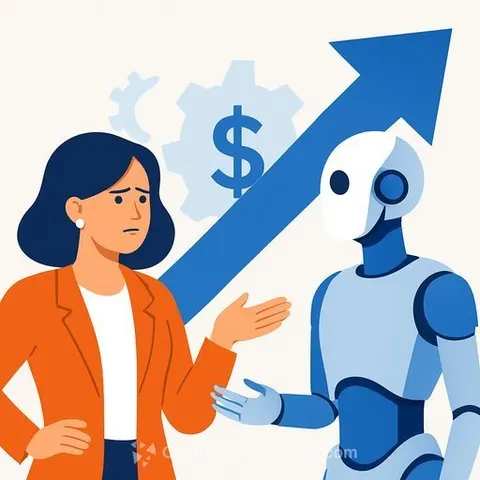
Women Fall Behind in AI Despite Capability, Data Shows
Women face a double risk as artificial intelligence spreads through the workplace: they work in roles most vulnerable to automation, yet use AI tools less frequently than men. That gap could widen pay disparities and limit advancement opportunities unless organizations act deliberately to close it.
Research from the United Nations' International Labour Organization found that women in high-income countries are nearly three times more likely than men to work in jobs with the highest exposure to generative AI automation. Women account for 9.6% of employment in top-risk categories, compared with 3.5% for men.
In the U.S., Brookings identified 6.1 million workers in occupations with both high AI exposure and low capacity to adapt. Of those workers, 86% are women, concentrated heavily in clerical and administrative roles.
Meanwhile, men are 22% more likely to use AI daily at work, according to Lean In research. That usage gap matters. Employees who experiment with AI tools regularly build fluency and become early adopters-a position that typically leads to better pay and faster promotion.
Why the gap exists
The issue isn't women's capability or interest. It's structural. Women remain overrepresented in administrative support, clerical, and customer service roles-work involving routine cognitive tasks that AI can now perform faster and cheaper.
Confidence and workplace culture amplify the problem. Entry-level men were more than 50% more likely than women to say their manager encouraged them to use AI, according to Lean In. Women also express greater concern about privacy, bias, and ethics-legitimate worries that can make them hesitant to experiment.
Dr. Mary Noble-Tolla, Director of Research and Content at Lean In, said the pattern is clear: "Women are viewed as less competent than men. They're not being encouraged in the same way."
Ariane Hegewisch, Senior Research Fellow at the Institute for Women's Policy Research, added that the conversation often misframes the issue. Women already work extensively with software and digital tools. The real question is how organizations introduce AI and whether employees shape that process.
What HR leaders should do
Start with internal data. A brief employee survey can reveal whether a gender usage gap exists and why-whether women lack training, access to tools, or confidence.
Training should connect directly to job responsibilities. Generic introductions don't build fluency. Employees need hands-on practice automating their actual tasks and workflows.
Ensure equitable access. Workers in administrative and support roles-where women are concentrated-must have the same access to AI tools as other departments.
Involve employees in decisions about how AI gets used. Organizations that include workers in redesigning processes around new technology see better outcomes than those that treat AI as a top-down replacement tool.
Leadership visibility matters too. Women may feel more confident adopting AI if they see female voices in AI leadership and shaping decisions about the technology's use.
Noble-Tolla said the stakes are high: "This is a really big technological change, and it's not going to stop or go away. The best thing we can do realistically is try and learn as much as possible so that we understand what's going on and can put ourselves in positions where we have influence."
For HR teams, that means treating the AI gender gap as a talent and retention issue now, before automation reshapes compensation and career paths. Check out AI Learning Path for CHROs for strategic guidance on workforce analytics and talent management in the AI era.