
AI news ·
Workers want human connection at work and remain anxious about AI, Hilton report finds
Hilton's report finds 52% of U.S. workers feel anxious about AI's impact on their jobs. To address this, 55% want employers to provide AI training.
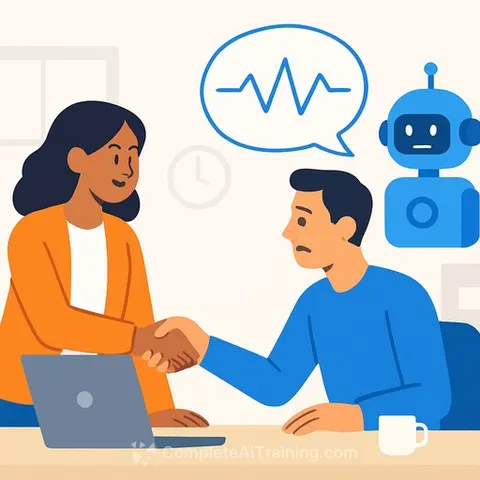
Hilton's inaugural workplace trends report, drawing on research from Ipsos and Morning Consult, finds that 52% of U.S. workers feel anxious about AI's impact on their jobs, while 55% want their employers to provide AI training. The report, released June 23, 2026, also shows a strong preference for in-person work and mentorship, positioning hospitality-style leadership as a model for improving retention and performance.
AI anxiety and the training imperative
Workers' unease with artificial intelligence is widespread, but the data points to a clear solution. Christine Maginnis, senior vice president and global head of talent and human resources strategy at Hilton, said, "The antidote to anxiety is going to be training and permission to test and learn - making AI a source of confidence and growth, rather than something to be afraid of." For HR departments, that means building structured upskilling programs. A dedicated AI Learning Path for Training & Development Managers can equip teams to design and deliver this training effectively.
Transparency about how AI will be used also reduces fear, Maginnis added. Workers who understand the technology's role and have opportunities to experiment with it are less likely to see it as a threat. The report underscores that companies that invest in AI education and clear communication will have a more adaptable workforce.
The return to in-person work and mentorship
The report challenges the narrative that employees want to stay remote. Ninety-six percent of Gen Z workers said they see value in coming to the office. Maginnis attributes this partly to loneliness: nearly half of early-career workers reported experiencing workplace loneliness. "I think you start to realize that there are a lot of organic growth opportunities and moments that come with working alongside other people in person," she said.
Mentorship is a key driver of this preference. Seventy-four percent of workers said mentorship opportunities are important. Spontaneous, face-to-face interactions - not just scheduled check-ins - make employees feel valued and foster a sense of belonging. HR teams can support this by designing intentional shared spaces and encouraging cross-functional collaboration.
What HR can borrow from hospitality
Hilton's report suggests that the hospitality industry's "host mentality" - anticipating the needs of others - can strengthen any workplace culture. Maginnis noted, "What we believe makes our culture special can make any culture special." Practical recommendations include activating cross-functional task forces, creating workplace holidays to recognize good work, and providing AI tools alongside training.
The data ties human-centered practices directly to business outcomes. "When workers feel supported, stable and encouraged to grow - that there's real tangible value for business," Maginnis said. For HR professionals, this reinforces the case for investing in leadership development that prioritizes community and mentorship.
Why this matters for Human Resources
The report provides HR leaders with a data-backed argument for balancing technology adoption with human connection. AI anxiety won't resolve itself; it requires proactive training and transparent communication. At the same time, the pull toward in-person work, especially among younger employees, suggests that office design and mentorship programs are now retention tools. HR departments that integrate these insights - offering AI upskilling through resources like those found in AI for Human Resources and fostering intentional in-person collaboration - will be better positioned to reduce turnover and build a resilient workforce.