AI tool
Polylane
Polylane connects your code, cloud infrastructure, and observability data to automatically investigate incidents and open pull requests with proposed fixes. It is for development teams who want to reduce on-call burden and catch risky changes befo...
About Polylane
Polylane is an observability and AI workflow automation tool that connects code, cloud infrastructure, and observability data to investigate incidents automatically. When an issue is detected, the system opens a pull request with a proposed fix for the team to review. If a code fix isn't possible, it surfaces the root cause and a recommendation instead.
Review
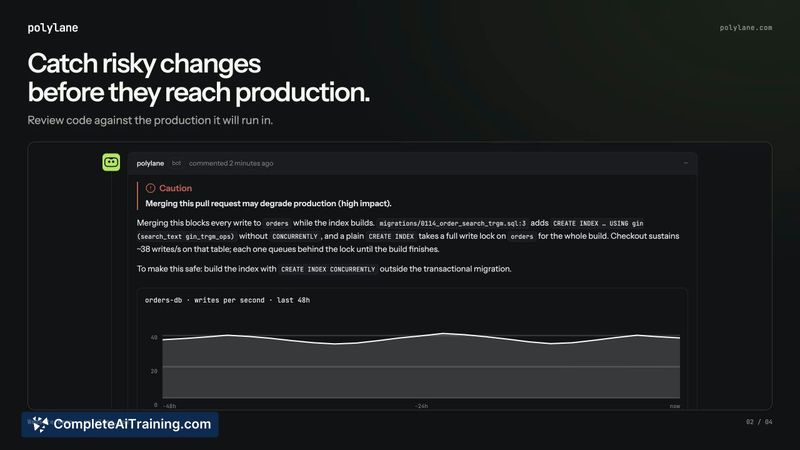
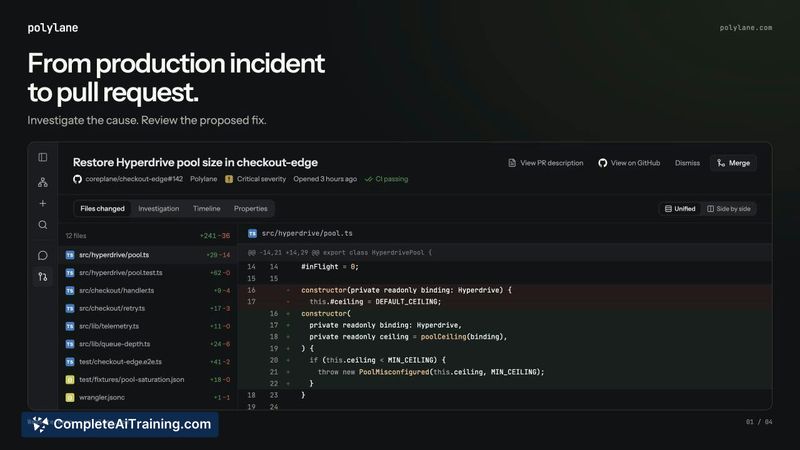
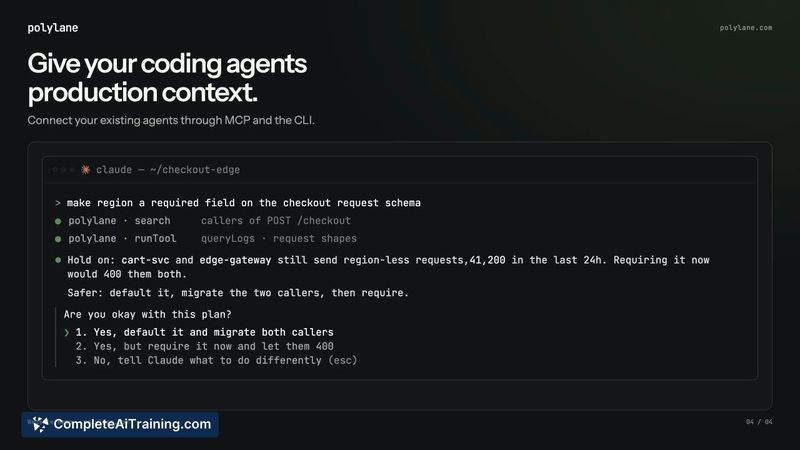
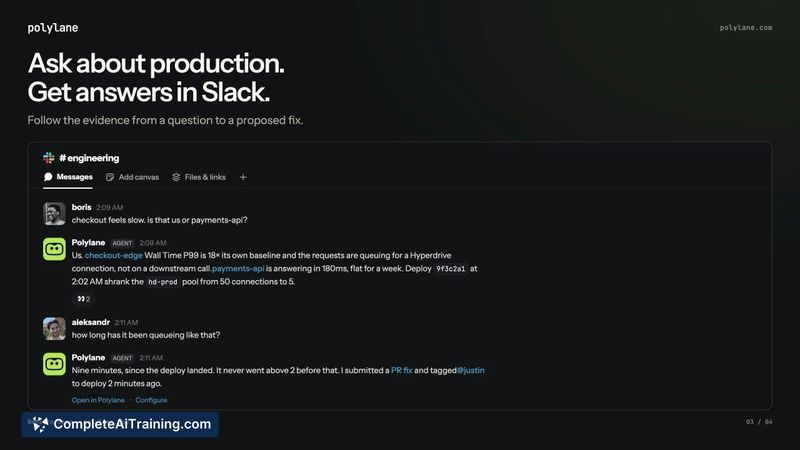
Polylane takes aim at the on-call burden by deploying AI agents that work across your production environment while you're offline. The tool ingests signals from your code, infrastructure, and observability stack, then correlates them to diagnose incidents. The core output is a pull request-or a structured finding when code alone can't resolve the problem.
Key Features
- Automated incident investigation that traces root cause through telemetry and code, then opens a pull request with a proposed fix when a code change applies.
- Proactive CI monitoring that detects flaky tests and transient failures, opening PRs to harden them over time.
- Production context available through Slack for answering questions, plus MCP and CLI access so coding agents can query the same production data.
- Incident grouping that collapses repeated alerts for the same problem into a single investigation, with the agent distinguishing real issues from expected behavior.
- An audit trail in the form of an investigation thread showing gathered evidence, diagnosis, tools used, and outcome, alongside a timeline linking detections, findings, and fixes.
Pricing and Value
Polylane launched with a free plan that lets you connect your tools and test the system. The reference content does not specify pricing for paid tiers or what limits the free plan carries beyond that entry point. Until the team publishes those details, the cost structure remains undefined.
Pros
- Reduces manual triage by correlating deploys, config changes, and dependency bumps with alerts before a human reviews the finding.
- Pull request workflow means no code reaches production without team review and CI, keeping approval gates intact.
- Agent memory saves confirmed findings and recurring patterns about your application, building application-specific context for future investigations.
- Connectors pull from code, cloud infrastructure, and observability data, giving the agent a broad view of how the application actually runs.
Cons
- Teams with highly bespoke or legacy infrastructure may find the connector surface insufficient until more integrations ship.
- The quality of investigations depends directly on how much production context the agent can see-gaps in telemetry coverage will produce weaker results.
- The tool is not well suited for organizations that require all incident response to stay entirely within human-controlled workflows without any automated code suggestions.
Polylane fits teams that already have solid observability coverage and want to shift triage and initial fixes to an automated layer. It's most practical for groups running modern CI pipelines who are comfortable reviewing AI-authored pull requests. Smaller teams without dedicated SRE resources may find the proactive CI hardening and Slack-based production queries particularly useful for reclaiming time spent on reliability tasks.
Jobs Polylane suits
We checked Polylane against 500+ jobs; these get the most out of it.