AI tool
PromptLayer
PromptLayer instruments AI workflows with request tracing, waterfall views, token and latency tracking, and model analytics, so developers can inspect calls, costs, and failures across multi-step flows.

About PromptLayer
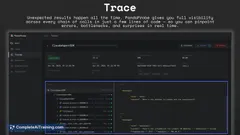
PromptLayer is an AI observability tool for developers that traces model requests, workflows, token usage, latency, costs, and failures in a single timeline and waterfall view. It visualizes complete execution paths across multi-step AI systems so teams can see where issues, delays, or unexpected costs originate.
Review

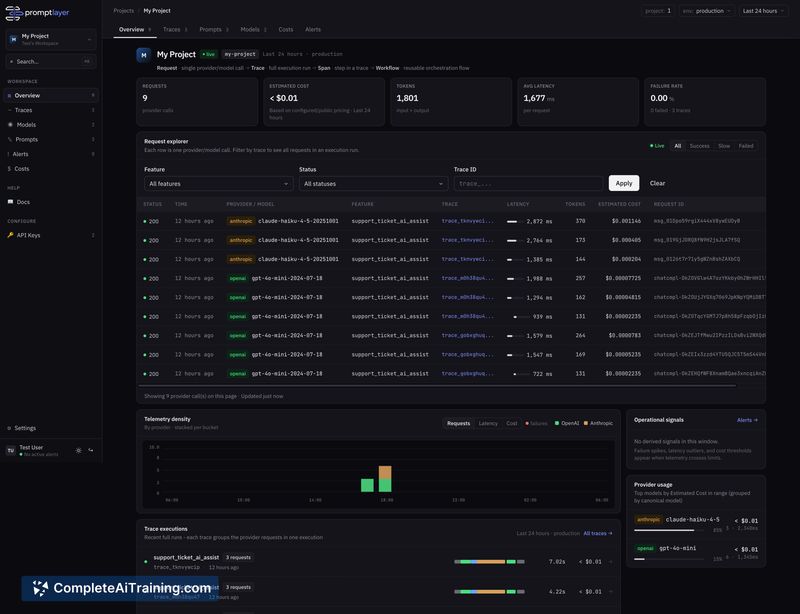
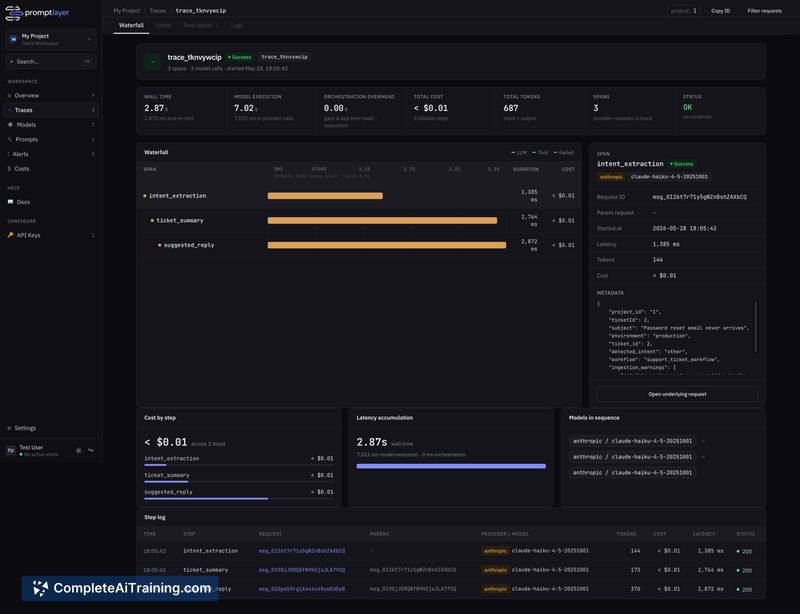
PromptLayer focuses on making AI application behavior visible in a way that resembles traditional software tracing and debugging. By exposing spans, timelines, and waterfall visualizations it helps teams inspect individual model calls and end-to-end traces for complex workflows and agentic systems.
Key Features
- Request explorer and workflow tracing that show individual model calls and full execution traces.
- Waterfall timeline view to inspect latency and the order of operations across multi-step runs.
- Token and cost tracking that attributes usage to specific requests and workflow steps.
- Model analytics and span-level visibility for identifying failures, retries, and repeated executions.
- JavaScript SDK and an initial free beta that includes core observability features.
Pricing and Value
PromptLayer is currently available as a free beta with features such as the request explorer, workflow tracing, waterfall views, token and latency tracking, model analytics, and a JavaScript SDK. The short-term value is reduced time to diagnose where requests fail, where latency appears, and which steps drive costs. Longer-term pricing and commercial tiers are not fully disclosed at launch, so teams should evaluate the beta for fit before planning production budgets.
Pros
- Centralized timeline and waterfall views make it easy to pinpoint slow or failing steps in multi-step workflows.
- Token and cost attribution at the workflow level helps surface which features are driving spend.
- Shows repeated executions and agent loops as discrete events rather than collapsing them, which aids debugging of iterative behaviors.
- Free beta access and a JavaScript SDK lower the barrier to initial experimentation.
Cons
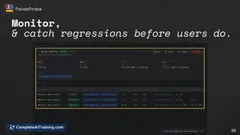
- Early-stage beta means some advanced analytics (automated regression detection or alerting) are limited or not yet available.
- Requires integration and instrumentation work to capture traces and spans, which adds development overhead.
- Long-term pricing and enterprise features are not yet clear at launch, making cost planning harder for larger teams.
PromptLayer is a good fit for developers and teams building multi-step AI workflows or agentic systems who need deeper visibility into cost, latency, and failure modes than standard API dashboards provide. It is especially useful during development and debugging phases; teams should evaluate the beta to confirm integration effort and plan for future pricing before full production rollout.
Jobs PromptLayer suits
We checked PromptLayer against 500+ jobs; these get the most out of it.
Alternatives to PromptLayer
Other tools that do the same main job. Our AI compared PromptLayer with similar tools and kept the ones you could use instead.