AI tool
Weave Router 2.0
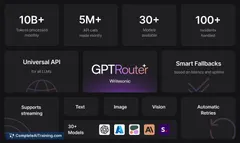
Weave Router 2.0 sends coding agent requests to Claude or GPT models based on which has available quota. A classifier scores task complexity and a cache-aware switch selects the cheapest model that can complete the job correctly. It is built for d...
About Weave Router 2.0
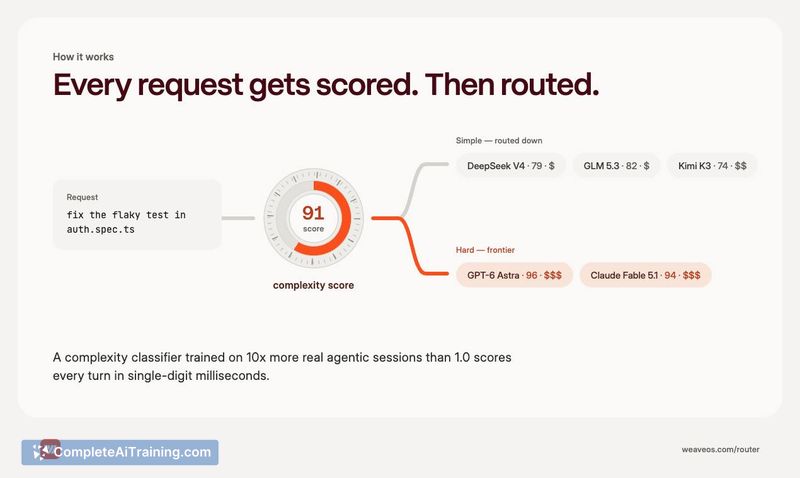
Weave Router 2.0 is a subscription-aware routing tool that sits in front of coding agents like Claude Code, Codex, and Cursor. It reads each request, scores its complexity, and sends it to the cheapest model capable of handling that task. The tool uses a new classifier trained on agentic coding sessions and cache-aware switching that only moves when savings exceed the rebuild cost.
Review
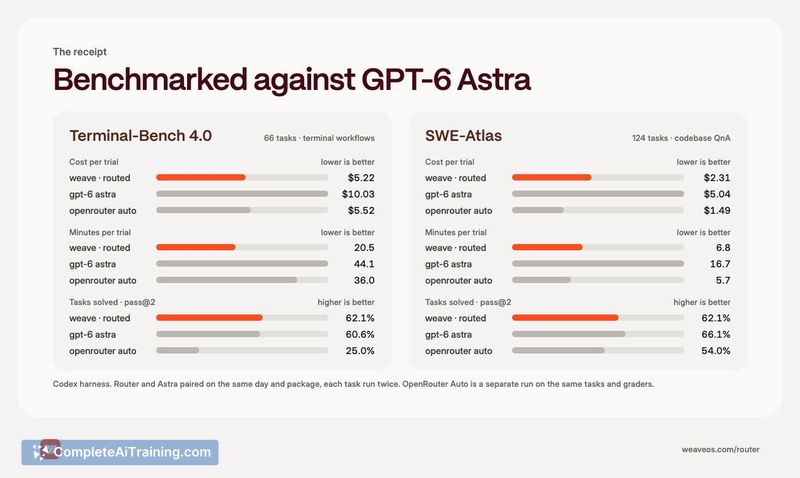
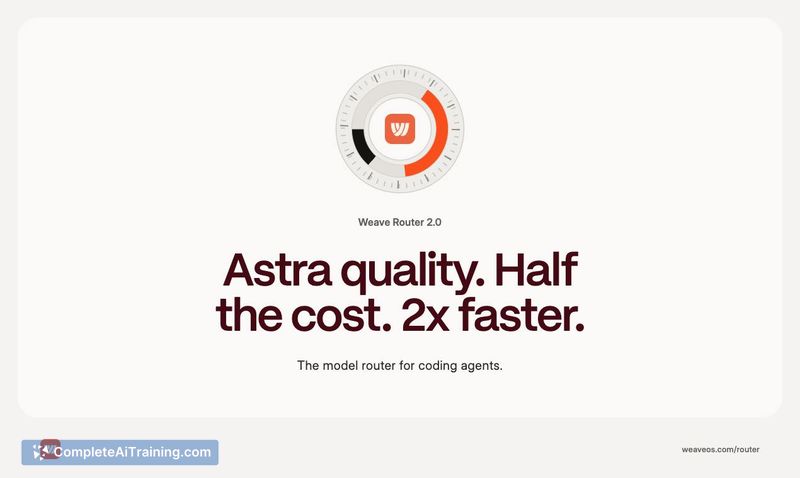
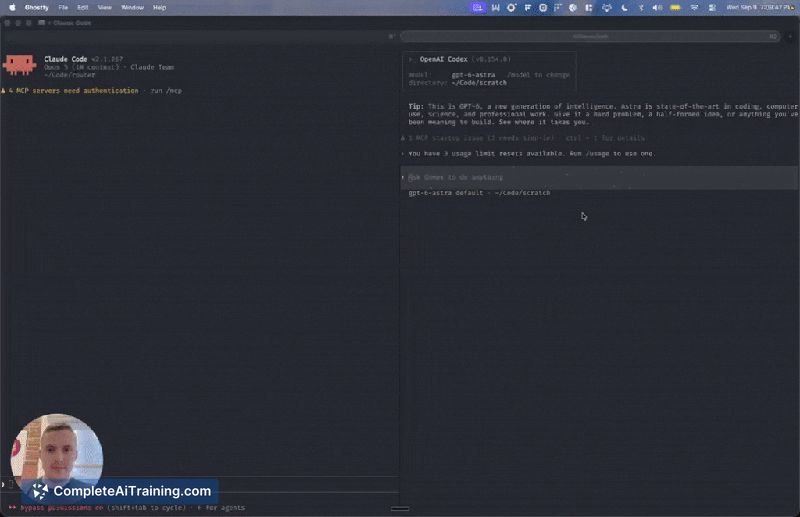
Weave Router 2.0 addresses a specific cost problem for teams running coding agents daily: paying frontier model rates for every request regardless of difficulty. The tool acts as a drop-in endpoint that routes requests across models while respecting existing subscription plans. Benchmarks published by the team show tied pass rates with GPT-6 Astra on Terminal-Bench 4.0 and SWE-Atlas Codebase QnA, at roughly half the cost and more than twice the speed.
Key Features
- Complexity-scored routing: A classifier trained on agentic coding sessions routes based on task difficulty rather than task type. Simpler turns go to models like DeepSeek, GLM, or Kimi, while harder tasks hit Astra or Fable.
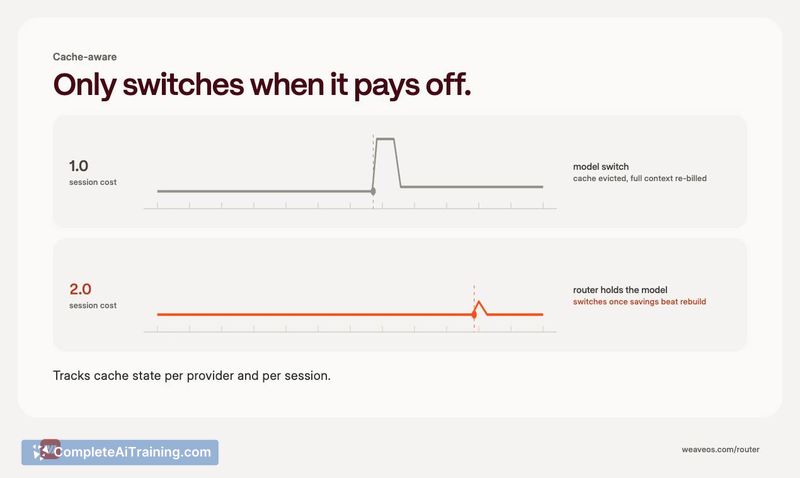
- Cache-aware switching: The router tracks cache state per provider and per session. It only switches models when projected savings outweigh the cost of rebuilding the prompt cache, which the team identifies as where most of the cost reduction comes from.
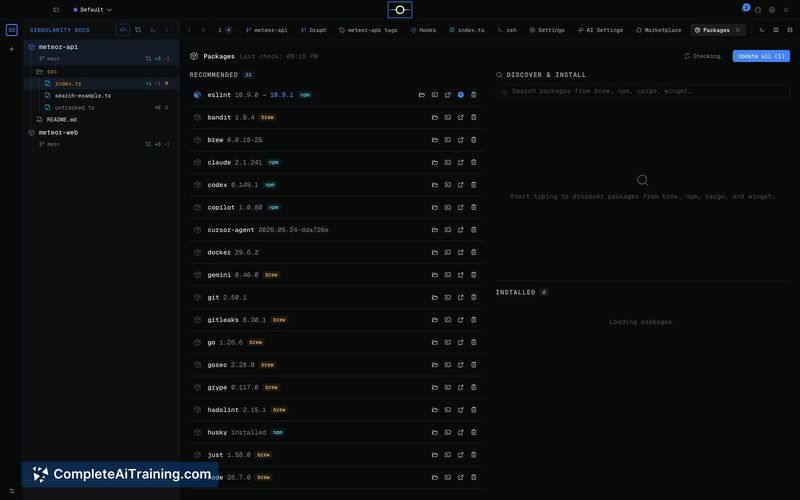
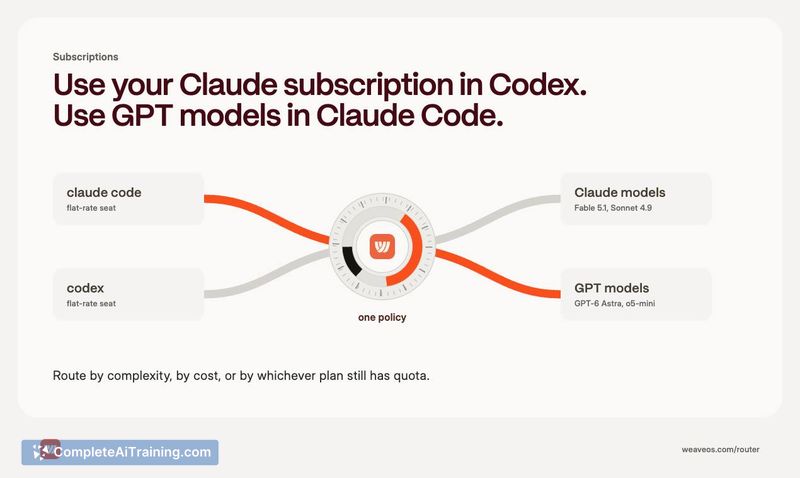
- Multi-subscription routing: Users can run Claude models inside Codex and GPT models inside Claude Code, routing by complexity, cost, or whichever subscription still has quota remaining for the month.
- Per-turn savings visibility: The tool shows how much quota each request saves on every turn.
- Configurable model pool and preferences: Users can select which models the router picks from and set their own cost-versus-speed preferences, or leave it on automatic routing.
Pricing and Value
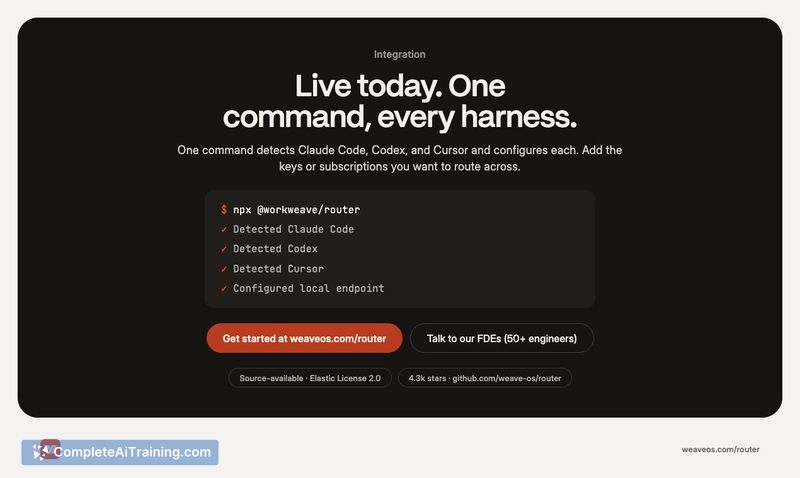
Weave Router 2.0 is source-available under the Elastic License 2.0 and installs with a single npx command. The tool uses your existing model subscriptions rather than charging per-token API billing. There is no separate pricing page referenced in the launch materials; the cost benefit comes from routing requests to cheaper models within plans you already pay for. Teams of 50 or more engineers can book time with the company's field engineering team for onboarding.
Pros
- Routes each coding agent request to the cheapest model that can handle it, instead of defaulting everything to a frontier model.
- Cache-aware switching avoids the common pitfall where mid-session model changes eat savings through cache rebuilds.
- Works with existing subscriptions across Claude Code, Codex, and Cursor without requiring a separate API billing arrangement.
- Benchmarked at tied pass rates with GPT-6 Astra while cutting cost by roughly half and running twice as fast.
- Single-command install and drop-in endpoint setup requires minimal configuration changes to existing workflows.
Cons
- Limited post-hoc visibility into why the classifier selected a particular model for a given request, making it harder to diagnose when a routed result is subtly off.
- The tool is tightly coupled to specific coding agents (Claude Code, Codex, Cursor); teams using other development environments won't get the same integration.
- Not well suited for solo developers or very small teams who run coding agents infrequently, since the cost savings materialize most clearly at higher request volumes where routing decisions compound.
Weave Router 2.0 fits teams that run coding agents daily and want to reduce model costs without switching tools or workflows. It rewards volume: the more requests flowing through the router, the more the cache-aware switching and complexity-based routing can compound savings. Teams evaluating it should weigh the current lack of detailed routing explanations against the published benchmark results and the fact that it operates within subscription limits they already have.
Jobs Weave Router 2.0 suits
We checked Weave Router 2.0 against 500+ jobs; these get the most out of it.
Alternatives to Weave Router 2.0
Other tools that do the same main job. Our AI compared Weave Router 2.0 with similar tools and kept the ones you could use instead.