MCP server · Developer tools
BasicDeploy MCP server
by AkaciaNL
Lets your AI create and manage BasicDeploy containers, deploy apps, run commands and read logs for you.

This is a small connector that lets your AI assistant work with BasicDeploy, a service that runs your apps in the cloud. Each container you make comes with a database, file storage, a message queue and a public web address, all set up for you. It is handy if you build or test small apps and want your AI to do the boring setup steps.
What is an MCP server? The 30-second version
On its own, your AI can only chat with you. An MCP server is a small helper program that gives your AI a new skill or a connection to another service. This one connects your AI to BasicDeploy, so it can create containers, put your app online, run commands and read logs when you ask. You stay in the chat, and the helper does the clicking behind the scenes.
What this MCP server does
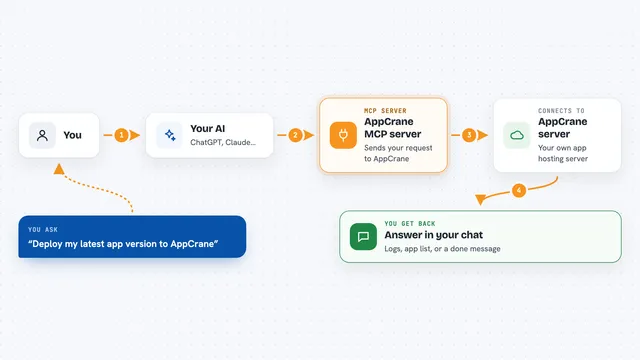
You tell your AI what you want in plain words, like creating a container or putting an app online. Your AI passes that request to this helper program. The helper talks to BasicDeploy over the internet using your account key. BasicDeploy sets up the container, database, storage and web address, or runs the command you asked for. Then the helper sends the result back, and your AI shows it to you in the chat.
 Click to zoom
What you can do with it
- Create a new container with a database and storage included
- Deploy an app from a zip or tar file on your computer
- Run a shell command inside a container and see the output
- Read the latest log lines from a container
- Turn always-on mode on or off for a container
- Share a container with a teammate by email
- Check your plan and how many containers you can run
Try asking your AI
- “Create a 1GB always-on container and deploy ./dist/app.tar.gz to it, then give me the URL”
- “Show me the last 100 log lines of my blue-fox container”
- “What plan am I on and how many containers can I run?”
- “Share my container with teammate@example.com for 24 hours”
What it gives back to you
You get answers in the chat, like a list of your containers with their web addresses and status, or the output of a command you ran. Logs come back as text lines, and account details come back as a short summary of your plan and limits. When it creates or changes something, it tells you what it did, for example the new container's URL.
Before you start
What you need
- A BasicDeploy account
- An API key from BasicDeploy (a kind of password for apps; you get one at basicdeploy.com/api-keys, shown once)
- Node.js 18 or newer on your computer
- An MCP client like Claude Code, Cursor or the Claude desktop app
Good to know
Some actions are permanent, like deleting a container or a topic, and always-on mode or larger memory sizes can cost money on your BasicDeploy plan.
Install it with your AI
Add BasicDeploy MCP server to your AI, no technical skills needed
You don't install anything by hand. You copy one prompt, paste it into an AI that can work on your computer, and it checks, installs and connects the server for you, asking you when it needs something.
Sign in to get the install prompt
Members get a ready-made prompt that lets the Claude desktop app check BasicDeploy MCP server, install it and connect it for them, step by step. You don't need any technical skills: you copy, paste and answer a few questions. Your connected AI can also find and install any of the 4,609 MCP servers here for you.
Who it's for
Developers and technical hobbyists who build or test small apps and want their AI to handle the cloud setup for them.