MCP server · Research
ENCODE Toolkit MCP server
by ammawla
Search, download and track ENCODE genomics experiments, and cross-check them against other biology databases.

This is a helper for Claude that connects it to the ENCODE Project, a big public library of genomics experiments. It lets you search, download and keep track of that data by just asking in plain words. It is made for people doing biology or genomics research, especially anyone who works with ENCODE data and is tired of clicking through web portals.
What is an MCP server? The 30-second version
On its own, your AI can only chat. An MCP server is a small helper program that gives your AI a new skill or a connection to an app or service. This one connects your AI to the ENCODE Project, so it can look up experiments, download files and track what you have collected. You just ask, and the helper does the looking up for you.
What this MCP server does
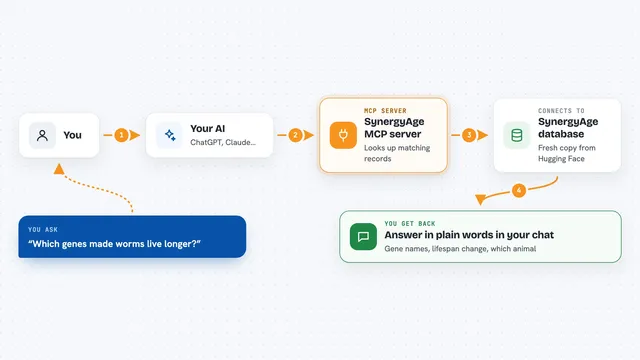
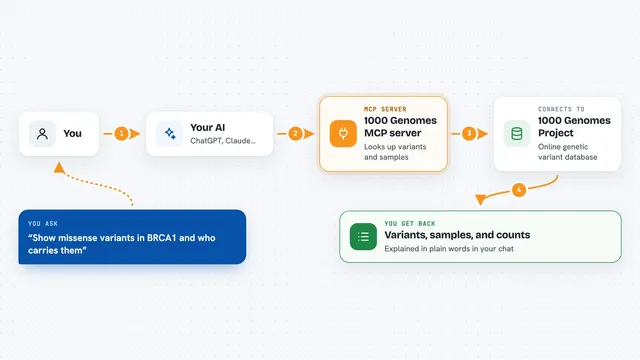
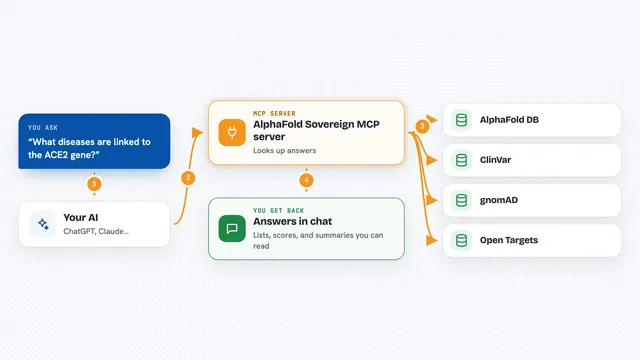
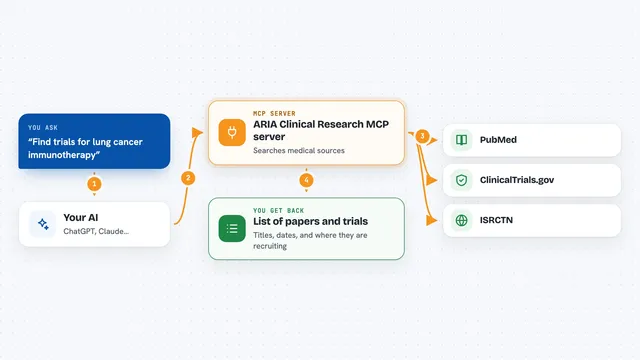
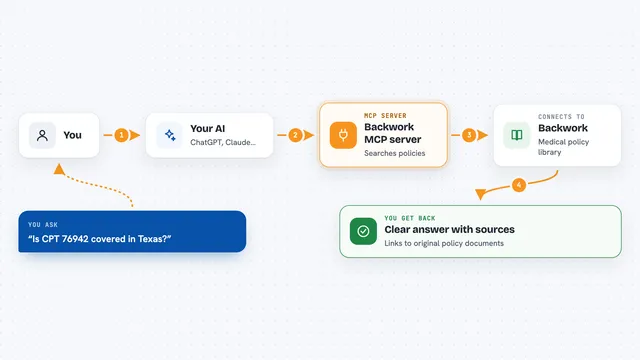
You ask your AI something like find all histone ChIP-seq data for human pancreas tissue. The AI passes that to this helper, which searches the ENCODE Project's online database. The helper brings back a list of matching experiments with details like targets, replicates and file counts. If you want the actual data files, it can download them to a folder on your computer and check they arrived intact. It can also keep a local record of the experiments you care about, so you do not lose track of where your files came from.
 Click to zoom
What you can do with it
- Search ENCODE for experiments by assay, organ, target or cell line
- Download data files to a folder on your computer
- Track experiments you care about, with their publications
- Compare two experiments to see if they can be combined
- Cross-check variants against ClinVar, GWAS and GTEx
- Log files you made from ENCODE data so you keep a record
- Export your tracked experiments as a table or citation list
Try asking your AI
- “Find all histone ChIP-seq experiments for human pancreas tissue”
- “Download all BED files from ENCSR133RZO to my data folder”
- “Track experiment ENCSR133RZO with its publications”
- “Are experiments ENCSR133RZO and ENCSR000AKS compatible for combined analysis”
What it gives back to you
You get back lists and tables in the chat, for example a table of matching experiments with their targets and file counts. When you download files, it tells you where they were saved and whether the file check passed. It can also give you summaries of your tracked experiments, citation lists, or a table you can open in Excel. Everything shows up as text in the conversation, and files land in the folder you chose.
Before you start
What you need
- The Claude desktop app or Claude Code
- Python installed (the uvx command handles the rest)
- An internet connection to reach the ENCODE Project
Good to know
Downloading many large data files can take a lot of time and disk space, so use the preview mode first when you are not sure.
Install it with your AI
Add ENCODE Toolkit MCP server to your AI, no technical skills needed
You don't install anything by hand. You copy one prompt, paste it into an AI that can work on your computer, and it checks, installs and connects the server for you, asking you when it needs something.
Sign in to get the install prompt
Members get a ready-made prompt that lets the Claude desktop app check ENCODE Toolkit MCP server, install it and connect it for them, step by step. You don't need any technical skills: you copy, paste and answer a few questions. Your connected AI can also find and install any of the 4,361 MCP servers here for you.
Who it's for
Genomics and biology researchers, lab scientists and students who work with ENCODE data and want to skip the manual clicking.