MCP server · Developer tools
dep-diff MCP server
Ask your AI if a package upgrade is safe and get a ranked plan with security fixes and breaking changes.

This is a small helper that lets your AI read a package upgrade and tell you whether it is safe. You point it at something like a Dependabot pull request or a line of npm outdated output, and it comes back with a plain verdict for each package. It is handy if you merge dependency updates but do not have time to dig through release notes and security advisories yourself.
What is an MCP server? The 30-second version
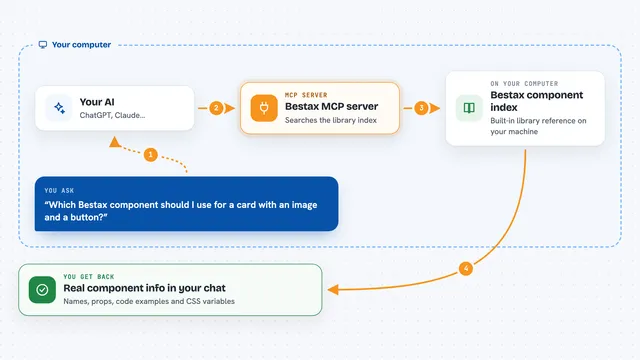
On its own, your AI can only chat with you. An MCP server is a small helper program that gives your AI a new skill or a connection to an app or service. This one connects your AI to package registries and GitHub release notes, so it can look up what changed between two versions of a package. Once it is connected, you just ask your question in normal words and the AI does the looking up for you.
What this MCP server does
You ask your AI something like whether it is safe to bump a package from one version to another. The AI passes that question to this helper, which checks the package registry and the project's GitHub release notes. The helper works out whether the change is a major, minor, or patch update, lists any breaking changes it finds, and checks a public vulnerability database for security fixes in that range. It then gives back a single-line recommendation, ranked from safe up to security, so you know what to look at first.
 Click to zoom
What you can do with it
- Check whether a single package upgrade is safe before you merge it
- Analyze a whole Dependabot batch of up to 50 packages at once
- See which security issues a version bump actually fixes
- Spot breaking changes pulled from GitHub release notes
- Get a migration guide link when a major version changes
- Rank upgrades by risk so urgent ones stand out from routine ones
- Check GitHub Actions version bumps, which often carry no advisory data
Try asking your AI
- “Is it safe to bump lodash from 4.17.20 to 4.17.21?”
- “Here's my Dependabot PR, what's actually risky in it?”
- “Is it safe to bump tj-actions/changed-files from 45.0.7 to 46.0.1?”
- “We're going from express 4.18.2 to 5.0.0, what should I watch out for?”
What it gives back to you
You get back a short plan for each package: the version change, whether it is major, minor, or patch, any breaking changes, any security fixes with their severity, and a one-line recommendation. For a batch, the packages come back ranked from most urgent to least, with a small summary at the top. In the chat it reads like a tidy list you can scan in a few seconds. The AI can also show the raw details if you want to see them.
Before you start
What you need
- The Claude desktop app, Cursor, or Claude Code
- Node.js installed if you run it locally with npx
- Optional: a GitHub token or the gh command line tool, for more release-note lookups per hour
Good to know
It only reads public package and release information, so it will not see private packages or private repositories, and its verdict is a suggestion you should still sanity-check before merging.
Install it with your AI
Add dep-diff MCP server to your AI, no technical skills needed
You don't install anything by hand. You copy one prompt, paste it into an AI that can work on your computer, and it checks, installs and connects the server for you, asking you when it needs something.
Sign in to get the install prompt
Members get a ready-made prompt that lets the Claude desktop app check dep-diff MCP server, install it and connect it for them, step by step. You don't need any technical skills: you copy, paste and answer a few questions. Your connected AI can also find and install any of the 4,609 MCP servers here for you.
Who it's for
Developers and anyone who reviews or merges dependency update pull requests, especially people who use Dependabot or Renovate.