MCP server · Developer tools · official
Buildkite MCP server
by buildkite · official
Lets your AI look at your Buildkite pipelines and builds, compare them, and help you figure out what broke.

This is a small helper made by Buildkite itself. It connects your AI assistant to your Buildkite account so the AI can look at your pipelines, builds, jobs and test results for you. It is handy if you work with a team that uses Buildkite to build and test software, and you want quick answers without clicking around the Buildkite website.
What is an MCP server? The 30-second version
On its own, your AI can only chat. It cannot see your Buildkite account or anything inside it. An MCP server is a small helper program that gives your AI a new skill, here a connection to Buildkite, so it can look things up there when you ask. You stay in the chat, and the helper does the fetching behind the scenes.
What this MCP server does
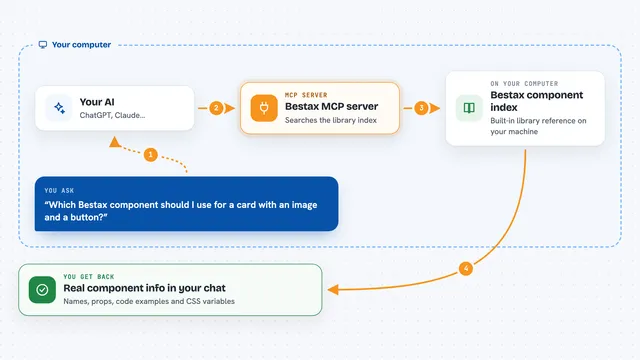
You ask your AI a question about your Buildkite setup, for example which builds failed today. Your AI sends that request to this helper. The helper talks to Buildkite using your Buildkite account and your access token. Buildkite sends back the details, and the helper passes them to your AI. Your AI then explains the answer to you in plain words in the chat.
 Click to zoom
What you can do with it
- List your pipelines and recent builds
- Check which jobs failed and read their logs
- Compare a build with an earlier passing build to see what changed
- Get a summary of why a build failed
- Look at test results for a build
- Trigger a new build of a pipeline
- Create a new pipeline
Try asking your AI
- “Which of my pipelines had failing builds today?”
- “Compare build 412 with the last passing build on main and tell me what changed.”
- “Why did the last build of the checkout pipeline fail?”
- “Show me the last 20 lines of the log for the failed test job.”
What it gives back to you
You get answers in the chat: lists of pipelines and builds, short summaries of failures, and side by side comparisons of two builds showing which jobs newly failed, which recovered, and which are still failing. For failures it can include a few log lines so you can see the actual error. If you ask it to trigger or create something, it tells you what it did.
Before you start
What you need
- A Buildkite account with access to the pipelines you want to look at
- A Buildkite API token (a kind of password for apps; you create one in your Buildkite account settings)
- An AI app that supports MCP servers, like Claude Desktop
Good to know
It can read your Buildkite data and, depending on the tools you allow, also trigger builds or create pipelines, so give it a token with only the access you are comfortable with.
Install it with your AI
Add Buildkite MCP server to your AI, no technical skills needed
You don't install anything by hand. You copy one prompt, paste it into an AI that can work on your computer, and it checks, installs and connects the server for you, asking you when it needs something.
Sign in to get the install prompt
Members get a ready-made prompt that lets the Claude desktop app check Buildkite MCP server, install it and connect it for them, step by step. You don't need any technical skills: you copy, paste and answer a few questions. Your connected AI can also find and install any of the 4,361 MCP servers here for you.
Who it's for
Developers, testers and team leads who use Buildkite and want quick answers about builds and failures without leaving their chat.